


E Visa UK: Your Complete Guide to the e visa uk System

Trying to get your head around the term e visa uk can feel a bit confusing, but it’s actually more straightforward than it seems. The simple truth is, the UK doesn't have one single "e-visa" that covers everyone. Instead, the government has rolled out two very different digital systems: the Electronic Travel Authorisation (ETA) for short trips, and a digital e-Visa for long-term residents, which is replacing old physical permit cards.
Understanding the UK’s New Digital Travel System
The UK is in the middle of a major overhaul of its border system, swapping out traditional paper documents for a fully digital approach. The idea is to make travel smoother and borders more secure, but it’s introduced a couple of new terms that are easy to get mixed up. The two key pieces of this new puzzle are the Electronic Travel Authorisation (ETA) and the digital e-Visa.
Think of it like this: the ETA is a lightweight, digital permission slip for your trip. It's for people who don't normally need a visa for a short visit, like tourists or those attending a quick business meeting. The e-Visa, on the other hand, is the full-blown digital proof that someone has the right to live, work, or study in the UK long-term.
The ETA for Short Stays
First things first: an ETA is not a visa. It's a pre-travel screening that gives you permission to board your flight to the UK. It’s very similar to the systems used in the USA (ESTA) or Canada (eTA), and its main job is to check visitors before they even arrive, beefing up border security.
Here’s what you need to know about the ETA:
Its Purpose: It grants you permission to travel to the UK for short visits, which is usually up to six months.
Who Needs It: It’s for people from countries who can visit the UK without a visa for tourism, business, visiting family, or short-term study.
The Format: The ETA is completely digital. Once approved, it’s electronically linked to your passport, so there's nothing to print out.
Digital travel authorisations are becoming the norm globally. A good point of comparison is the EU's ETIAS system, which works on a similar principle for the Schengen Area.
The E-Visa for Long-Term Residents
When you hear ‘e-Visa’ in the UK context, it almost always refers to the new digital system that's replacing physical Biometric Residence Permits (BRPs) and Biometric Residence Cards (BRCs). This isn't something a tourist applies for. It’s the modern way for long-term residents to prove their immigration status.
This change is a huge step in the UK’s move towards a paperless border, with the government aiming to have everyone switched over to digital eVisas by 2025. The big win here is security—by linking your status directly to your biometrics, there’s no physical card to lose or have stolen.
By moving immigration status online, the UK government eliminates the need for physical cards that can be lost, stolen, or tampered with. Your right to be in the UK is proven through a secure online portal, accessible to employers, landlords, and officials with your permission.
To help clear up any lingering confusion, here's a quick side-by-side look at the two systems.
UK Digital Travel Systems at a Glance
This table breaks down the key differences between the ETA and the digital e-Visa, clarifying who they're for and what they do.
Feature | Electronic Travel Authorisation (ETA) | Digital e-Visa (BRP Replacement) |
|---|---|---|
Primary Purpose | Pre-travel permission for short, visa-free visits. | Digital proof of long-term immigration status (right to live/work/study). |
Who It's For | Tourists, business visitors, and transit passengers from specific countries. | Non-UK citizens residing in the UK long-term (e.g., on a work or family visa). |
Duration of Validity | Valid for 2 years and allows multiple entries. | Linked to the duration of the individual's immigration permission. |
What It Replaces | The visa-waiver entry system (no physical document was previously needed). | Physical Biometric Residence Permit (BRP) cards. |
How You Get It | Apply online before you travel. | Granted as part of a successful long-term visa application. |
Understanding these distinctions is the first step, whether you're organising a short business trip to Norwich or managing a long-term relocation to Norfolk. For more helpful information for your visit, you might find our collection of general UK travel tips useful.
Who Actually Needs a UK ETA
Before you get too deep into your travel plans, the first and most crucial question is: do you actually need a UK Electronic Travel Authorisation, or ETA? Getting this sorted from the start will save you a world of headaches later on.
The new system is designed to be pretty straightforward. It mainly affects travellers from countries that used to enjoy visa-free entry for short visits. So, if you're not a British or Irish citizen and you don't already hold a UK visa or some other form of immigration status, this is something you need to look into.
Think of the ETA as a digital permission slip you need before you even get on the plane, train, or ferry. It’s a key part of the UK's new digital border strategy, which kicked off in October 2023 to beef up security and streamline the flow of visitors. It's already become standard procedure for millions of travellers – up to September 2025, a staggering 19.6 million ETAs have been granted, with US nationals leading the pack at 4.6 million. You can dig into the numbers yourself in the official Home Office factsheet about the ETA scheme.
Nationalities Requiring an ETA
The list of countries requiring an ETA is growing in stages. The scheme first rolled out for visitors from Qatar, quickly followed by Bahrain, Jordan, Kuwait, Oman, Saudi Arabia, and the United Arab Emirates.
Eventually, the plan is for the ETA to apply to all visitors who don't need a formal visa for short stays. This will include travellers from the USA, Canada, Australia, and many European nations.
The rollout is ongoing, so the list of required nationalities can change. The single best piece of advice is to check the official GOV.UK website for the latest, most accurate list before you book anything. It’s the only way to be 100% sure and avoid any nasty surprises.
To make things simpler, this little diagram breaks down whether you're looking at a short visit (ETA) or a longer-term stay that needs a full visa.
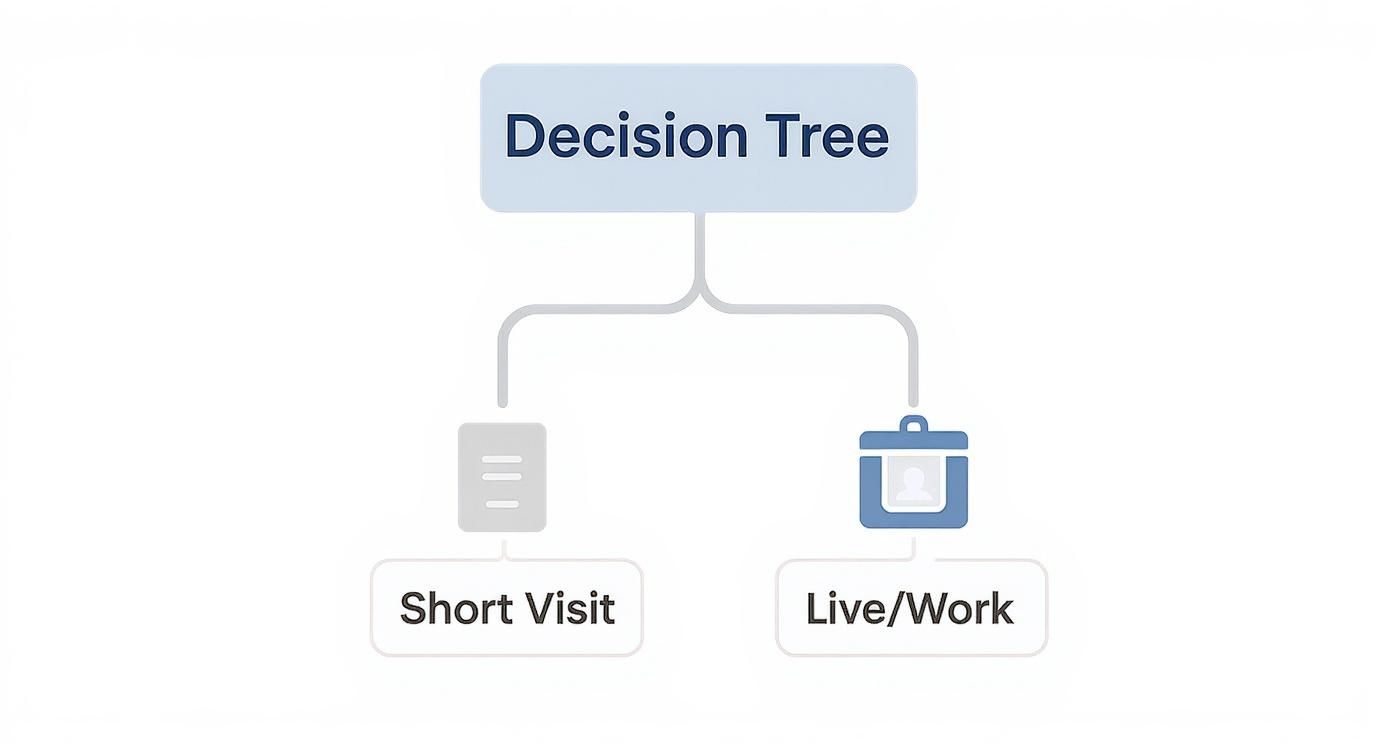
As you can see, it clearly separates the quick trips covered by an ETA from the more involved stays that require a different kind of permission.
Permitted Activities on an ETA
Just as important as who needs an ETA is what you can do with one. An approved ETA allows you to enter the UK for up to six months for very specific reasons.
Here are a few common scenarios where an ETA is the right move:
Tourism: You’re coming for a holiday, maybe to wander the historic lanes of Norwich or explore the beautiful Norfolk Broads.
Visiting Family and Friends: You're simply here to catch up with loved ones.
Short-Term Business: Attending a conference, taking part in meetings, or negotiating a contract are all fine. The key thing is that you can't do paid or unpaid work for a UK company.
Short Courses: You can study for up to six months at an accredited institution, like a language school. For anything longer, you'll need a proper student visa. You can find out more about the costs and rules by checking out the details on UK study visa fees and requirements.
Transit: You're just passing through a UK airport on your way somewhere else. This applies even if you don't go through border control (known as airside transit).
Who Is Exempt from Needing an ETA
While the ETA scheme covers a lot of people, there are several groups who don't need to worry about it at all. The rules are pretty clear on this to avoid any confusion.
You do not need an ETA if you fit into one of these categories:
British or Irish Citizens: As you'd expect, these nationals can enter the UK without any extra permissions.
Holders of a UK Visa: If you already have a valid UK visa – for work, study, or family, for instance – you don’t need an ETA on top of that.
UK Immigration Status Holders: Anyone who already has permission to live, work, or study in the UK (like someone with indefinite leave to remain) is exempt.
By running through these guidelines, you should have a much clearer picture of whether the new ETA system applies to you. Getting it right ensures a smooth, hassle-free start to your trip, whether you’re heading to Norfolk for business or just enjoying a well-deserved break.
Your Step-By-Step Guide to Applying for an ETA
So, you’ve figured out you need an ETA for your trip. What's next? Let's walk through the actual application process. The good news is the UK government has designed the whole system to be quick and painless. With a little preparation, you can get it all done from the comfort of your home in just a few minutes.
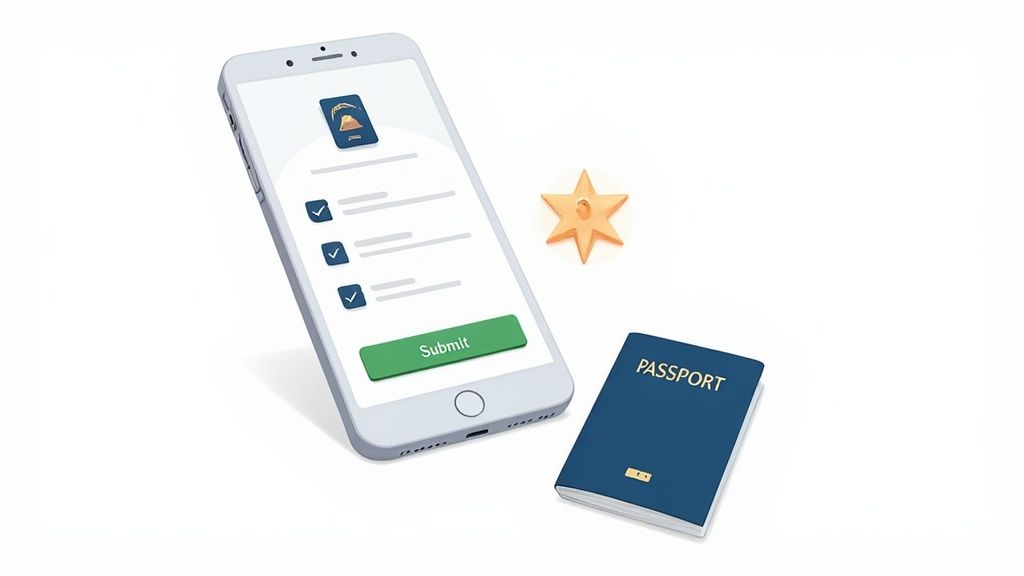
The easiest way to apply is through the official ‘UK ETA’ app, which you can download from the Apple App Store or Google Play. If you’d rather not use an app, you can also complete the application on the GOV.UK website.
Preparing for Your Application
Before you dive in, gathering a few things first will make the whole process completely seamless. Having everything ready means you won't have to stop midway through to hunt for a document.
Here’s a simple checklist of what you'll need:
A Valid Passport: You must use the same passport you plan to travel with, as your ETA is electronically tied to it.
A Valid Email Address: This is where the Home Office will send your decision, so make sure it's one you check regularly.
A Debit or Credit Card: You'll need this to pay the application fee.
A Smartphone or Device with a Camera: The application requires you to take or upload a photo of yourself.
A little prep work here is the key to a stress-free experience, getting you one step closer to your UK trip.
The Four Key Application Steps
The application itself is broken down into a simple, logical sequence. If you use the app, it guides you through each stage, making it pretty hard to go wrong.
1. Create a Digital PhotoFirst up, you’ll need to provide a good digital photograph. If you're using the app, it's quite clever – you can scan the photo page of your passport and then take a live 'selfie' to prove it's really you. The app’s tech helps ensure your photo meets all the required standards, a bit like the automated photo booths you see at airports.
A common reason for delays is a poor-quality photo. Make sure you’re in a well-lit space, take off any hats (unless for religious or medical reasons), and keep a neutral expression against a plain, light-coloured background.
2. Complete the Application FormNext, you'll fill in your personal details. This includes your full name, date of birth, contact information, and passport details. It sounds obvious, but double-check every single entry for accuracy. A simple typo in your passport number could invalidate your ETA.
3. Answer the Suitability QuestionsYou’ll then face a short series of questions about your travel history and any past criminal convictions. It is absolutely vital to answer these questions honestly and accurately. Providing misleading information can lead to a refusal and could cause problems with any future UK immigration applications.
4. Pay the Application FeeThe final step is paying the fee. The UK ETA application currently costs £16. Be aware of third-party services that might offer to do this for you at a higher price; the most direct and cheapest way is always through the official app or the GOV.UK website. Once your payment goes through, your application is officially submitted.
What Happens Next?
After you've hit submit, the waiting game begins, but it’s not usually a long one. The vast majority of people get a decision within minutes, especially when using the app.
However, the official guidance is to apply at least three working days before you travel. This gives a buffer for any applications that might need a manual review by a Home Office official. You'll receive an email confirming the outcome – either approval or refusal. Your approved e visa uk equivalent, the ETA, is then digitally linked to your passport, ready for your journey. There's no need to print anything; your airline can verify it electronically when you check in.
What to Expect After You Apply
So, you’ve hit ‘submit’ on your Electronic Travel Authorisation (ETA) application. What happens now?
For most people, the process is remarkably quick. The system gets to work straight away, and if you've used the recommended ‘UK ETA’ app, you could have a decision in your inbox within minutes. It’s a far cry from the long waits we used to associate with travel authorisations.
That said, it’s always wise not to leave it to the very last minute. The official advice is to apply at least three working days before you travel. This gives a little breathing room in case your application is one of the few that needs a manual look-over by a Home Office official. Building in this buffer ensures any potential hiccups don’t throw a spanner in your travel plans.
Understanding Your Approved ETA
Once that approval email lands, you'll notice something missing—there's no physical document or PDF to print out. This is a core feature of the UK's move to a digital border. Your ETA is entirely electronic, digitally tethered to the passport you used when you applied. It’s a modern, streamlined approach that means there’s no bit of paper to lose or forget.
Your approved ETA gives you the green light to travel to the UK multiple times. Here’s a quick breakdown of what that means for its validity:
Duration: Your ETA is valid for two years from the day it’s issued.
Passport Expiry: If your passport expires before those two years are up, your ETA expires with it. You'll need to apply for a new ETA with your new passport.
Permitted Stays: Within that two-year window, you can pop over to the UK for multiple short visits, typically for up to six months at a time.
This new system makes repeat trips for business meetings in Norwich or visiting family across Norfolk so much simpler, as you won't have to go through the application process for every single journey.
Troubleshooting Common Post-Application Issues
While the process is designed to be smooth, sometimes things don’t go perfectly to plan. Knowing what to do next will keep the stress out of your travel prep. The most common issues are an application being refused, spotting a mistake after you’ve submitted, or needing to update details because you have a new passport.
If your ETA application is refused, you can’t appeal the decision directly. Your next port of call is to apply for a Standard Visitor visa. A refusal isn’t a ban from the UK; it just means you need to provide more detailed information through a different application process to be considered for entry.
Key Takeaway: An approved ETA is your digital permission to travel, but it doesn't guarantee entry into the UK. That final decision always lies with the UK Border Force officer you meet on arrival. They’ll verify who you are and the purpose of your visit.
Arriving in the UK with Your Digital ETA
The real magic of the digital system happens when you arrive. When you check in for your flight, train, or ferry, the carrier’s system will automatically check for a valid ETA linked to your passport. If it’s not there, you won't be allowed to board.
Once you land at a UK airport, you can usually head straight for the eGates if you're from an eligible country. The automated gates simply scan your passport and instantly verify your linked ETA, making for a much faster, more efficient entry. For travellers arriving at major hubs, this is a game-changer. You can find more practical tips on getting through one of the UK's busiest entry points in our guide to London Heathrow Terminal 5.
If you need to speak to a Border Force officer, they will also just scan your passport to confirm your digital status. It’s all part of making the journey that little bit smoother.
Planning Your Hassle-Free Stay in Norwich and Norfolk

With your digital travel authorisation sorted, the really exciting part can begin—planning your actual visit to the UK. For many professionals, contractors, and even families, the real destination isn’t London but the historic and vibrant heart of East England.
Norwich and the wider Norfolk area offer a fantastic blend of rich history, modern business opportunities, and truly stunning natural beauty. It's become a real hub for professionals on assignment, families relocating, or anyone looking for a comfortable base to explore from. Once your travel is approved, the next logical step is locking down the right place to stay.
Why Choose Norfolk for Your UK Stay
Norfolk is so much more than just a picturesque county; it's a strategic spot for thriving industries like energy, tech, and agriculture. Norwich itself boasts a lively city centre, a top-tier university, and brilliant transport links, making it a prime location for business travellers and contractors.
But when you're planning a longer visit, the usual options like hotels or long-term tenancy agreements often don't quite fit. Hotels can get expensive and feel impersonal after a few weeks, while standard rentals mean wading through complex contracts, credit checks, and the headache of setting up utilities. This is where a more flexible, common-sense solution comes in.
At Stay Norwich Apartments, Norfolk, we provide furnished accommodation when you need it, for as long as you need it. We offer a direct-to-landlord service with no hassle, no drama—just pay and stay.
This hassle-free approach is a lifesaver for anyone who needs to focus on their work or settling in, not on endless paperwork.
The 'Pay and Stay' Accommodation Solution
For a genuinely seamless experience, you can't beat furnished, flexible accommodation. This model, offered by providers like Stay Norwich Apartments, cuts right through the usual complications of renting. You get a fully furnished place when you need it, for exactly as long as you need it.
This approach has some major advantages:
No Hidden Hassles: You get to skip the stress of credit checks, utility bills, and long-term contracts. Everything is bundled into one clear price.
Complete Flexibility: Whether you need a place for a few weeks or several months, the length of your stay can be tailored to your project or personal plans.
Home Comforts from Day One: Walk into a fully equipped kitchen, a comfortable living space, and a dedicated workspace with fast Wi-Fi ready to go.
This model is especially helpful for contractors who need a reliable base or families caught between house moves. For a closer look at this convenient option, you can explore this detailed guide to short-term rentals in Norwich.
Settling In Quickly and Easily
Arriving in a new area is always a bit easier with some local knowledge up your sleeve. Norwich is well-connected, with direct train services from London and an international airport that offers links to major hubs. Once you arrive, making yourself at home should be the top priority.
Beyond the travel formalities, make sure you're prepared for your stay; it’s a good idea to explore various communication options when visiting the UK to stay connected with ease. By choosing a 'pay and stay' solution, you can move straight in and start feeling settled immediately, letting you focus on the real reason for your visit from the moment you arrive.
Common UK ETA and Visa Mistakes You Need to Avoid
Navigating the UK's new digital travel system is mostly plain sailing, but one tiny oversight can quickly snowball into a major travel headache. Knowing the common tripwires ahead of time is the best way to make sure your journey begins without a hitch.
The most frequent mistake? Simply leaving it too late. While the vast majority of ETA applications sail through in minutes, some get flagged for a manual review, which can take up to three working days. Cutting it fine is a gamble that could end with you having to cancel your trip entirely.
Mismatched Information and Passport Errors
One of the most critical yet surprisingly common slip-ups is entering incorrect passport details. Your approved ETA is digitally hardwired to your passport number, and a single typo – a wrong digit or a misspelled name – renders it completely invalid. It’s a surefire way to be denied boarding before you even leave.
Always, always double-check that the details you type into the application form exactly match the information on your passport's photo page. We’re talking full name, date of birth, and passport number. Even the smallest discrepancy can cause big problems.
It's worth remembering that an ETA is your permission to travel, not a guarantee of entry. The final say always rests with the UK Border Force officer you meet on arrival. They will verify who you are and why you're visiting before waving you through.
Misunderstanding the Purpose of an ETA
Another frequent point of confusion is what an ETA actually lets you do. Think of it as a pass for short-term activities: tourism, visiting family, attending a business meeting, or taking a brief study course. It is not a work permit or a path to residency. Trying to work for a UK company while on an ETA can land you in serious trouble with immigration.
Do: Use an ETA for a holiday, a business conference, or a short visit to see relatives.
Don't: Use an ETA to take up any form of employment, paid or unpaid.
Short-term visits are a massive part of UK travel. In the year ending June 2025, the UK issued 2.2 million visitor visas, highlighting just how crucial these trips are to the country. The ETA scheme is changing the game for nationalities who previously didn’t need a visa, with Indian nationals receiving the most visitor visas at 555,468. You can dive into the numbers in the government's official summary of latest immigration statistics.
Avoiding these simple errors is all about planning ahead and understanding the rules – much like finding the right place to stay. For those visiting Norfolk, Stay Norwich Apartments offers furnished accommodation when you need it, for as long as you need it. Their straightforward 'pay and stay' approach removes all the usual hassle and drama from finding a temporary home, allowing landlords to deal directly with a trusted provider.
Your Questions Answered: The UK's New Digital System
Got a question on your mind? You're not the only one. Here are some quick, straightforward answers to the questions we hear most often about the UK's new e-Visa and ETA system. Think of this as your go-to reference for clearing up any confusion.
Do I Need an ETA if I’m Only Transiting Through the UK?
Yes, almost certainly. Even if you're just catching a connecting flight and won't be passing through UK border control (this is called 'airside transit'), you'll still need an Electronic Travel Authorisation (ETA). The rule also applies if you do go through border control to get to another flight ('landside transit').
The only real exceptions are for people who already hold a valid UK visa or those who don't need an ETA in the first place, like British or Irish citizens. The best advice? Always double-check the exact rules for your nationality before you book anything.
My ETA Application Was Refused. What Are My Next Steps?
First things first, don't panic, but also don't try to travel to the UK. If your ETA application is refused, you simply don't have permission to board a flight. The refusal email won't go into detail about why.
Your next move is to apply for a Standard Visitor visa. This is a more in-depth process, but an ETA refusal doesn't mean you're banned from the country. It just means the system flagged something that requires a closer look through a full visa application.
How Does the Digital e-Visa for Residents Affect My Right to Work or Rent?
It doesn't change your rights at all. The move away from a physical Biometric Residence Permit (BRP) to a digital e-Visa UK residents use is about modernising the system, not altering your permissions. Your right to work or rent remains exactly the same.
Instead of showing a plastic card, you’ll now log into the Home Office’s online service to create a secure 'share code'. You give this code to an employer or landlord, and they use it to verify your immigration status online. It’s a much safer method, as physical documents can be lost, stolen, or faked.
Can I Use an ETA for a Short Business Trip to Norwich?
Absolutely. An ETA is ideal for short business trips, whether you're heading to Norwich or anywhere else in the UK. It covers activities like attending conferences, client meetings, or contract negotiations.
What you can't do is use an ETA to perform paid or unpaid work for a UK company or operate as a self-employed person. If you're coming over for a specific project or a longer contract, you'll likely need a proper work visa. It's always smart to confirm your planned activities are allowed for business visitors.
For more general tips on visiting the area, have a look at some of the most frequently asked questions about staying in Norwich to help you plan.
When you need a place to stay in Norwich or Norfolk, Stay Norwich Apartments offers furnished, flexible accommodation perfect for any length of visit. No hassle, no drama—just pay and stay. Book your ideal apartment at https://www.staynorwichapartments.com.
Comments