


Seals in Norfolk Horsey

There are few wildlife sights in the UK more memorable than witnessing the thousands of seals in Norfolk Horsey. Every winter, the vast, sandy dunes of Horsey Beach transform into a sprawling nursery for grey seal pups, establishing it as a crucial spot for one of the country's most important seal colonies. This guide is your key to planning a perfect—and respectful—visit.
Your Essential Guide to viewing Seals in Norfolk Horsey

Seals in Norfolk Horsey, The North Norfolk coast offers a truly magical experience, where the wild North Sea crashes against a landscape bursting with life. Horsey Beach, in particular, has become famous for this incredible natural event. Its wide, sloping sands and protective dunes create the perfect haven for grey seals to give birth and raise their young, drawing in nature lovers from all over the country.
During the peak pupping season from late October to early February, the beach is completely covered with white-furred pups and their ever-watchful mothers. The sheer scale of it all is staggering; volunteer counts often record close to 4,000 new pups born along just this stretch of coast. This makes Horsey a vital site for the UK’s grey seal population, which makes up a huge portion of the entire global total.
Why This Guide is Your Perfect Companion
Planning your trip involves more than just showing up. It’s about knowing the best times to visit, figuring out how to get there, and—most importantly—understanding how to watch the seals responsibly. This guide breaks down everything you need for a seamless adventure. If you're keen to learn more, these insights on wildlife watching in coastal areas can really enhance your experience.
We'll walk you through:
The best seasons and times of day for viewing.
Practical travel tips for getting from Norwich to the coast.
Essential wildlife etiquette to keep you and the seals safe.
What to pack to make your day comfortable and memorable.
A trip to see the seals at Horsey is a unique chance to connect with nature on a grand scale. It's a powerful reminder of the incredible wildlife thriving right on our doorstep, much like other stunning coastal spots such as Cromer, another jewel of the East Anglian coast.
To truly make the most of your Norfolk adventure, you’ll want a comfortable base to return to. Landlords direct with Stay Norwich Apartments, Norfolk, furnished accommodation when you need it, for as long as you need it. No hassle, no drama, pay and stay.
Best Times for Seal Watching at Horsey
Getting the timing right for your visit to see the seals at Horsey, Norfolk, is probably the single most crucial part of planning your trip. It can be the difference between a nice day out and a truly unforgettable wildlife experience.
While you might catch a glimpse of seals along the coast year-round, the real show happens within a particular window, transforming the beach into one of the UK's most incredible wildlife arenas.
The absolute best time to go is during the winter, specifically from late October to early February. This is the grey seal pupping season, and it’s nothing short of magical. The beach at Horsey becomes a massive, bustling nursery as thousands of female seals come ashore to give birth to their fluffy, white-coated pups.
Horsey Seal Watching Seasons at a Glance
To help you plan, here’s a quick summary of what you can expect throughout the year.
Season | What You Will See | Visitor Level |
|---|---|---|
Winter (Late Oct - Early Feb) | Thousands of seals, pupping season in full swing, mothers nursing, bulls competing. | High |
Spring (Mar - May) | Fewer seals on the beach, mainly adults resting ("hauling out"). Pups have left. | Low |
Summer (Jun - Aug) | Small groups of seals resting on the sand, often seen bobbing in the sea. | Medium |
Autumn (Sep - Mid Oct) | Numbers begin to increase as seals gather for the upcoming breeding season. | Medium |
While winter is undoubtedly the peak season for the sheer spectacle, visiting at other times offers a quieter, more peaceful experience with the resident seal population.
The Peak Pupping Season
If you visit during the pupping season, you’re not just seeing a few seals here and there—you're witnessing a sprawling, noisy, and constantly moving colony. The sight of thousands of pups dotting the landscape is something you won’t soon forget.
The success of this colony is a brilliant conservation story. The grey seal population here has exploded, with recent counts recording nearly 4,000 seal pups born along the five-mile stretch between Waxham and Winterton, with over a thousand adults alongside them. These numbers really highlight just how vital this part of the Norfolk coast is for the species.
Key Insight: The pupping season is by far the most dynamic time to visit. You'll see mothers nursing their pups, huge dominant bulls protecting their territory, and all the charming chaos that comes with a massive seal colony in full swing.
Visiting Outside the Main Season
What if you can't make it in the winter? Don't worry, you’re still in luck. While the pupping season is the headline act, grey seals can often be spotted at Horsey year-round.
During the spring and summer months, you'll find adult seals "hauling out"—a great term for them dragging themselves onto the sand to rest and digest after a good feed.
The colony is much smaller and quieter than, but it's special in a different way. It’s a more serene viewing experience, usually with fewer crowds, giving you a chance to appreciate the seals basking peacefully in the sun. If you’re already exploring Norfolk's beautiful coastline in the warmer months, a trip to Horsey is still a fantastic addition to your plans. For more ideas, check out our guide to the 10 best beaches in Norfolk, UK.
Choosing the Best Time of Day
Once you’ve settled on the season, think about the time of day. Tides play a huge part in what you’ll see. As a general rule, the best time to see the most significant number of seals on the beach is within two hours on either side of low tide. This is when the most sand is exposed, giving the seals plenty of space to spread out and rest.
To dodge the biggest crowds, especially on a weekend during pupping season, try to go either early in the morning or later in the afternoon. A weekday trip is even better if you want a more personal experience, letting you hear the colony's sounds without too much human chatter.
An early start often means easier parking and a prime viewing spot along the dunes before the midday rush kicks in.
Navigating Your Way to Horsey Beach
Getting out to see the seals in Norfolk Horsey is a pretty straightforward affair, especially if you’re heading out from Norwich. Most people choose to drive, which makes for a lovely trip in itself, taking you through quintessential Norfolk villages and the unique landscape of the Broads.
For your sat nav, the main destination you'll want to aim for is the Horsey Gap car park. Just pop the postcode NR29 4EJ into your device, and it’ll lead you right to the best access point for the seal colony. This is a National Trust car park, so it’s well-signposted as you get closer and is the nearest place to park for the main viewing areas.
Parking and Access Details
When you pull in, you’ll find it’s a pay-and-display system. It’s always a good idea to have both cash and a card handy, as the signal for card machines can be a bit hit-or-miss in this beautifully rural spot. The parking fees go directly towards the upkeep of the area and the vital conservation work that protects these fantastic animals.
From the car park, it's a relatively short walk to where the action is, but you will be crossing sandy dunes. The designated paths are clearly marked out to guide you and to protect the fragile dune ecosystem. While the walk itself isn’t strenuous, the ground is soft and uneven, which can be a bit of a challenge with a pushchair or for anyone with mobility concerns.
Travel Tip: During the peak pupping season (November to February), that Horsey Gap car park fills up incredibly fast, especially at weekends. Your best bet is to get there early in the morning to grab a spot and avoid being turned away.
Alternative Travel Options
If you arrive and Horsey Gap is completely full, don't despair. A great alternative is to park at Winterton-on-Sea and walk north along the beach or coastal path. It's a longer stroll, but the coastal views are absolutely stunning, and you'll often start spotting seals dotted along the shoreline long before you reach the main colony.
While driving is the easiest way to get there, public transport can get you into the general area. You can look into train routes to nearby towns like Acle or Great Yarmouth. If you need a hand with local rail connections, our guide to getting around from Norwich train station is a useful starting point. From the station, however, you'll almost certainly need to pre-book a taxi for the last leg of the journey, as direct buses to Horsey are few and far between.
This timeline visualises the different seal-watching seasons in Norfolk, from the quiet summer months to the busy winter pupping period.
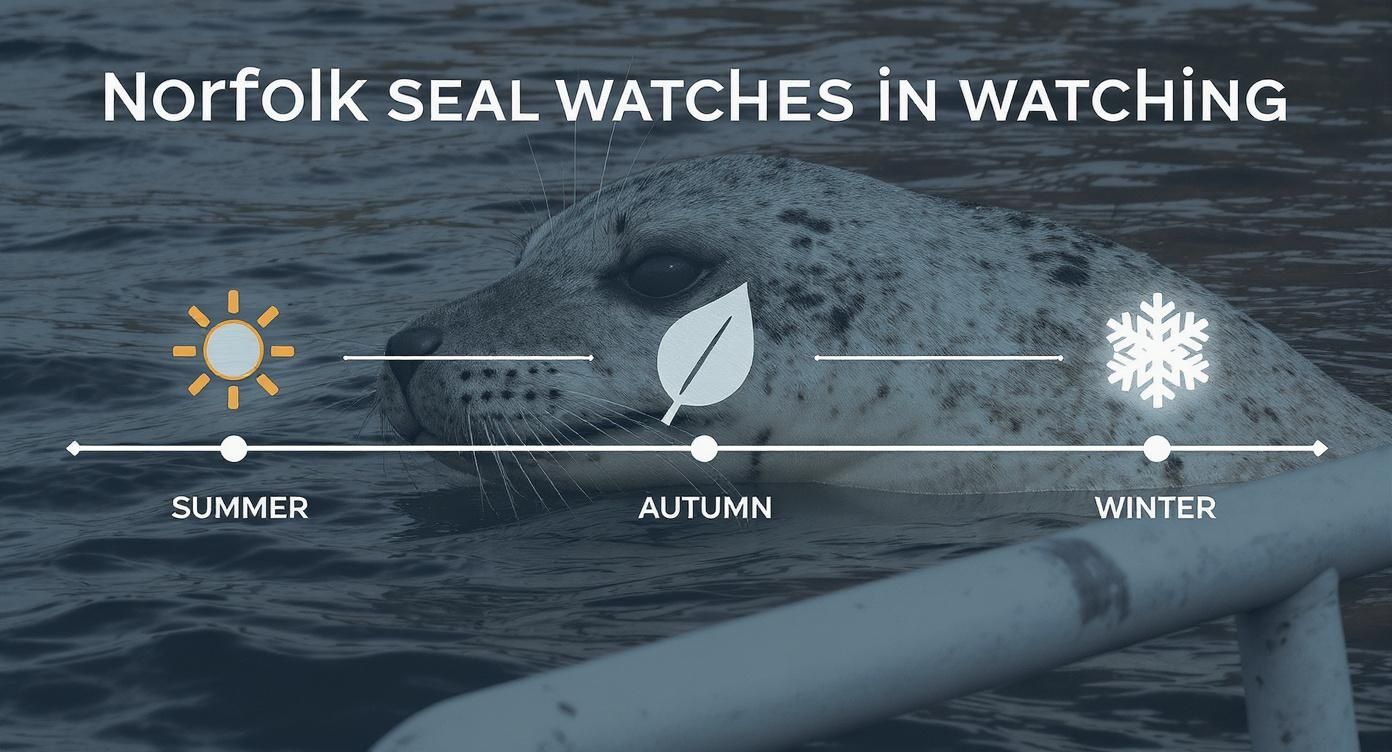
As the infographic shows, while you can spot seals here all year, the winter months are without a doubt the prime time to witness the incredible spectacle of thousands of pups being born. Planning your journey around this peak season is the key to having the most memorable experience.
Responsible Viewing and Visitor Safety
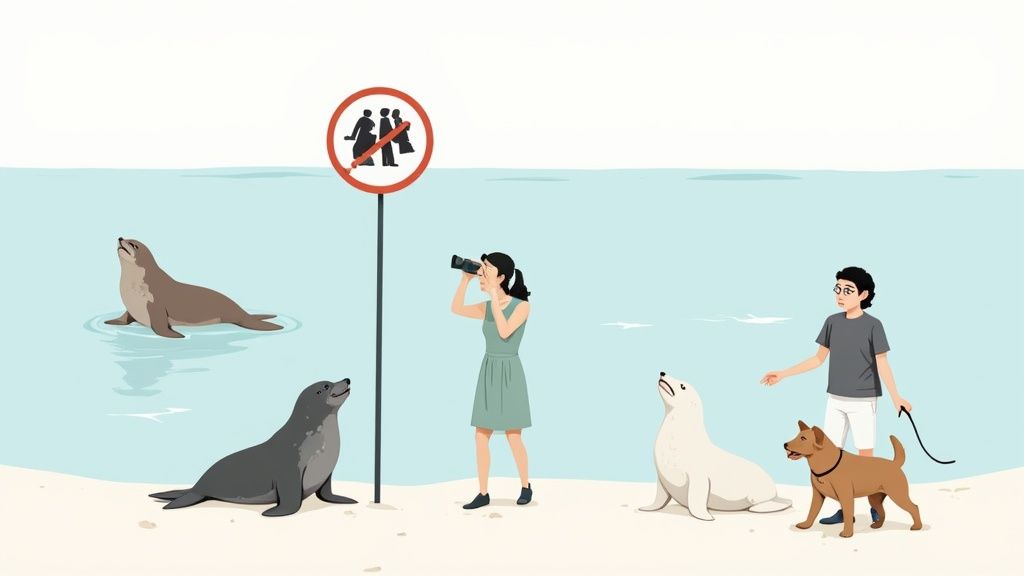
Seeing thousands of seals in Norfolk Horsey is a profound privilege, but it’s one that comes with a real responsibility to protect them. These are wild animals, and our presence can have a massive impact, especially during the incredibly sensitive pupping season. The key to a memorable and harmless visit is simple: treat the colony with the respect it deserves.
The volunteer wardens from the Friends of Horsey Seals do a brilliant job guiding visitors and keeping the seals safe, but every single one of us shares that duty. Sticking to a few simple rules ensures this incredible natural spectacle can continue for years to come. Think of yourself as a quiet observer, just there to appreciate a moment in their world without changing it.
And this is more than just good advice; it's essential for their survival. The Horsey seal population is a cornerstone of the UK's grey seal numbers. With the global population estimated at around 300,000, it's astonishing that over 40 per cent call UK shores home. This makes our coastline a globally important habitat. You can dive deeper into these numbers with the Friends of Horsey Seals official counts.
The Golden Rules of Seal Watching
To ensure a safe and respectful experience for everyone—both humans and seals—please follow these essential guidelines. They’re in place to prevent distress and protect the colony's natural behaviours.
Maintain a Safe Distance: The most important rule of all. Stay at least 10 metres (about 33 feet) away from the seals. This isn't just a random number; it's the space they need to feel secure. Getting any closer can cause serious stress, which is especially dangerous for nursing mothers and their pups.
Keep Dogs on a Lead and Away: During pupping season, dogs are not allowed on the beach at all. Even on the dunes, they must be on a short, non-extendable lead. Seals see dogs as predators, and the mere sight of one can cause a mother to panic and abandon her pup.
Never Block Their Path to the Sea: Seals always need a clear, unobstructed route to the water. It’s their escape route if they feel threatened. Always make sure you are not positioned between a seal and the sea.
Do Not Separate a Mother and Pup: Getting between a mother and her pup is one of the most disruptive things you can do. It can break their bond, which often leads to the pup being abandoned and starving.
Understanding the Impact of Disturbance
It can be incredibly tempting to creep a little closer for that perfect photo, but the consequences can be severe. A seal that feels threatened will go into a state of high alert, raising its head and watching you intently. This burns up vital energy reserves it desperately needs for nursing, resting, or just staying warm.
Crucial Takeaway: A mother seal disturbed by a person or a dog might flee into the sea, leaving her pup vulnerable. If she's scared away repeatedly, she may not return at all. For the pup, that's a death sentence.
Remember, the designated viewing areas along the dunes are there for a very good reason. They offer fantastic, safe views without intruding on the seals' space. Bring a camera with a decent zoom lens or a pair of binoculars to get a closer look without causing any harm.
By being mindful during your visit, you play a direct role in ensuring the Horsey seal colony continues to thrive. Enjoying all the other wonderful things to do in Norfolk responsibly also helps preserve the region's unique natural charm for generations to come.
What to Pack for Your Coastal Adventure
A great day out watching the seals at Horsey is all about being prepared. The weather along the coast can turn on a sixpence, and having the right kit can make all the difference between a fantastic memory and a chilly, uncomfortable slog. If you’re kitted out correctly, you can relax and just soak in the unforgettable wildlife spectacle unfolding before you.
That North Sea wind can be pretty sharp, even when the sun’s out, so layers are your best friend. A waterproof and windproof outer jacket is an absolute must, with a warm fleece or jumper underneath. Decent footwear is also non-negotiable—you’ll be trekking over soft dunes and potentially muddy paths, so a pair of waterproof walking boots will serve you well.
Don't Leave Home Without These
To really get the most out of your day, a few extra items will elevate your experience while ensuring you keep a respectful distance from the seals.
Binoculars: Honestly, this is the most critical piece of gear. A good pair of binoculars lets you get incredible "close-up" views of the seals' natural behaviour without disturbing them in the slightest.
Camera with a Zoom Lens: If you’re a keen photographer, you’ll need a long lens. It’s the only way to get those frame-filling shots of the pups and their mothers from the safety of the designated viewing areas.
A Flask and Some Snacks: While you can find refreshments nearby, there’s nothing quite like a hot drink from a flask on a cold winter’s day. A few snacks will keep your energy levels up, too.
Remember that your visit helps support conservation. The money from parking fees and any donations you make goes straight back into protecting this vital habitat and managing the area for both the seals and visitors.
Local Facilities and a Place to Warm Up
While the beach itself is beautifully wild, you’re not entirely cut off from civilisation. You'll find public toilets at the Horsey Gap car park, which is the perfect place to start your walk.
After a couple of hours in the elements, there's no better feeling than thawing out in a warm pub. The nearby Nelson Head is a classic Norfolk pub, complete with a cosy atmosphere, local ales, and proper hearty food. It’s the perfect spot to sit back, warm up, and chat about the incredible wildlife you’ve just seen.
The conservation work at Horsey is proving incredibly successful. In a fascinating modern twist, advanced drone and AI monitoring has revealed a much larger seal population than ever thought possible, highlighting the effectiveness of these new strategies. You can discover more about how this technology protects Norfolk seals on GOV.UK.
Choosing Your Ideal Norfolk Base
After an unforgettable day watching the seals at Horsey, you’ll want a comfortable, convenient place to unwind. The right base can turn a brilliant day trip into a proper Norfolk holiday, perfectly mixing the raw beauty of the coast with the buzz of a historic city.
Basing yourself in Norwich is a brilliant move. It gives you the best of both worlds. The city is a fantastic hub with superb restaurants, independent shops, and endless cultural spots, all just an easy drive from the coast. You get to soak up that serene, natural spectacle with the seals, then head back to the comfort and energy of city life in the evening.
The Stay Norwich Apartments Advantage
For a truly hassle-free experience, a furnished, self-catering apartment is hard to beat. It gives you a level of freedom and flexibility a standard hotel room can’t offer. You get more space, a proper kitchen to cook your own meals, and that genuine home-from-home feeling.
This is where Stay Norwich Apartments really shines, offering a refreshingly straightforward approach. We are landlords direct with Stay Norwich Apartments, Norfolk, offering furnished accommodation when you need it, for as long as you need it. No hassle, no drama, pay and stay.
A self-catering apartment lets you live on your own schedule. Fancy an early start to catch the low tide at Horsey? No problem. Prefer a lazy morning exploring the Norwich Lanes? You're not tied to hotel breakfast times.
Choosing the right accommodation is the key to a stress-free trip. For a closer look at what's on offer, you might find our guide to the top short-term accommodation in Norwich, Norfolk, really helpful.
Pairing a city base with your coastal adventure yields a wonderfully balanced and memorable Norfolk experience. It’s the perfect way to enjoy everything the region has to offer —from its stunning wildlife to its rich history —while staying in a comfortable, convenient home base.
Common Questions About Horsey Seals
Got a few lingering questions before you finalise your trip? You're not the only one. Here are some straightforward answers to the things people most often ask before heading out to see the seals in Norfolk Horsey.
Can You See Seals at Horsey All Year Round?
Yes, technically you can spot seals at Horsey any time of year, but the experience is completely different depending on when you go. The real magic happens during the pupping season, from late October to early February. That's when the beach is packed with thousands of seals and their fluffy white pups.
If you visit outside of those months, you'll still likely see adult seals resting on the sand, but in much smaller groups. It’s a far quieter visit, but still an incredible sight.
Is It Free to See the Horsey Seals?
Watching the seals themselves won't cost you a penny. There are no entrance fees for the viewing areas along the dunes, which is fantastic.
The only thing you'll need to pay for is parking at one of the official car parks, like Horsey Gap. Think of it less as a fee and more as a contribution. The money goes directly into conserving this incredible wildlife habitat so we can all keep enjoying it for years to come.
It's a small price to pay for such an unforgettable experience, especially when you know your contribution helps protect the colony.
Are the Paths Accessible?
Getting to the best viewing spots involves a bit of a walk over natural terrain, which can be tricky. The paths from the car park lead you over soft dunes, which can be uneven and difficult to navigate.
Because of this, the routes are generally not suitable for most wheelchairs or pushchairs. Be ready for a sandy trek to reach the best vantage points for watching the seals.
Accommodation when you need it for as long as you need
Discover Norwich from a cosy and convenient city centre apartment. Whatever the reason for your visit, I am confident we can offer you a place at an affordable price. Reserve your stay directly with Stay Norwich Apartments for a seamless experience customised to your preferences. Head over to Stay Norwich Apartments to secure your perfect lodging today.


Comments