


Colman's Mustard Norwich: A Visitor's Story

Updated: Sep 5
If you've just stepped out of a central Norwich apartment with a map in one hand and a mustard tin in the other, you're probably asking the same thing many visitors ask now, what's left of Colman's in Norwich? The honest answer is that the story no longer sits in one neat place. It's spread across the riverside at Carrow, shop shelves in the city centre, and the working production story at Easton, so the best visit is the one that treats Colman's mustard Norwich as a trail, not a vanished attraction.
Table of Contents
Stepping Out in Norwich Chasing a Mustard Story - What to look for first
How Colman's Became Norwich's Most Famous Brand - Why the dates matter on the ground
What Remains of Colman's in Norwich Today - The surviving pieces you can still see
Where to Find Colman's Around Norwich - What each stop gives you - The real trade-off
Why a Stay Norwich Apartment Suits a Mustard Trip - The practical benefits are real
A One-Day Mustard Itinerary From Your Apartment Door - A route that actually works
Norwich's Mustard Future and Your Visit Checklist - A short checklist before you go
Colman's Mustard Norwich: A Visitor's Story: Stepping Out in Norwich Chasing a Mustard Story
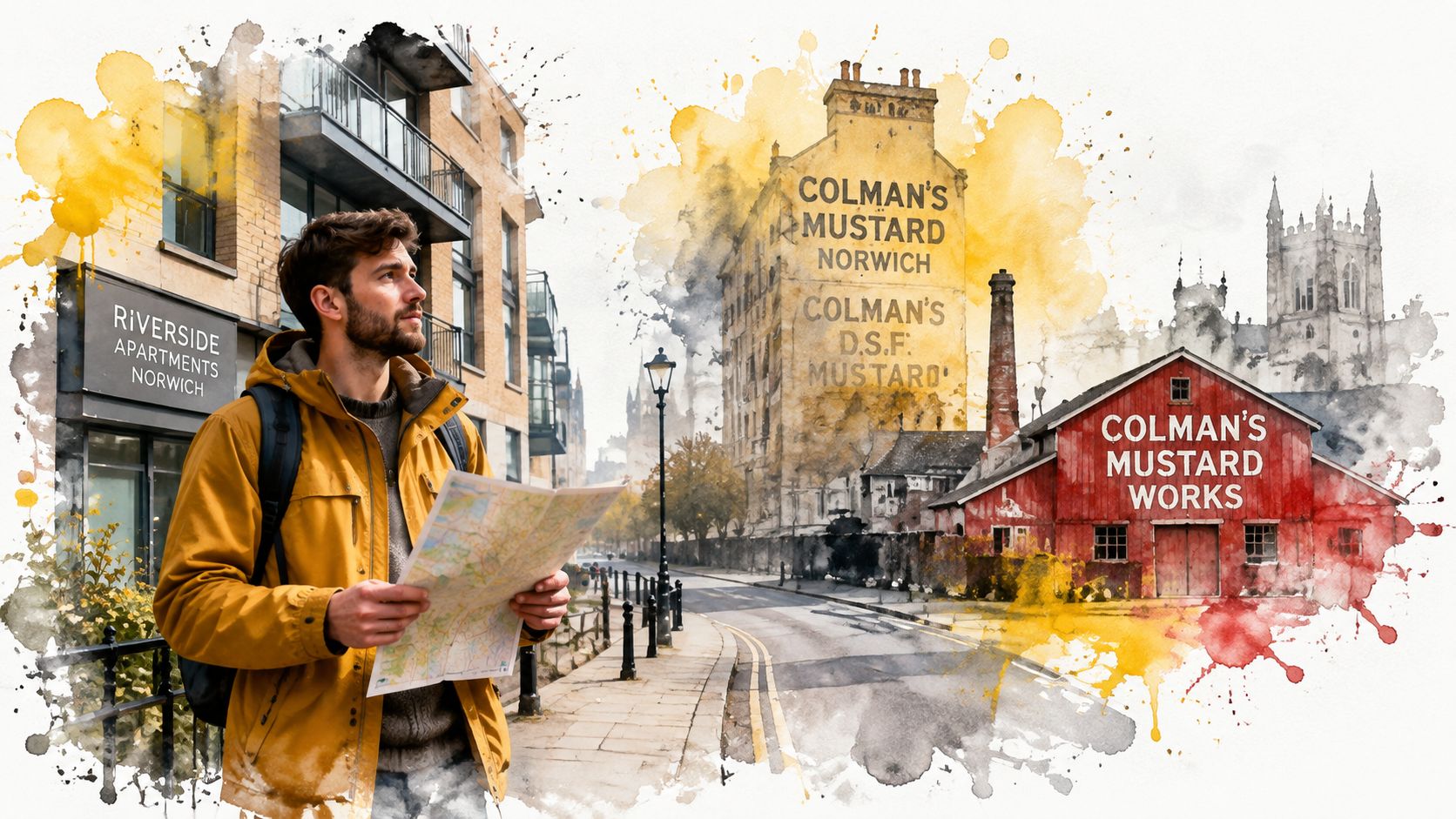
A guest leaves a Stay Norwich apartment expecting a factory gate or a tidy museum and finds something more scattered, but more interesting. The old Colman's world is still visible if you know how to read the city, especially down by the river where the industrial once stretched out at Carrow. For a practical city break, that means starting with what survives, then folding in what is still sold, still made, and still remembered.
What to look for first
Begin at Carrow Works, because that is where the brand's Norwich identity still feels physical. The site sits beside the River Yare, and even with the factory long gone, the surviving structures and river path still anchor the story in place. Then move into the centre, where yellow tins, sauces and mustard products keep the name visible in retail rather than production.
A sensible day also includes a visit to Condimentum at Easton, because that is where the living manufacturing story now sits. Colman's own history page notes the old seed-dryer building and its original wooden sieving equipment, which helps explain why the Norwich story is as much about process as branding. If you want a broader Norwich day out around this kind of heritage-led wandering, the city guide on unmissable things to do in Norwich for 2026 pairs neatly with a mustard trail.
Practical rule: treat Colman's as a city route, not a single attraction. That saves disappointment and gives the day a better rhythm.
A quick video stop helps place the route before you walk it.
By the end of the day, the attraction is not nostalgia for its own sake. It's the way Norwich has turned one condiment into a readable urban story, with industry, retail and active food production all still sitting in plain sight if you know where to look.
How Colman's Became Norwich's Most Famous Brand
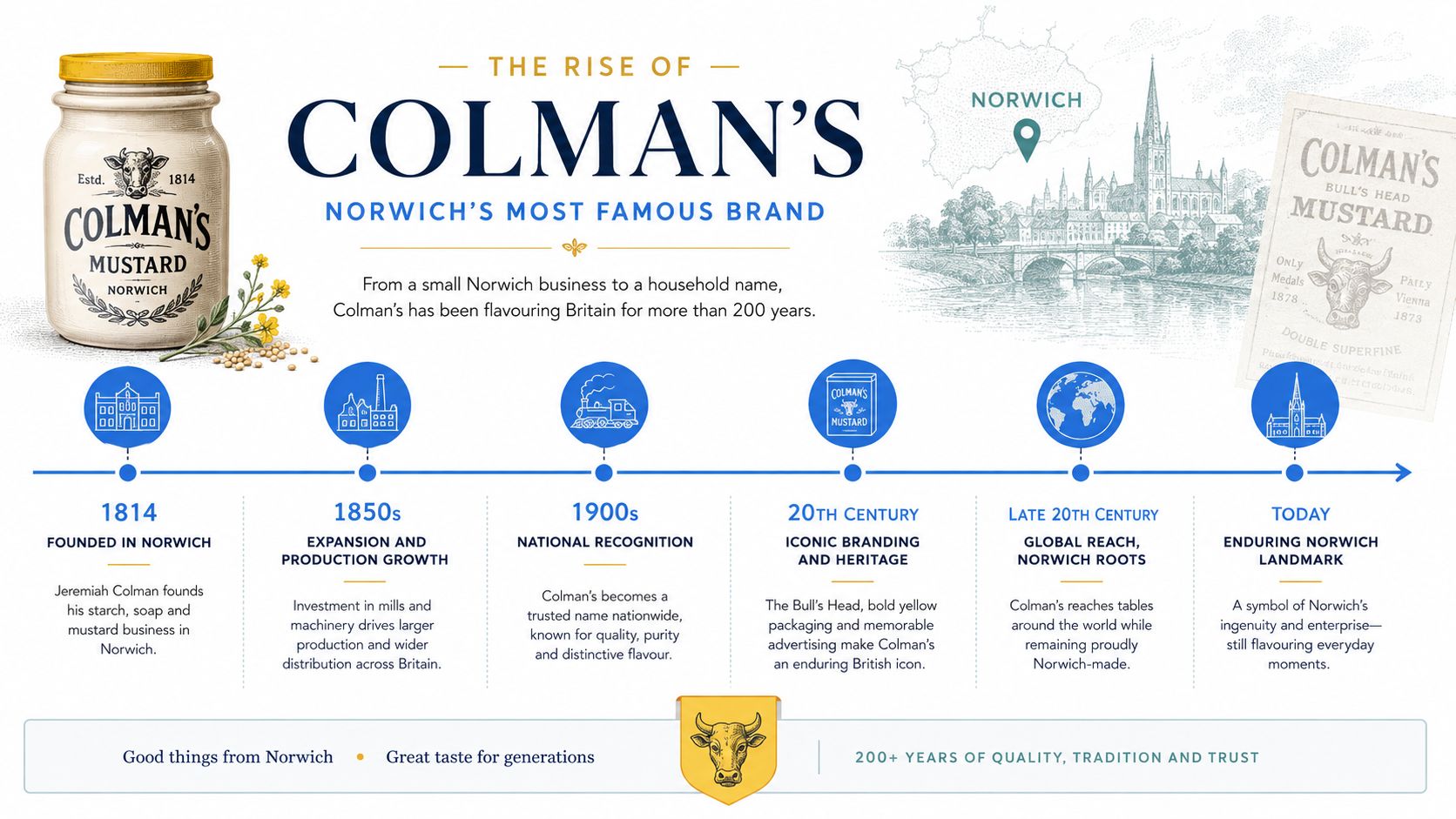
Colman's started as a local milling business and grew by moving with its own success. Jeremiah Colman began in 1814 at Stoke Holy Cross, just south of Norwich, before production shifted to Carrow in 1858, where the river and rail links suited an ingredient business that needed raw seed in and finished product out. That move matters because it turned a small specialist mill into part of Norwich's industrial identity, not just a family trade.
Why the dates matter on the ground
The brand's later recognition followed the same pattern. It received a Royal Warrant in 1866, and by 1903 the business had expanded through the acquisition of Keen Robinson & Co., a step that helped push Colman's from regional name to national reputation. Historic England's account, as reported by the BBC, says J and J Colman Ltd operated from Carrow Works for 160 years, and that by 1926 the site had grown to around 50 acres. Those figures explain why the Carrow area still feels like a place where a company once occupied an entire industrial world, not just a single factory building. (BBC report on Colman's Norwich history)
For visitors, the useful way to read this history is spatial. The original Norwich centre story, the Carrow industrial site and the later brand empire are all part of the same journey, even though they no longer line up neatly on one street. That's why a short walk from the old inner-city area towards the river gives a better sense of the brand than any single display case can.
The city-centre story also ties back into modern Norwich as a place that still mixes heritage and new uses. A useful local read on that shift sits in Norwich evolving into a vibrant cosmopolitan hub, because Colman's is part of that broader change, old industry now living beside shops, apartments and riverside leisure.
Colman's didn't become famous because Norwich had a neat tourist plan. It became famous because the business kept solving practical problems, milling, packing, moving and marketing until the yellow tin became a national shorthand.
If you stand in the city and picture seed coming in, flour going out and trains carrying the finished product, the dates stop feeling abstract. They become the reason Norwich still talks about Colman's at all.
How Norwich Made Its Mustard
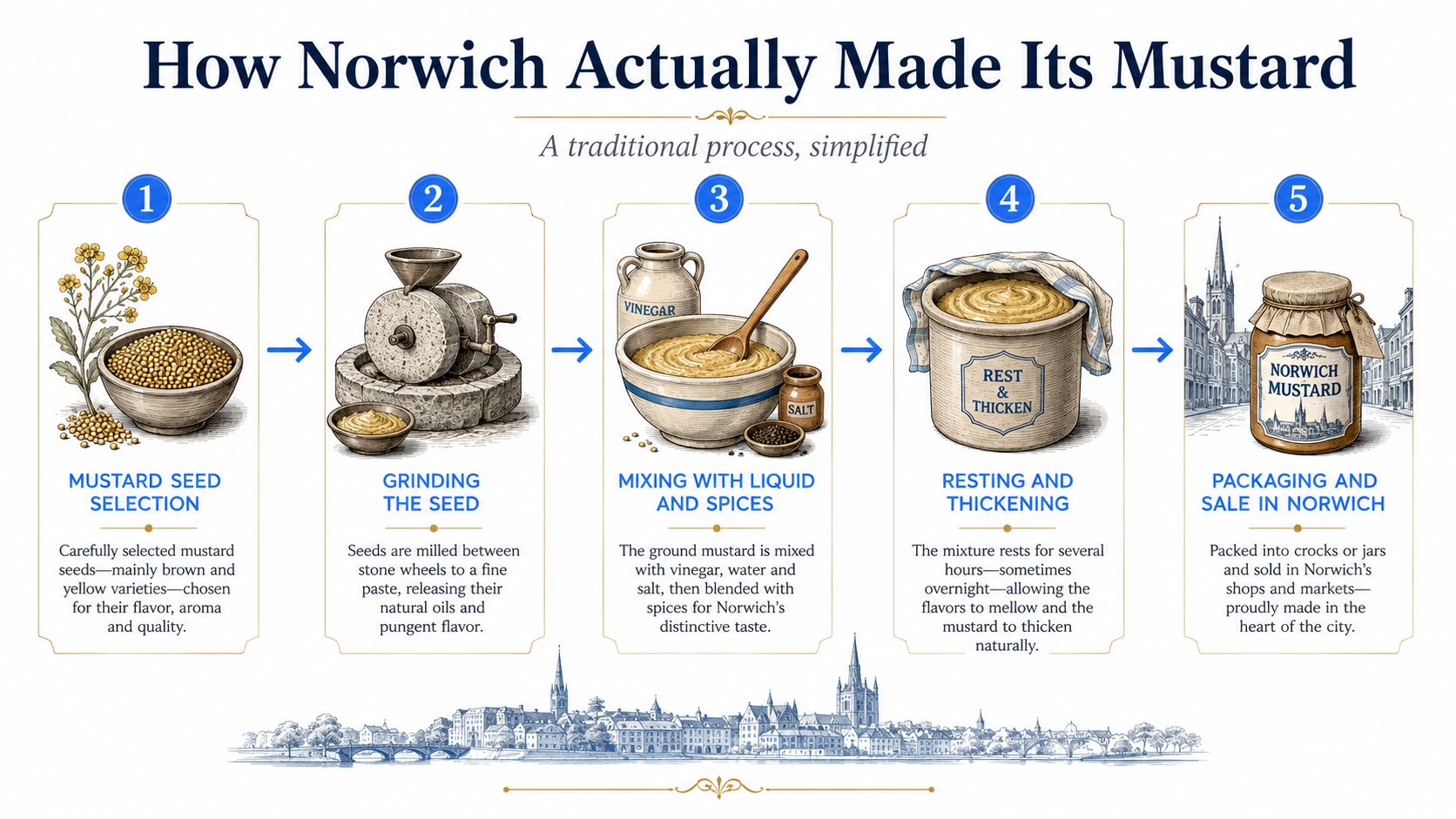
The Colman's name sat on bright tins, but the product under it was a tightly controlled flour. At Carrow Works, the process depended on specialised seed-drying and sieving equipment, and Colman's own history page says the 1890 seed-dryer building still used original wooden sieving equipment from the 1950s. That points to what mattered most, consistency of grind, texture and separation. It was a manufacturing job first. (Colman's history page)
Why the texture mattered
English mustard uses a different standard of quality from the soft, spoonable sauces many people reach for now. The seed had to be cleaned, dried, ground and sifted until the flour reached the fine, even state that gave Colman's its recognisable character. After that, the site handled blending, filling and packing, so the route from raw seed to branded tin stayed under one industrial roof.
That process explains why Norwich mustard was more than a local label. It was a technical standard. The equipment kept particle size under control, the sieves removed the coarse bits, and the mechanical stages gave the product the clean finish people expected from the yellow tin. If you've only thought of mustard as a condiment, the Carrow story shows it as food engineering.
The practical way to connect that history to a visit is to look for the visual echoes. Historic packaging shows how the brand sold itself. A retail shelf shows what survives commercially. A seed-processing site like Condimentum shows how much of the old production mindset still matters. That mix says more than chasing a vanished factory tour.
Useful visitor cue: if a display or shop focuses only on logo nostalgia, it misses the point. The core story is how Norwich turned agricultural seed into a controlled flour product that could travel.
For local browsing that fits the food story, the Norwich market guide works well, because the market is where practical shopping, ingredients and everyday city life still overlap.
The mustard trail makes more sense once you understand the machinery behind it. Norwich did not just brand a condiment, it built a process around it.
What Remains of Colman's in Norwich Today
There's no factory tour to book in 2026, and there isn't a dedicated Colman's museum in Norwich either. That is the part some search results still blur, which is why so many visitors arrive expecting a preserved attraction and end up hunting around for something that no longer exists in the old format. The honest answer is that Colman's heritage survives in fragments, not as a single public site.
The surviving pieces you can still see
The old Carrow site has gone through major change since production shifted away from the historic works. The factory ended mustard production in 2020 after 160 years, and the area has since been partly cleared and redeveloped for housing. What remains is worth seeing, but only if you understand it as a heritage footprint rather than a preserved industrial campus.
Look for the Carrow Works chimney, the restored Carrow Bridge gates with the Colman's name, and the riverside edge of the former site. Those are markers. They are the details that still connect the brand to Norwich's south bank. Street names and housing layout around the Carrow estate also keep the old industrial geography alive, even if the buildings themselves are no longer operating.
A lot of online chatter still treats “mustard shop” as if it means a factory experience. It doesn't. If you're planning a short break and want the practical version of the city, it helps to compare that expectation with a broader planning a UK getaway search mindset, then focus on what exists on the ground rather than what once did.
The key distinction is simple. Heritage remains, production moved, retail survived elsewhere. Once you separate those three things, the city makes much more sense.
If you go in expecting a self-contained museum, you'll leave underwhelmed. If you go in expecting a walkable industrial trace, the area repays the detour.
Where to Find Colman's Around Norwich
Three different Colman's touchpoints still matter to a visitor, and they do very different jobs. One is about place, one is about shopping, and one is about living production. Mixing them up leads to disappointment. Separating them gives you a better day.
Location | What you actually see or buy | Access and booking |
|---|---|---|
Carrow riverside area | Chimney, Carrow Bridge gates, riverside footprint and estate street names | Free, walkable from the city centre, no booking |
City-centre retail stops | Colman's mustard, sauces, tins and gifts in selected shops and food halls | Open with normal shop hours, no special booking |
Condimentum at Easton | Working mustard seed processing, a live food-manufacturing story | Booking may be needed, especially for any visitor or tour-style visit |
What each stop gives you
At Carrow, you are looking at the old geography of the brand. It's the best stop for atmosphere, but it won't satisfy anyone wanting a guided exhibition. The river path, the surviving gates and the chimney together tell the story without needing a ticket.
In the city centre, the useful stops are the places that still stock the products people buy. Roys of Wroxham's Norwich store is a dependable retail stop, and the independent food shops in the Lanes can be better than souvenir-heavy outlets if you want to take home something you'll use. Jarrold and the food halls in Castle Quarter and Chantry Place are also worth checking because they sit in the ordinary shopping rhythm of the city, not in a themed attraction bubble. Norwich Market is useful too, though more for cooks looking for English mustard powder than for visitors chasing branded gifts.
Condimentum at Easton is the live production link. It took on Colman's milling contract after the factory closure, so it's the place that keeps the practical mustard story moving. If you are interested in the making rather than just the label, that is the one stop that still feels operational.
The real trade-off
Carrow gives atmosphere. Retail gives convenience. Easton gives the manufacturing reality. A good Norwich visit uses all three in the right order, instead of expecting one place to do every job.
Why a Stay Norwich Apartment Suits a Mustard Trip
Book a central apartment and the day starts to make sense. Carrow sits south of the river, the useful retail stops are clustered around the centre, and Easton pulls you out towards the edge of Norwich. If you stay within walking distance of the core, you spend less time on transport and more time moving between the places that still matter to the Colman's story.
The practical benefits are real
A kitchen earns its keep on this sort of trip. You can bring Colman's back from the city and use it, in a sandwich, with a simple supper, or at breakfast the next morning. Laundry is useful too if the riverside walk leaves you damp. Flexible check-in helps if you come back late from Easton or stay out longer in the centre.
It also makes shopping easier. You can drop tins and bags at the apartment between stops instead of carrying them through the Lanes all afternoon. That sounds minor until you've done it with a few purchases and a wet coat.
Local rule of thumb: if your day includes both the river walk and the centre shops, stay central. It keeps the route shorter and the day less tiring.
If you want a self-catering base with local knowledge, your guide to serviced apartments in Norwich explains why that setup works for short city breaks and longer working stays alike. On a mustard-themed visit, it also means you can ask practical questions when you arrive, like which deli is currently best for Colman's stock or whether Easton is worth a booking.
That suits more than leisure travellers. Contractors, relocating professionals and families all need the same basic thing, a place that lets them move through Norwich without losing time to logistics. Colman's just gives the stay a stronger local thread.
A One-Day Mustard Itinerary From Your Apartment Door
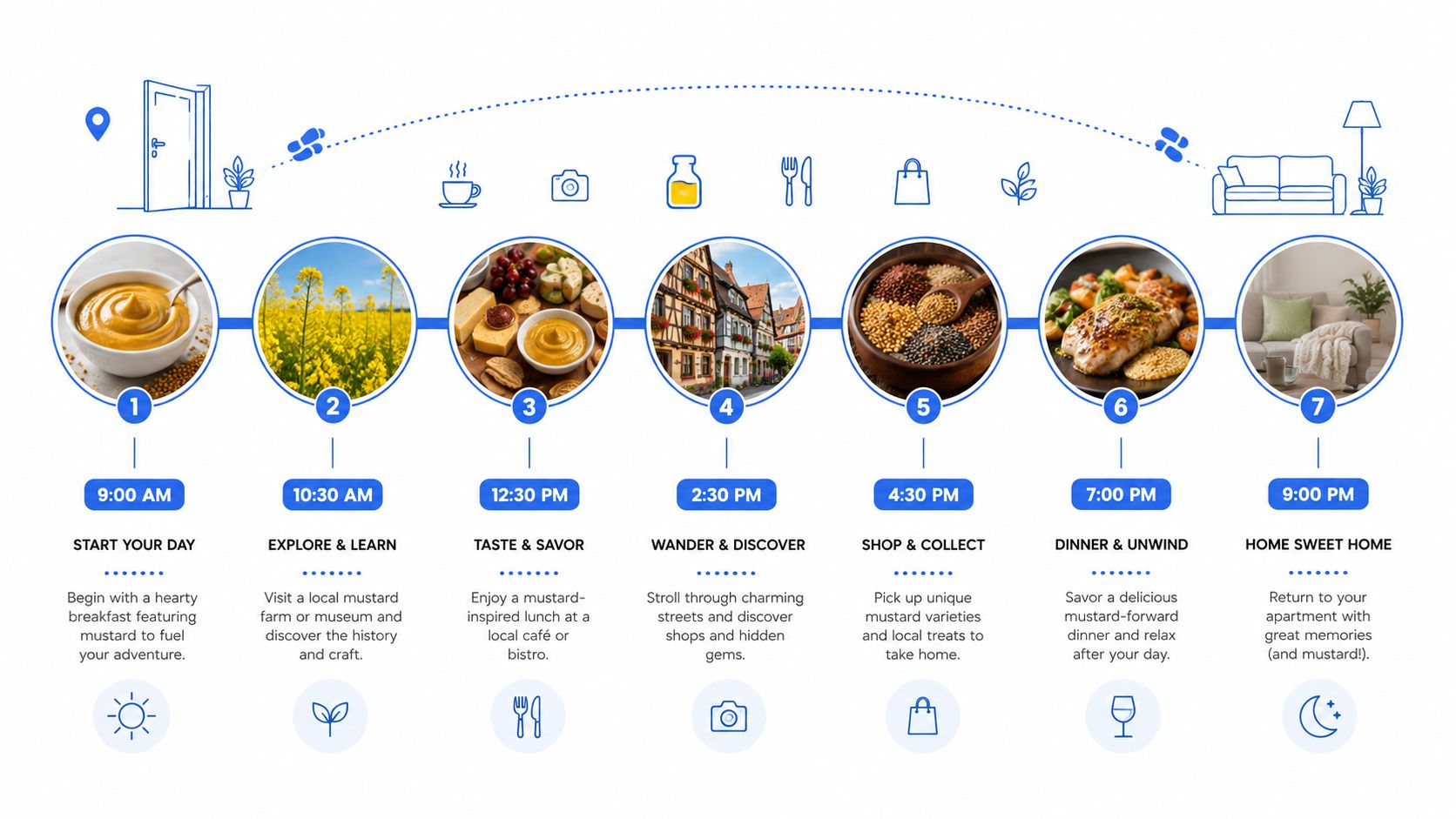
Start the day with breakfast near the centre, somewhere that puts Colman's on the table without making a fuss of it. That keeps the tone right. This is a working Norwich product, not a theme park prop.
A route that actually works
9.00 am, breakfast in the city centre. Choose a deli or café that uses Colman's English mustard with eggs, bacon or a breakfast sandwich. It's the easiest way to begin because it ties the product to everyday Norwich rather than souvenir buying.
10.00 am, London Street and the Royal Arcade area. Stop at the Mustard Shop for a branded tin, then compare that with the larger range at Jarrold. If the weather turns wet, this is the best part of the day to linger indoors and browse without rushing.
11.30 am, Norwich Market. Pick up English mustard powder if you cook for yourself. This is a better stop for ingredients than for gifts, so keep expectations practical.
1.00 pm, lunch in the centre. Go somewhere that still keeps Colman's on the table or in the kitchen. A simple pub lunch often works better than a destination restaurant for this part of the day.
2.30 pm, walk south towards Riverside Road. Give yourself around 25 minutes to reach the Carrow area on foot. That walk is the best way to understand the old industrial scale without needing access to the former factory.
3.00 pm, the Carrow riverfront. Look for the chimney, the bridge gates and the painted brick edges that mark the former site. Don't try to force a visit that isn't there.
7.00 pm, dinner back in the centre. Finish at a gastropub or restaurant that stocks Colman's English or Norwich mustard, then head straight back to the apartment instead of trying to squeeze in another detour.
Rainy-day substitutions are simple. Swap the riverside walk for more time in the shops, or use the afternoon for a longer food-led browse through the centre before dinner. The day still works because the story is spread across short, manageable distances rather than one locked visitor site.
Norwich's Mustard Future and Your Visit Checklist
Norwich is still part of the condiment map because the manufacturing story never disappeared completely. Condimentum at Easton keeps mustard processing in the area, and the wider Norwich food-science ecosystem around Norwich Research Park gives the city a continuing agri-food identity rather than a purely nostalgic one. That matters because Colman's is no longer just a heritage brand, it's part of a working regional food chain.
A short checklist before you go
Confirm what's open in 2026. Don't assume a factory tour or museum still exists. Check the current Carrow access and focus on the surviving structures instead.
Book the tasting or visit you want. If you're heading to Easton, treat it as a working production stop, not a casual drop-in.
Pack a refillable tin or small bag. You'll probably buy something, and it's easier to carry when you've planned for it.
Allow half a day for the riverside walk. That gives you enough time to see Carrow properly without turning the trip into a rush.
Ask for a local recommendation on arrival. The best deli, the best pub and the best shopping stop can shift, and local advice beats outdated guides.
Temporary stays in England are under pressure, with 131,140 households living in temporary accommodation as of 31 March 2025, a 11.8% rise on the year before, which is one reason flexible short-term bases matter in cities like Norwich. Tourism also keeps the city busy, with Norwich and Norfolk continuing to draw visitors and spend. That combination makes central, self-catering accommodation a useful practical fit for guests who want to explore without losing time to logistics. (Homestead Norfolk update on temporary accommodation, Visit Norfolk tourism figures)
The mustard trail works best when you treat it as a thread through Norwich, not the whole cloth. It gives you a good walk, a bit of industrial history, a proper food stop and a clearer sense of how the city still works.
If you want a central, flexible base for a Norwich break shaped around Colman's, Stay Norwich Apartments makes that easy. You get a practical city-centre stay that suits riverside walks, shopping stops and a working visit to Easton without the stress of fitting everything around transport. Visit Stay Norwich Apartments and book a base that lets you do Norwich properly.
Comments