


Studio Flats Rent Norwich: A Local Guide

You've arrived in Norwich with a laptop bag, two suitcases, and a deadline. Maybe you're here for a site job, a university placement, a hospital rotation, or a house move that's dragged on longer than planned. The question isn't abstract. It's immediate. Do you grab a serviced studio for a couple of weeks and stay flexible, or do you lock into a standard tenancy and hope the paperwork, deposit, and bills don't become a nuisance?
That's where many waste money. They focus on headline rent and ignore how long they're really staying, how quickly they need to move in, and whether they can afford to tie up cash in a deposit while also covering travel, food, and setup costs. In Norwich, that matters because the city has a genuine split between short-stay convenience and traditional rental value.
Landlords direct with Stay Norwich Apartments, Norfolk, furnished accommodation when you need it, for as long as you need it. No hassle, no drama, pay and stay.
Studio Flats Rent Norwich: A Local Guide Table of Contents
Landing in Norwich and Finding the Right Studio - Start with your real length of stay - What usually decides the right format - What to get clear before you book
Norwich Studio Rent Prices and the Wider Market - Norwich Studio Rent Benchmarks by Area - Where affordability gets tight
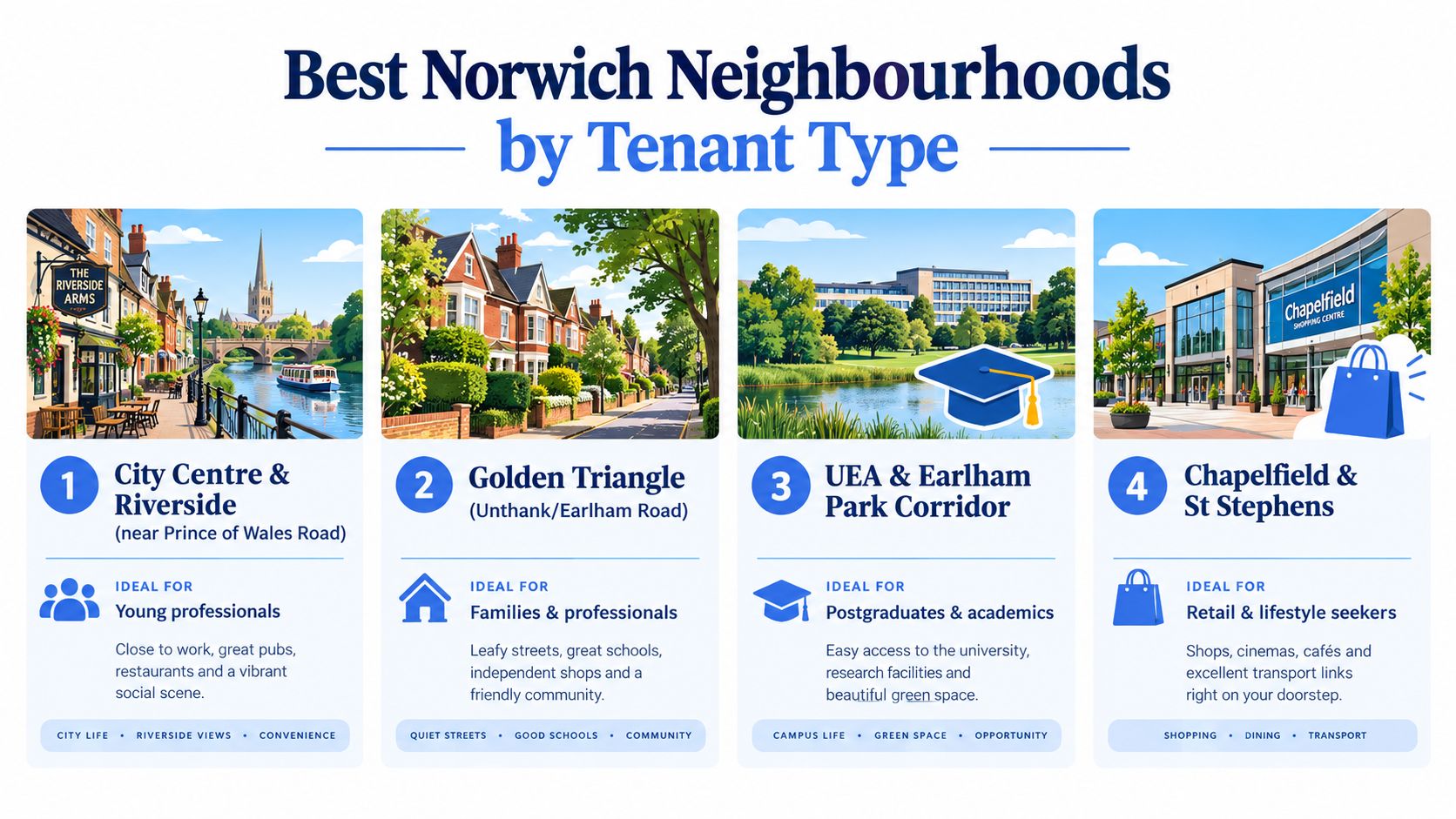
Best Norwich Neighbourhoods by Tenant Type - City centre and Riverside - Golden Triangle - UEA and Earlham corridor - Chapelfield and St Stephens - Outer parishes
Serviced Apartments Versus Traditional Studio Tenancies - The three formats that matter - Serviced vs Traditional Studio Tenancy in Norwich - When serviced wins - When ASTs win
Booking, Viewing and Check-In the Norwich Way - Shortlist like you mean it - Virtual viewing first if you're outside Norfolk - Ask better questions before you commit - Check-in without getting caught out
Packing, Amenities and Weekly Budget Planning - What serviced studios usually cover - What to bring yourself - Budget weekly, not just monthly - The small admin jobs that stop future hassle
Smart Booking Tips and FAQs for Staying in Norwich - Why direct tends to work better - The mistakes that cost renters money - FAQs renters actually ask - My blunt recommendation
Landing in Norwich and Finding the Right Studio
A lot of renters make the same mistake on day one. They search “studio flats rent Norwich”, click the cheapest listing they can find, and treat every studio as if it solves the same problem. It doesn't. A contractor staying until the next site instruction needs something very different from a postgrad settling in for a full term.
Start with your real length of stay
If you're in Norwich for a week, a month, or an open-ended work run, flexibility matters more than shaving a bit off the monthly figure. If you're staying for six months or longer, a standard tenancy usually gives you more control and better value, provided you can pass referencing and handle the setup.
Ask yourself three blunt questions:
How long am I likely to stay? Don't answer with the optimistic version. Answer with the realistic one.
Can I tie money up in a deposit right now? If cash flow is tight, a “cheaper” tenancy can become expensive fast.
What matters more, commute or postcode prestige? Commute should come first. Norwich is easier when you can walk, cycle, or take a simple bus route to where you need to be.
What usually decides the right format
For short stays, the practical win is speed. You can move in with fewer moving parts, fewer accounts to set up, and less messing about with furniture, broadband, or kitchen basics. For longer stays, control matters more. You'll usually want your own utility accounts, a more stable base, and the feeling that you've settled rather than camped.
Practical rule: If your end date is unclear, don't trap yourself in a rigid setup just because someone told you “monthly rent is always cheaper”.
Studio Flats Rent Norwich: A Local Guide: Some renters also underestimate location. A studio near your work site, campus, or hospital can save time, taxi fares, parking hassle, and a lot of daily irritation. Norwich isn't London, but a badly chosen location still wears thin when you repeat the same awkward journey every day.
What to get clear before you book
Keep your first shortlist tight and practical:
Budget first: Include rent, bills, transport, and any upfront payment.
Move-in speed: Can you get keys quickly, or are you waiting on paperwork?
Furniture level: Fully furnished, partly furnished, or basically empty.
Noise tolerance: Riverside and central areas suit some people, annoy others.
Stay purpose: Work trip, relocation, student term, hospital placement, or stopgap housing.
Plenty of standard rental advice is written for people with stable dates, perfect references, and time to compare twenty listings. Real life in Norwich usually isn't that tidy.
You want the studio type that fits your stay, your cash flow, and your daily routine. Get that right, and you'll know what to budget and what to avoid.
Norwich Studio Rent Prices and the Wider Market
Turn up in Norwich on a Monday with a work start on Tuesday, and the first bad decision is usually the same. People compare a serviced studio with a standard tenancy as if the monthly rent is the whole story. It isn't. In Norwich, the choice is convenience now versus flexibility later, and the price gap can punish you if you pick the wrong setup.
Start with the wider market. The Office for National Statistics put average monthly private rent in Norwich at £1,142 in August 2026, with one-bedroom homes averaging £778 and flats and maisonettes averaging £881, as shown in Norwich private rent data. That gives you a sensible baseline. A studio at around the lower end of one-bed pricing can be fair value. A studio priced close to the citywide average needs stronger reasons, such as bills included, short stay flexibility, or prime location.
Local listing trackers broadly line up with that picture. One local snapshot put Norwich studio asking rents around £800 a month, while the citywide median asking rent sat higher, according to Norwich studio supply and market tightness figures. That is the bracket I'd treat as the practical middle of the market for traditional studio lets, not a guaranteed deal. Go much below it and quality, location, or hidden costs usually explain why.
Studios are also a small part of Norwich stock. Good ones go quickly. Contractors arriving mid-project, students sorting late accommodation, and relocators needing a stopgap all end up chasing the same compact, furnished units.
Norwich Studio Rent Benchmarks by Area
Area | Avg Studio Rent (PCM) | Typical LHA Cap | Supply Note |
|---|---|---|---|
City centre | around city studio market levels | shared rate often falls short | tight for furnished stock |
Golden Triangle | often above entry-level studio pricing | shared rate usually well below asking rents | popular, limited turnover |
UEA-adjacent | mixed, depends on term cycle and furnishing | shared rate still restrictive | student pressure affects availability |
Outer parishes | often the value end of the studio market | still may exceed shared rate | less central, broader search helps |
For a broader breakdown of local price patterns, this guide to renting in Norwich is a useful reference point.
Where affordability gets tight
Local Housing Allowance is where plenty of studio searches fall apart. Norwich City Council's 2026 to 2027 rates put the shared accommodation rate at £90.56 a week, about £392 a month, and the one-bedroom self-contained rate at £135.78 a week, about £588 a month, as set out in Norwich studio and LHA context on Zoopla. If the studio you want is advertised at £650 to £800 a month, there is an obvious gap.
That gap matters most for younger single renters, benefit-backed movers, and anyone trying to keep upfront cash low. Standard advice often says “just rent a studio instead of a one-bed.” In Norwich, that only works if your income covers the shortfall or the deal includes enough extras to justify the stretch.
The same trade-off shows up with furnished and serviced stock. Norwich furnished apartment data showed a median monthly price of £1,238 in February and March 2025, according to Norwich furnished apartment pricing. That figure is not a studio average, but it makes the point clearly. Move-in-ready convenience costs more, and short-term renters pay that premium because speed, bills, and flexibility are bundled in.
Here's the blunt version. If you are in Norwich for a short contract, a placement, or the first few weeks of a relocation, paying more for a serviced setup can save money overall because you avoid deposits, utility setup, broadband delays, and being stuck in the wrong area. If you expect to stay longer and can pass referencing, a traditional studio tenancy usually wins on monthly cost and control.
Judge the rent against the stay length, not just the headline number. That is how you avoid paying serviced prices for a six-month stay, or signing a tenancy when you really needed a three-week base.
Best Norwich Neighbourhoods by Tenant Type
Pick the wrong area and even a decent studio feels like a bad deal. Pick the right area and a small place works far better than the floorplan suggests. In Norwich, the smart move is to match neighbourhood to your daily routine rather than chasing a fashionable postcode.
City centre and Riverside
City centre studios and Riverside locations suit renters who want to walk everywhere. If you're working centrally, coming in by train, or only in Norwich for a short period, this is the easiest part of the city to use without much setup. You've got quick access to shops, food, and the station side of town.
The trade-off is obvious. Noise, pricier parking, and less breathing room. If you need calm evenings, easy van access, or regular equipment loading, central living gets old quickly.
Golden Triangle
The Golden Triangle works well for visiting academics, hospital-linked professionals, and relocators who want a neighbourhood that feels lived in. Around Unthank Road and Earlham Road, you get period streets, independent cafés, and a setting that feels more residential without being cut off.
It's a strong middle-ground choice for people who need a city base but don't want city-centre bustle outside the front door every night. If your days are busy and you value a quiet return, this area often lands well.
For a broader local overview, these Norfolk area recommendations help when you're weighing location against daily convenience.
UEA and Earlham corridor
If you're tied to UEA, Earlham is the practical answer. Students, postgrads, short-stay academic visitors, and anyone who doesn't want a daily slog across the city usually do best here. You won't get the same city buzz, but that's not the point. The point is getting to campus or nearby work without building your day around the trip.
This area also suits renters who want a more structured routine. It's less about nightlife and more about function.
Chapelfield and St Stephens
Chapelfield and St Stephens are useful for retail workers, council contractors, and renters who need central convenience without sitting right in the nightlife-heavy pockets. You're close to buses, shops, and routine errands. That makes a difference when you're working shifts or sorting a move around other pressures.
Outer parishes
Costessey, Hethersett, and Cringleford suit a different renter. If you've got a car, want easier parking, or need something that feels less boxed in, outer areas can be the better call. They often work well for longer contractor rotations, couples, and anyone who wants a bit more calm.
What they don't suit is the person who assumes they'll “pop into town” constantly without thinking through transport. If your life is centred on the station, nightlife, or campus, don't choose an outer area just because the listing photos look roomy.
Match commute first, budget second, lifestyle third. Most bad Norwich rentals happen when people reverse that order.
A studio doesn't have to be perfect. It has to fit the way you'll live for the time you're here.
Serviced Apartments Versus Traditional Studio Tenancies
You land in Norwich on a Monday, start work on Tuesday, and by Friday the project dates have shifted. That is where renters waste money. They sign the wrong type of studio because they focus on the headline monthly rent and ignore how long they are really staying, who is paying, and how fixed their dates are.
In Norwich, the choice is usually between serviced convenience and tenancy flexibility. A serviced apartment costs more upfront, but it cuts out deposits, utility setup, furniture gaps, and the risk of being tied into the wrong term. A traditional studio tenancy usually wins on monthly cost if you are settled and staying long enough to justify the admin.
The three formats that matter
You have three realistic options:
Serviced apartment
Traditional AST studio
Short-let or holiday-let style stay
Each one suits a different kind of renter. Treating them as interchangeable is a mistake.
Serviced vs Traditional Studio Tenancy in Norwich
Factor | Serviced Apartment | Traditional AST Studio | Short-Let / Holiday Let |
|---|---|---|---|
Stay style | short to medium stays | medium to long stays | short stays with some flexibility |
Bills | usually bundled | usually in tenant's name or billed separately | often bundled |
Furnishing | ready to use | varies by listing | furnished |
Deposit approach | often pre-payment structure | tenancy deposit plus advance rent | varies by operator |
Cleaning | may be included on a schedule | tenant handles it | may include turnaround cleans |
Flexibility | strong for uncertain dates | lower once committed | stronger than AST, varies by terms |
Best for | contractors, relocators, visitors | settled renters, longer student stays | holiday, temporary gap stays |
When serviced wins
Serviced works best when your stay has an end point, but the exact date may move. That covers contractors on phased jobs, relocators waiting on a house purchase, visiting lecturers, insurance stays, and employers booking for staff. You get furniture, Wi-Fi, kitchen kit, bedding, and a faster check-in. That matters more than people admit.
It also matters if your budget is being tested against real Norwich numbers. A standard studio on an AST may look cheaper per month, but once you add deposit, advance rent, broadband, energy, council tax if applicable, and the cost of buying the missing basics, the saving can disappear for shorter stays. For some renters relying on Local Housing Allowance limits, serviced stock will sit above what housing support comfortably covers. That is the blunt reality. If you need LHA-level affordability, an AST or room let is usually the more realistic target.
Short-stay furnished accommodation also sits in a different legal and tax setup from a normal tenancy. The government rules for self-catering holiday homes in England show that clearly. You do not need the tax detail to choose a studio, but you do need to understand the main point. Temporary accommodation is built around flexibility and ready-to-use living, not the conventions of a normal rented home.
When ASTs win
A traditional studio tenancy is the better deal when you are staying long enough to spread the setup costs over several months and you want proper control over the place. That usually means settled students, Norwich relocators with a clear timeline, and workers on fixed contracts rather than rolling site schedules.
I would not use a lazy one-month rule. Some renters stay eight weeks and still do better in serviced accommodation because their dates are unstable. Others stay six months and should absolutely take an AST because they want lower ongoing cost and are happy to manage bills. The right question is not "how long am I staying?" on its own. Ask "how fixed is my stay, and who carries the risk if plans change?"
Neighbourhood fit matters here too. A contractor working near the hospital or research park may save time and transport cost by taking a furnished short stay close to work. A student with a full term ahead usually benefits more from the lower monthly cost of a standard tenancy in a practical area. A relocator waiting to choose a long-term neighbourhood often does best by paying more for a serviced base first, then switching once they know the city properly.
If you want a more detailed comparison of furnished short-stay options, this Norwich guide to self-catering cottages versus serviced apartments is a useful reference.
For furnished stays, check the kitchen as hard as the bed and bathroom. A tiny fridge, weak storage, or no proper prep space will push you into takeaway spending within days. This accommodation mini bar fridge advice is worth reading if you are judging whether a compact studio is workable for more than a brief stop.
Cheap rent is meaningless if the tenancy structure does not match your stay.
Stay Norwich Apartments is one local example of the serviced model. The point is not the brand. The point is the format. Ready-to-use accommodation suits renters who need speed, flexibility, and fewer moving parts. Traditional tenancies suit renters who want lower monthly cost and enough certainty to make the admin worthwhile.
Booking, Viewing and Check-In the Norwich Way
Most booking mistakes happen before anyone opens the front door. People shortlist badly, ask weak questions, and treat polished listing photos as proof. They aren't proof. They're marketing.
Shortlist like you mean it
Use Rightmove, Zoopla, and OpenRent for standard studio stock. Use direct operator websites when you want serviced accommodation, because that's often where the actual stay terms, included items, and check-in process are clearest.
When you scan listings, don't just look at the main room. Look for what the photos avoid.
Window direction: A bright room can feel far larger than a gloomy one.
Kitchen setup: A separate or at least usable kitchen area matters if you're staying more than a few days.
Bed size: Some “studios” are really sofa-bed setups with better photography than comfort.
Storage: One wardrobe and nowhere to put cases gets irritating fast.
Virtual viewing first if you're outside Norfolk
If you're arriving from elsewhere, ask for a virtual viewing. It saves pointless travel and reveals how honest the listing really is. A decent operator or agent should be able to show you the room flow, kitchen, bathroom, entrance, and outside access without fuss.
If you want to see how that process works in a more structured way, online apartment viewing in Norwich gives a practical reference point.
A physical viewing still tells you what the listing won't. You'll notice traffic noise, stairwell condition, smells in converted houses, parking reality, and whether the “walkable location” is a long trudge with bags.
Ask better questions before you commit
Don't waste time on vague niceties. Ask the questions that expose hassle.
What exactly is included? Bills, Wi-Fi, linen, kitchen kit, parking, cleaning.
How is check-in handled? Agent office, lockbox, meet-and-greet, or remote code.
What are the payment terms? Advance payment, deposit, staged invoices.
Who do I contact if something goes wrong at night?
Can you confirm the mobile signal and broadband situation? That matters if you work from the room.
For hosts and operators, direct booking systems matter too. If you manage rental accommodation yourself or want to understand why some providers push direct channels, this piece on how to accept direct reservations for your rental is worth a read.
Check-in without getting caught out
For standard tenancies, expect right-to-rent checks, referencing, deposit paperwork, and an inventory. For serviced stock, the process is usually simpler, but you should still read the terms carefully.
At check-in:
Photograph everything: walls, appliances, windows, marks, keys, meter areas if relevant.
Timestamp the images: don't rely on memory.
Test the basics immediately: shower pressure, heating, hob, Wi-Fi, fridge, locks.
Report issues the same day: not after three nights.
Don't assume “they'll know about that already”. If it isn't logged, it can become your problem later.
In your first week, sort the basics that make the stay run smoothly. If you're longer-term, register with a GP, learn local bin collection arrangements, and check whether you need a parking permit or visitor parking arrangement. A good studio stay is usually decided by boring details handled early, not by the photos you liked at booking stage.
Packing, Amenities and Weekly Budget Planning
A studio works well when you pack for the space you've rented, not the one you wish you had. People often overpack clothes, underpack work kit, and forget the practical bits that matter in the first forty-eight hours.
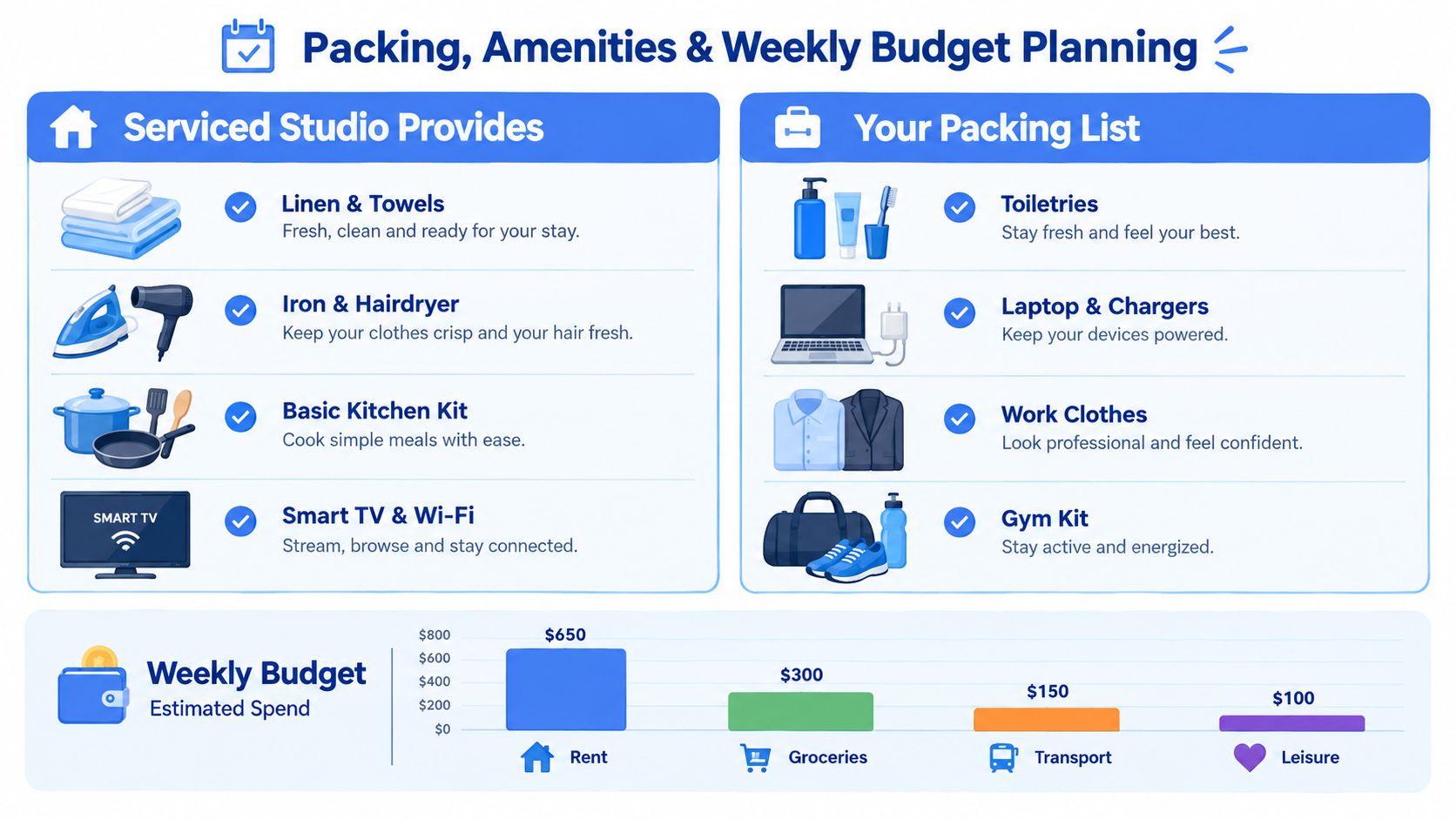
What serviced studios usually cover
A decent serviced studio generally provides the basics you need to live, not just sleep. That usually means bedding, towels, kitchen equipment, Wi-Fi, and a few core household items that save you from making a panic trip on your first evening.
That's the appeal. You can arrive and function.
What to bring yourself
If you're taking a traditional studio tenancy, assume less is included unless the listing says otherwise. Even with furnished places, “furnished” often means the big items only.
Pack or plan to buy:
Toiletries and medication: enough for your first week.
Chargers and extension lead: studios never seem to have sockets where you want them.
Workwear or campus essentials: don't bury these at the bottom of a suitcase.
Laundry basics: pods, bag, and something to dry smaller items.
Food starters: tea, coffee, milk, breakfast, and a simple first meal.
For the first proper shop, Tesco Extra on Harvey Lane or Riverside is handy for a fuller run. Lidl on St Stephens Street helps if you're keeping costs down. Norwich Market is useful for fresh produce and quick top-ups without a full supermarket trek.
Budget weekly, not just monthly
Renters stay honest with themselves. Monthly rent matters, but weekly spending tells you whether the place is sustainable.
Your weekly plan should account for:
Accommodation cost: the biggest line by a distance.
Council tax: unless you're exempt or entitled to a discount.
Utilities and broadband: only if they aren't included.
Food: supermarket plus the inevitable convenience spends.
Transport: bus fares, rail use, fuel, or parking.
Contents cover and admin: often ignored until it's too late.
Social spend: a couple of evenings out in the city adds up quickly.
If you're in a standard tenancy, check whether you qualify for a student exemption or single-person council tax discount. Don't assume it's automatic. Ask and confirm. If you're staying short-term in serviced accommodation, many of those running costs may already be wrapped into the price, which is why direct comparisons with AST rent alone can mislead.
For a more detailed renter checklist, what to look for when renting an apartment in Norwich is worth bookmarking.
The small admin jobs that stop future hassle
Before you settle in, sort these early:
TV licence: if your viewing habits require one.
Royal Mail redirect: especially if you're between homes.
GP registration: if the stay isn't just a short stopover.
Bank and employer address updates: if you need local correspondence.
Laundry and rubbish routine: studios feel smaller when clutter builds.
The best studio stays aren't glamorous. They're organised.
That's especially true in Norwich, where a compact space can feel easy and efficient if the basics are covered, or cramped and annoying if they aren't.
Smart Booking Tips and FAQs for Staying in Norwich
Third-party booking platforms are convenient until they aren't. They're fine for browsing, but plenty of renters end up paying more, getting less flexibility, and speaking to a platform support queue that knows nothing about Norwich when plans change. For short-stay users, direct booking is usually the sharper move.
Why direct tends to work better
If you're booking a studio for work, relocation, or a temporary housing gap, clarity beats platform polish. You want to know what's included, how check-in works, whether late arrival is manageable, and who answers the phone if there's an issue.
Booking direct often gives you:
Cleaner pricing: fewer platform mark-ups and fewer surprises.
Better stay clarity: what's included is easier to confirm.
More useful communication: you speak to people who know the property and the area.
Flexibility on practical details: arrival times, invoices, stay extensions, and special requests are easier to handle directly.
A better fit for contractor use: especially when dates shift and admin matters.

That matters more in Norwich than people expect. A lot of short-stay demand comes from contractors, visiting professionals, academics, and people between homes. Those renters usually need fast answers and practical flexibility, not generic booking-platform scripts.
The mistakes that cost renters money
Keep this list short and brutal.
Booking on headline price alone: If bills, Wi-Fi, or parking aren't included, the “cheap” option may not be cheap.
Ignoring location fit: A lower rate means little if your commute becomes a daily nuisance.
Committing too early to an AST: Rolling work and uncertain end dates don't mix well with rigid tenancy assumptions.
Failing to confirm check-in arrangements: Late arrivals need a clear plan, not crossed fingers.
Not asking about workspace and kitchen setup: You'll feel these omissions by day two.
Here's the useful video if you want a quick visual guide before booking:
FAQs renters actually ask
What's the minimum stay for a Norwich studio?
It depends on the format. Traditional tenancies usually suit longer commitments. Serviced studios and short-lets are built for shorter or uncertain stays. If your dates may move, ask about extension and early-departure terms before paying.
How much deposit should I expect?
It varies by arrangement. Traditional tenancies usually involve a deposit plus advance rent. Serviced stays often use pre-payment structures instead. The important part isn't just the amount. It's how much cash you need upfront and how quickly you need the room.
Can contractors get invoices for work stays?
Usually yes, if you book through a professional operator or an organised landlord. Ask for invoice terms before confirming, especially if your employer needs named paperwork or staged billing.
Is parking included?
Sometimes, sometimes not. Central Norwich parking is the first thing people forget to ask about. If you've got a van or drive daily, confirm parking before you fall in love with the photos.
Are pets allowed?
Not always. Traditional tenancies and short-stay accommodation often handle pets differently. Ask directly and get the answer in writing rather than assuming a “maybe” means yes.
Which areas suit the Norfolk and Norwich University Hospital?
Golden Triangle, Earlham-side locations, and some outer areas can work well depending on whether you drive, cycle, or use public transport. Don't choose based on a postcode label alone. Check the actual route.
Can I check in late?
Often yes, but only if the property has a workable process in place. Ask whether late check-in is done by key safe, remote code, or arranged handover. “Should be fine” is not confirmation.
What makes a studio different from a hotel room?
A proper studio gives you living function. You can cook, work, unpack, and stay in a way that feels more normal than a hotel setup. For anything beyond a very short visit, that difference matters.
My blunt recommendation
If you're staying briefly, working odd hours, relocating, or waiting for life to settle down, don't over-romanticise the standard tenancy. Flexibility has value. Bundled bills have value. Simple check-in has value. A room that's ready on arrival has value.
If you're settled, staying longer, and want the lowest likely long-term running cost, then yes, look hard at a traditional tenancy. But if your plans have any wobble in them, direct serviced booking is often the cleaner decision.
The smartest move is usually the least dramatic one. Book the format that fits the way you'll live in Norwich, not the one that sounds cheapest in a conversation.
If you need a furnished Norwich studio without the usual hassle, Stay Norwich Apartments offers serviced, self-catering accommodation that suits contractors, relocators, students, and short-stay professionals who want a simple move-in and clear terms. Book direct, check what's included, and choose a stay that fits your real timeline rather than forcing yourself into the wrong tenancy.
Comments