


The Ultimate 2025 Checklist Moving Home: 10 Steps for a Stress-Free Relocation

Moving home consistently ranks as one of life's most stressful events, but with a structured approach, it can be a smooth, manageable transition. A chaotic scramble can be transformed into an organised relocation simply through meticulous planning. This ultimate checklist moving home is designed to be your definitive guide, leading you through every critical stage of the process with clarity and purpose.
We have broken down this complex undertaking into a clear, time-based sequence. Starting from eight weeks before your move and continuing through to the day you settle in, we provide actionable steps and expert tips. You will learn precisely what to do and when, covering everything from the initial decluttering phase to packing strategically, managing utilities, and coordinating the logistics of the move itself. Our guide ensures no detail, big or small, is overlooked.
This resource is tailored for a wide range of circumstances. Whether you are a professional relocating for a new role, a family moving to a larger space, or a contractor needing temporary accommodation, this checklist covers the essentials. For those in between properties or renovating, finding flexible housing is crucial.
Local Insight: Landlords direct with Stay Norwich Apartments, Norfolk, furnished accommodation when you need it, for as long as you need it. No hassle, no drama, pay and stay.
Our goal is to equip you with a comprehensive plan, turning potential chaos into a controlled, successful move. Let's begin building your stress-free moving timeline.
1. Declutter and Sort Your Belongings
The first, most impactful step in any successful is to declutter. This isn't just a simple tidy-up; it's a systematic process of evaluating every item you own to decide its fate. By sorting your possessions into categories like keep, sell, donate, or discard, you drastically reduce the volume of items you need to pack, move, and unpack. This foundational task not only lowers removal costs but also simplifies the entire moving process, ensuring you start life in your new home with only the things you truly need and value.
Why It's a Crucial First Step
Starting the decluttering process 6-8 weeks before your move date prevents last-minute stress. It gives you ample time to organise, sell valuable items, and arrange for donations or disposal without a rush. This is particularly vital for those transitioning into temporary housing. If you're using furnished accommodation from Stay Norwich Apartments while your new home is being prepared, you'll want to minimise what you move twice. Deciding what to store versus what to keep with you becomes much simpler once you've decluttered.
Actionable Decluttering Tips
To tackle this task efficiently, follow a structured approach:
Adopt the Four-Box Method: Set up four distinct areas or boxes labelled: Keep, Sell, Donate, and Discard. As you go through each room, place every item into one of these categories. Be decisive to maintain momentum.
Photograph for Sale: For items in the "Sell" pile, take clear, well-lit photos immediately. This speeds up the process of listing them on platforms like Facebook Marketplace or Vinted.
Research Local Charities: Identify charities in your area that accept the items you wish to donate. Some may offer collection services for larger furniture, and remember to ask about Gift Aid to maximise your contribution.
Plan Your New Space: A thoughtful decluttering process also involves visualising your new home. For those final touches on a freshly renovated space, understanding how to work with professionals is key. You can find excellent advice on preparing your walls by reading about what to ask for from local painters and decorators in Norwich.
2. Create a Moving Timeline and Checklist
Once you've committed to decluttering, the next step in your is to create a detailed timeline. This isn't just a list of tasks; it's a strategic plan that breaks down the entire moving process into manageable, weekly milestones, starting 8-12 weeks before your move date. This organisational framework ensures nothing is overlooked, transforming an overwhelming project into a series of achievable goals and significantly reducing last-minute stress.
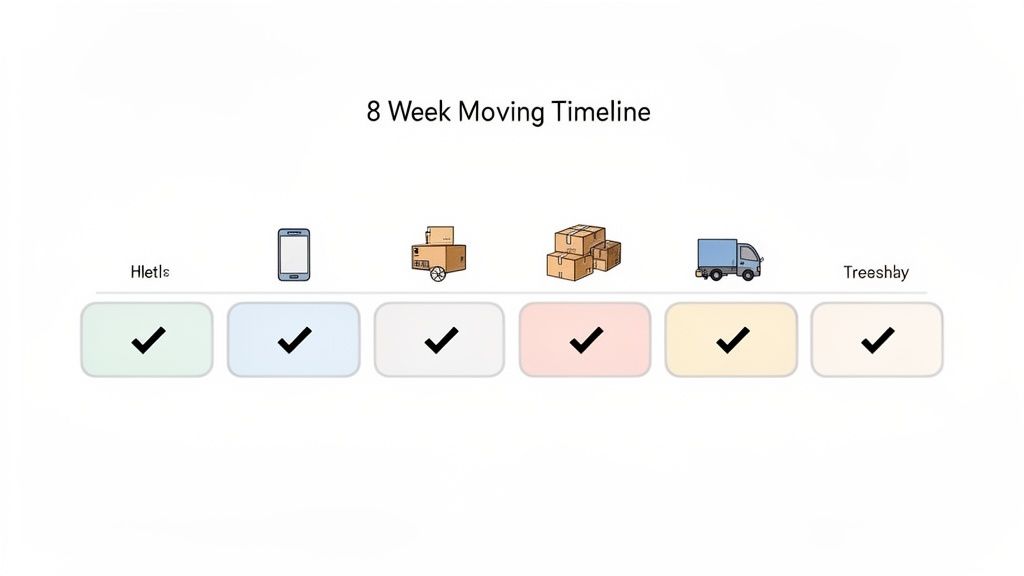
Why It's a Crucial Organisational Step
A well-structured timeline acts as your roadmap, preventing crucial tasks like booking removal services or transferring utilities from being forgotten. For professionals and contractors with demanding schedules, a clear timeline is indispensable. It allows you to coordinate the move around work commitments and manage the transition into temporary housing seamlessly. For those needing a flexible base, Stay Norwich Apartments offers furnished accommodation perfect for bridging the gap between homes. With a simple pay-and-stay model, there's no hassle or drama, allowing you to focus on your timeline.
Actionable Timeline Tips
To develop a timeline that works for you, consider these structured approaches:
Use Digital Tools: Leverage apps like Trello, Asana, or a shared Google Calendar to create your timeline. These tools allow you to assign tasks, set deadlines, and share access with family members, ensuring everyone is on the same page.
Build in Buffer Time: Life is unpredictable. Schedule a "buffer" week or a few buffer days into your plan to account for unexpected delays, such as issues with removals companies or last-minute work demands.
Work Backwards from Moving Day: Start with your move-in date and work backwards to schedule tasks. For example, if you need to be out by the 31st, removals should be booked by the 1st, and packing should start in earnest two weeks prior.
Consult Expert Resources: Don't reinvent the wheel. To help you build your own comprehensive plan, consult this ultimate moving house checklist for essential steps and timelines popularised by major firms like Allied Van Lines.
3. Notify Relevant Institutions and Services
Once you have a handle on your physical possessions, the next vital administrative task in your is to manage your digital and postal identity. Notifying institutions of your address change is a critical step to ensure a seamless transition. This process involves systematically updating your details with everyone from utility providers and banks to government bodies and subscription services. Failing to do so can lead to missed bills, service interruptions, and even security risks, making it an indispensable part of your moving plan.
Why It's a Crucial Administrative Step
Initiating these notifications around 4-6 weeks before you move is essential for continuity. Many organisations require several weeks' notice to process an address change, and managing this early prevents last-minute panic. This is particularly important for professionals and families moving into temporary housing. When you need a reliable interim base, like the furnished accommodation from Stay Norwich Apartments, you must ensure that critical services and communications are correctly routed. You can redirect mail and update services to your temporary address, ensuring there’s no disruption while you await your permanent home.
Actionable Notification Tips
A methodical approach will prevent any organisation from being overlooked:
Create a Master List: Group all necessary contacts into categories: Financial (banks, credit cards, pension providers), Utilities (gas, electricity, water, internet), Government (council tax, DVLA, HMRC), Health (GP, dentist), and Subscriptions (magazines, streaming services).
Use Royal Mail's Redirection Service: This is a fantastic safety net. It forwards mail from your old address to your new one for a set period, catching any notifications you may have missed.
Confirm Changes in Writing: After notifying an organisation over the phone or online, always request a written or email confirmation of the address change. This provides a clear paper trail should any issues arise.
Manage Temporary Stays Seamlessly: If you're in between homes, notify key services of your temporary address. With Stay Norwich Apartments, landlords direct you to furnished accommodation with no hassle, providing a stable address for as long as you need it, making this two-step notification process much simpler.
4. Arrange Professional Moving Services or Logistics
Once you have a clear idea of what you’re taking with you, the next pivotal item on your is to book your transport. This involves either securing a professional moving company or arranging the logistics for a self-move. Deciding how your belongings will get from A to B is a critical decision that impacts your budget, timeline, and stress levels. Making this arrangement 6-8 weeks in advance, especially during peak season (May to September), ensures you have reliable support on moving day.
Why It's a Crucial Step
Booking early gives you the time to properly research, compare quotes, and find a reputable company that fits your needs. Rushing this decision can lead to hiring unreliable movers, facing hidden costs, or discovering there’s no availability on your desired date. For those in a transitional phase, like moving into temporary furnished accommodation, logistics planning is equally vital. With Stay Norwich Apartments, you get a no-hassle, pay-and-stay solution, meaning you only need to move essential items. This makes hiring a smaller "man with a van" service or arranging storage a more manageable and cost-effective task than a full-scale house removal.
Actionable Tips for Booking Movers
To navigate this process smoothly, a structured approach is best:
Get at least three quotes: Contact reputable, insured companies like Pickfords or Britannia Movers. Request written, binding estimates to avoid unexpected price hikes on moving day.
Verify credentials and reviews: Check customer feedback on platforms like Google or Trustpilot. Ensure the company is a member of the British Association of Removers (BAR) for peace of mind.
Understand insurance options: Movers offer basic liability coverage (Released Value Protection) at no extra cost, but it provides minimal compensation. For valuable items, consider purchasing Full Value Protection for comprehensive coverage.
Plan the practicalities: Whether you arrange professional services or tackle it yourself, consult an expert guide to moving house furniture for smart packing, safe lifting, and strategic loading. This preparation makes the entire process more efficient for everyone involved.
5. Arrange New Utilities and Internet Setup
A crucial, often overlooked part of any comprehensive is arranging your utilities and internet for the new property. This involves coordinating the disconnection of services at your old address and the activation of new accounts for electricity, gas, water, and broadband at your new one. Getting the timing right is essential to avoid being left without power or connectivity on moving day, ensuring a smooth and comfortable transition from day one.
Why It's a Crucial Step
Initiating this process 4-6 weeks before you move is vital for a seamless handover. Utility and internet providers often have lead times for new installations or account setups, and leaving it to the last minute can result in delays. For professionals or families relocating, having immediate internet access is non-negotiable for work, school, and staying connected. This step is also a practical necessity; arriving at a new home without electricity or running water is a difficult start to your new chapter.
Actionable Utility Setup Tips
To manage this task without stress, a methodical approach is best:
Compare and Schedule Early: Use comparison sites like Uswitch or MoneySuperMarket to find the best deals on gas and electricity from providers like British Gas or Octopus Energy. Contact your chosen suppliers at least four weeks in advance to schedule the connection for your moving day.
Don't Forget Broadband: Research internet providers such as BT, Virgin Media, or Sky well ahead of time. Book your installation date as early as possible, as engineer appointments can get filled up quickly, especially at the end of the month.
Take Final and Initial Meter Readings: On moving day, take a photo of the final meter readings at your old property and the initial readings at your new one. Submit these immediately to the respective suppliers to ensure you are only billed for your exact usage and to avoid disputes.
Consider All-Inclusive Options: If you are moving into temporary furnished accommodation, such as that provided by Stay Norwich Apartments, utilities are often included. This "no hassle, no drama, pay and stay" approach removes the burden of setting up short-term contracts, making it an ideal solution for those in between permanent homes.
6. Pack Strategically with Labeling and Organisation
Effective packing is the cornerstone of an organised move, transforming a potentially chaotic task into a streamlined process. Strategic packing isn't just about putting items in boxes; it's a systematic approach involving room-based organisation, clear labelling, and proper documentation. By adopting a methodical strategy, you significantly reduce the risk of damage, make unpacking more efficient, and ensure you can find essential items immediately upon arrival. This part of your is crucial for a smooth transition.
Why It's a Crucial Step
A well-organised packing system saves time and prevents stress at both ends of the move. Knowing exactly what is in each box and where it belongs in the new home eliminates guesswork and frustration during unpacking. For those in a transitional phase, such as staying in temporary accommodation, this becomes even more vital. With Stay Norwich Apartments, landlords direct offer furnished accommodation when you need it, for as long as you need it. Strategic packing allows you to separate what goes into storage from the essentials you'll need for your short-term stay, ensuring no hassle and no drama.
Actionable Packing Tips
To execute a flawless packing strategy, follow these structured steps:
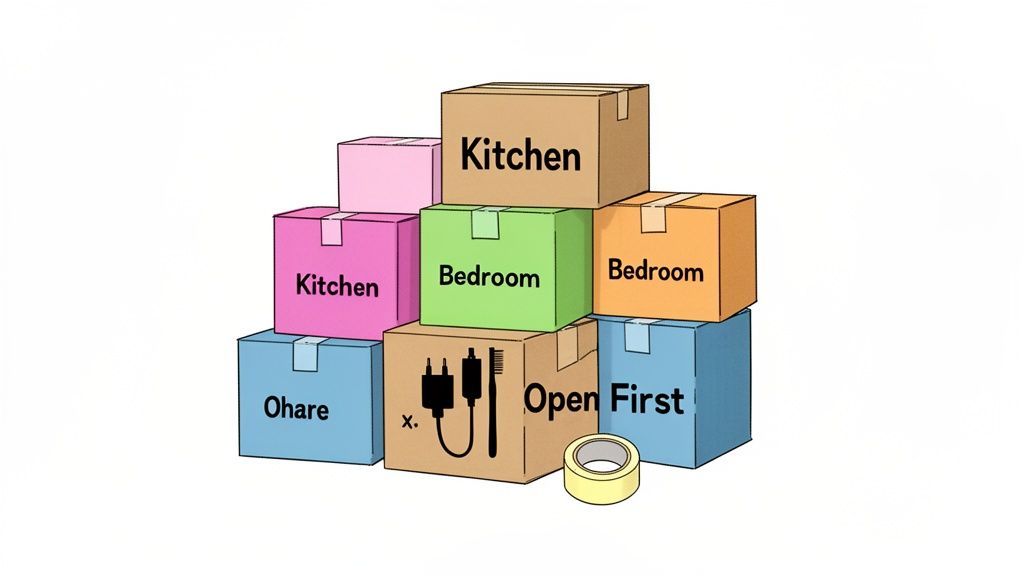
Implement a Colour-Coded System: Assign a different colour to each room in your new home (e.g., blue for the kitchen, red for the master bedroom). Use coloured tape or labels on the boxes so movers can instantly identify where each box should go, speeding up the unloading process.
Create an "Open First" Box: This is your survival kit for the first 24 hours. Pack it with essentials like toiletries, medications, phone chargers, a kettle, coffee, snacks, basic tools, and cleaning supplies. Mark it clearly so it's the last box on and the first box off the van.
Use the Right Box for the Right Items: A common mistake is overfilling large boxes with heavy items. Instead, use small boxes for heavy things like books and tools, and large boxes for light, bulky items like linens and pillows.
Document and Label Thoroughly: On each label, write the destination room, a brief summary of the contents (e.g., "Kitchen - Plates & Mugs"), and a box number. Keep a corresponding inventory list on your phone or in a notebook to track everything. For clever packing and storage solutions, exploring your local Norwich IKEA can offer some great ideas before you start.
7. Conduct Final Home Walkthrough and Documentation
An often-overlooked yet critical task in any is the final walkthrough of your old property. This isn't a quick glance around; it's a meticulous inspection to document the condition of the home upon your departure. By systematically recording the state of every room with photos and videos, you create an undeniable record that protects your security deposit and prevents potential disputes with landlords or new owners. This step is your final safeguard, ensuring a clean break and preventing future financial claims.
Why It's a Crucial Final Step
Scheduling this walkthrough just before you hand over the keys is essential for both renters and sellers. For tenants, this documented proof is your primary defence against unfair deposit deductions. Landlords must justify any claims, and photographic evidence of a clean, undamaged property is hard to contest. For sellers, it confirms you have met the contractual obligations for the property's condition at handover. This is particularly important for those moving into temporary furnished accommodation, as securing your full deposit provides a welcome financial buffer for the next stage of your move.
Actionable Walkthrough Tips
To ensure your final inspection is thorough and effective, follow these key steps:
Schedule and Invite: Arrange the walkthrough for a day or two before your tenancy ends, after all your belongings are removed and cleaning is complete. Invite your landlord or letting agent to attend, so you can agree on the property's condition in person.
Document Everything: Use your phone to take timestamped photos and a continuous video of the entire property. Capture wide shots of each room, then zoom in on areas of pre-existing wear and tear, and also show the clean condition of appliances, floors, and walls.
Check Key Details: Confirm all utilities are working, check smoke detectors, and ensure all sets of keys are accounted for. This is also the moment to guarantee the property is secure, an important final check highlighted by professionals when discussing how to choose a reliable locksmith service in Norwich.
Create a Written Record: Supplement your visual evidence with a simple written report noting the condition of each room. If your landlord is present, ask them to sign it. If not, send them a copy via email to create a digital paper trail. Keep all this documentation for at least three years.
8. Update Driver's License, Vehicle Registration, and Legal Documents
An often-overlooked but legally critical part of any is updating your official documents. This administrative task involves changing your address on government-issued identification like your driver's license, as well as your vehicle registration (V5C log book in the UK), insurance policies, and other legal records. Neglecting this step can lead to fines, invalidate your insurance, and cause significant administrative headaches down the line. It formally establishes your new residency, ensuring you remain compliant with legal requirements.
Why It's a Crucial Administrative Step
This task should be prioritised within 2-4 weeks of your move. Many jurisdictions, including the DVLA in the UK, impose deadlines and potential fines for failing to update your address promptly. For professionals moving for work or those on specific visa requirements, keeping these records accurate is non-negotiable. Furthermore, for those navigating complex relocations, ensuring all paperwork is in order provides peace of mind. International professionals can find detailed guidance on requirements by reviewing information on the UK e-visa system, which clarifies many residency-related obligations.
Actionable Tips for Updating Documents
To manage this process efficiently, a systematic approach is best:
Create a Document Checklist: List all official bodies that need your new address. This includes the DVLA for your license and vehicle, your car insurance provider, banking institutions, and the electoral roll.
Prioritise Online Updates: Many services, such as banking and insurance, allow for instant online address changes. Tackle these first as they are often the quickest wins and provide digital proof of your new address.
Handle DVLA Updates Together: In the UK, you can update the address on your driving license and your vehicle’s V5C log book simultaneously via the government's online portal. This is a free service and ensures consistency across your records.
Plan for Temporary Stays: If you are staying in furnished accommodation from Stay Norwich Apartments while your permanent home is being prepared, check if you can use a temporary address or a C/O (care of) address for less critical mail, but prioritise updating official documents as soon as you have a permanent residence.
9. Plan and Execute Utility Meter Readings and Final Bills
A critical, yet often overlooked, part of any is managing the handover of your utilities. This involves taking final meter readings for gas, electricity, and water at your old property on moving day. Submitting these figures to your suppliers ensures you are only billed for the energy you have actually used, preventing disputes and unexpected costs long after you have moved out. This simple administrative task is your financial safeguard against paying for the new occupant's consumption.
Why It's a Crucial Final Step
Finalising your utility accounts correctly is essential for a clean financial break from your old home. Without accurate, date-stamped meter readings, suppliers may estimate your final bill, which can lead to overcharging. This becomes even more important for those in temporary situations. If you are moving into flexible, furnished accommodation from Stay Norwich Apartments, where all bills are included, you want to ensure your previous accounts are closed properly. This avoids lingering financial ties and potential credit score issues, allowing you to enjoy a hassle-free transition.
Actionable Meter Reading Tips
To ensure a smooth and accurate utility handover, follow these steps on moving day:
Document with Photos: Take clear, time-stamped photographs of each meter (gas, electricity, water) showing the final reading and the meter serial number. This photographic evidence is invaluable if a dispute arises.
Submit Readings Promptly: As soon as you have the readings, submit them to your respective providers via their website, app, or customer service line. Do this on moving day or the next working day to ensure accuracy.
Request Confirmation: Ask your utility providers for written or email confirmation that they have received your final readings and have processed the closure of your account for that address.
Check Your Final Bill: When the final bill arrives, cross-reference it with the readings you submitted and your provider's tariff rates. Don't hesitate to query any discrepancies immediately to resolve them while the information is still fresh.
10. Arrange Moving Day Logistics and Contingency Planning
The final, crucial component of any comprehensive is meticulous day-of planning. This step involves finalising all logistical details and creating robust contingency plans to ensure the move itself is executed flawlessly. From confirming mover arrival times to arranging building access and preparing for unexpected disruptions like bad weather or delays, this stage transforms your careful preparation into a smooth, stress-free moving day. It’s about controlling the controllables and being ready for the uncontrollables.

Why It's a Crucial Final Step
Moving day is the culmination of weeks of effort, and without clear logistics, even the best plans can falter. Confirming details 24-48 hours in advance prevents misunderstandings with your removal company and ensures everyone is aligned. This proactive approach is essential for managing access, especially in apartment buildings with specific rules for lifts or parking. It also provides peace of mind, allowing you to focus on overseeing the process rather than firefighting last-minute problems. A well-orchestrated moving day sets a positive tone for settling into your new home.
Actionable Logistics and Contingency Tips
To ensure your moving day runs like clockwork, focus on these final checks:
Final Confirmation Call: Ring your removal company two days before the move. Confirm the exact arrival time, the number of crew members, and the lead contact's mobile number.
Secure Parking and Access: If required, arrange parking permits for the moving lorry at both properties. For flats, book the service lift and inform the building manager of your moving schedule.
Prepare for Delays: Life happens. If there's a gap between leaving your old property and getting keys to the new one, having a plan is vital. This is where temporary accommodation comes in handy; you can discover more about finding temporary housing solutions during home transitions.
On-the-Day Coordination: Have one person at the old property to supervise the final loading and another at the new property to direct movers. Use your inventory list to check off boxes as they arrive and take photos of any pre-existing or new damage for insurance purposes.
Moving Home: 10-Step Checklist Comparison
Task | 🔄 Implementation complexity | ⚡ Resource requirements | 📊 Expected outcomes | 💡 Ideal use cases | ⭐ Key advantages |
|---|---|---|---|---|---|
Declutter and Sort Your Belongings | Moderate–high; time- and decision-intensive | Time, boxes/bins, storage space, donation/sale coordination | Reduced move volume/costs, easier packing, fewer items to store | Downsizing, moving to furnished temporary housing, major transitions | Lower moving costs, faster unpacking, sustainable disposal |
Create a Moving Timeline and Checklist | Low–moderate; requires discipline and updates | Time, calendar/project apps, shared access for collaborators | Reduced stress, prevented last-minute tasks, timely completion | Professionals/contractors balancing work and relocation | Clear milestones, easier delegation, better vendor scheduling |
Notify Relevant Institutions and Services | Moderate; administrative and follow-up heavy | Contact list, proof of address, time for calls/forms | Continuous services, avoided missed bills/mail, reduced identity risk | Any relocation, especially with temporary forwarding needs | Prevents service interruptions, ensures important communications |
Arrange Professional Moving Services or Logistics | Moderate–high; vendor research and coordination | Budget for movers, insurance, inventory, advance booking | Safe transport, time savings, insurance protection | Full household moves, long-distance relocations, storage needs | Professional handling reduces damage and physical effort |
Arrange New Utilities and Internet Setup | Moderate; multiple provider coordination | Provider accounts, deposits, installation appointments | Utilities and connectivity active on arrival, optimized plans | Permanent moves; verify inclusion for temporary stays | Avoids service gaps, allows rate and provider comparison |
Pack Strategically with Labeling and Organization | Moderate; attention to detail required | Boxes, labels, padding, inventory photos, time | Faster unpacking, less damage, quick retrieval of essentials | All moves; especially useful when moving to furnished temporary housing | Streamlined unpacking, better inventory for insurance |
Conduct Final Home Walkthrough and Documentation | Moderate; detailed inspection and coordination | Camera/video, checklist, cleaning/repair supplies, witness | Protected security deposit, documented condition for disputes | Renters or anyone responsible for property condition at move-out | Evidence to prevent unfair deductions, reduces disputes |
Update Driver's License, Vehicle Registration, and Legal Documents | Moderate; jurisdictional timelines and visits | IDs, proof of residency, fees, possible appointments | Legal compliance, valid insurance, correct voting/records | Permanent relocations or residency changes | Avoids fines, maintains insurance and legal standing |
Plan and Execute Utility Meter Readings and Final Bills | Low–moderate; timing-sensitive administrative task | Photos of meters, provider contacts, submission dates | Accurate final billing, deposit refunds, billing dispute prevention | Vacating properties, closing accounts before move | Financial closure, prevents overcharges and disputes |
Arrange Moving Day Logistics and Contingency Planning | High; many simultaneous coordination points | Movers, parking permits, building access, emergency contacts | Smoother move day, fewer delays, mitigated disruptions | Moving day for complex buildings or large household moves | Minimizes chaos, reduces risk from weather/equipment issues |
Simplifying Your Next Move: From Checklist to Comfortable Stay
Navigating the complexities of a home move can feel overwhelming, but as this comprehensive guide has demonstrated, the journey is far more manageable when broken down into logical, time-bound steps. A detailed checklist moving home is not just a list of tasks; it is a strategic roadmap that transforms potential chaos into a structured, organised process. By methodically working through each stage, from the initial decluttering eight weeks out to the final meter readings on moving day, you reclaim control and significantly reduce stress.
The power of this approach lies in its proactive nature. Instead of reacting to last-minute crises, you anticipate needs, book services in advance, and systematically prepare your belongings and administrative life for the transition. This structured plan ensures that nothing critical, from notifying the DVLA to arranging your internet connection, is overlooked.
Key Takeaways for a Seamless Relocation
Mastering your move comes down to three core principles highlighted throughout this checklist:
Systematic Organisation: The value of a detailed inventory, a colour-coded labelling system, and a dedicated "essentials" box cannot be overstated. These small organisational habits have a massive cumulative effect, saving you countless hours of frustration when you arrive at your new property.
Proactive Communication: Arranging movers, notifying utility companies, and updating your address with banks and subscriptions well ahead of time prevents service disruptions and administrative headaches. Effective communication is the bedrock of a smooth handover, both from your old property and into your new one.
Strategic Buffering: Building contingency time into your schedule is crucial. Delays can and do happen. More importantly, creating a buffer between leaving your old home and settling into your new one can be a game-changer, especially during complex moves like renovations or cross-country relocations.
The Value of a Temporary Base
For many, the period between homes is not a simple, one-day event. Professionals starting a new contract in Norfolk, families waiting for renovation work to be completed, or individuals in between housing contracts often find themselves in a logistical limbo. This is where the concept of a temporary, flexible accommodation becomes an invaluable part of the moving checklist.
Insight: Viewing temporary accommodation not as a last resort, but as a strategic tool, can fundamentally change your moving experience. It provides a stable, comfortable base from which you can manage the final stages of your move without pressure or panic.
For those relocating to Norwich or the surrounding Norfolk area, this interim period is an opportunity to settle into the new environment without the immediate stress of unpacking. This is particularly beneficial for contract workers, builders on a trade stay, or professionals who need to be operational from day one. A fully furnished, serviced apartment removes the burden of setting up a temporary household, allowing you to focus on your work and the final details of securing your permanent residence.
Ultimately, a successful move is defined by how smoothly you transition from one chapter of your life to the next. By leveraging a detailed checklist moving home and planning for every eventuality, including the need for a comfortable interim stay, you are not just moving boxes; you are engineering a positive and stress-free new beginning.
Facing a complex move, a renovation delay, or starting a new contract in Norfolk? Let Stay Norwich Apartments provide your hassle-free temporary home base. Our fully furnished, all-inclusive apartments offer the perfect 'pay and stay' solution, so you can focus on what matters. Explore your options and book your comfortable stay today at Stay Norwich Apartments.
Comments