


Choosing International Relocation Moving Companies A Complete Guide

When you’re staring down the barrel of an international move, the logistics can feel overwhelming. Bringing in one of the professional international relocation moving companies is a game-changer, but your success really depends on giving yourself a long runway. A solid plan, kicked off 6-12 months before your move-in date, is the secret to a smooth transition. This isn’t just about boxes and tape; it's about budgets, visas, and getting a real handle on everything you own.
Building Your International Relocation Blueprint
An overseas move is a marathon, not a sprint. Breaking it down into a strategic blueprint turns a massive project into a series of manageable steps. This early phase is all about laying a strong foundation long before a single box gets packed. Believe me, rushing this part is a recipe for overlooked costs and frantic last-minute decisions.
Your journey starts with a realistic budget. And I don’t just mean the mover’s quote. You need to account for visa application fees, the potential cost of storage back home or at your destination, and temporary accommodation for when you first land. A common pitfall is underestimating these extra expenses, which can throw your entire financial plan off course.
At the same time, you need to become an expert on the visa and residency requirements for your new country. This can be a painfully slow and complicated process, so starting early isn't just a suggestion—it's essential. Every country has its own unique set of rules, and a mistake here can bring your entire relocation to a screeching halt.
Creating Your Household Inventory
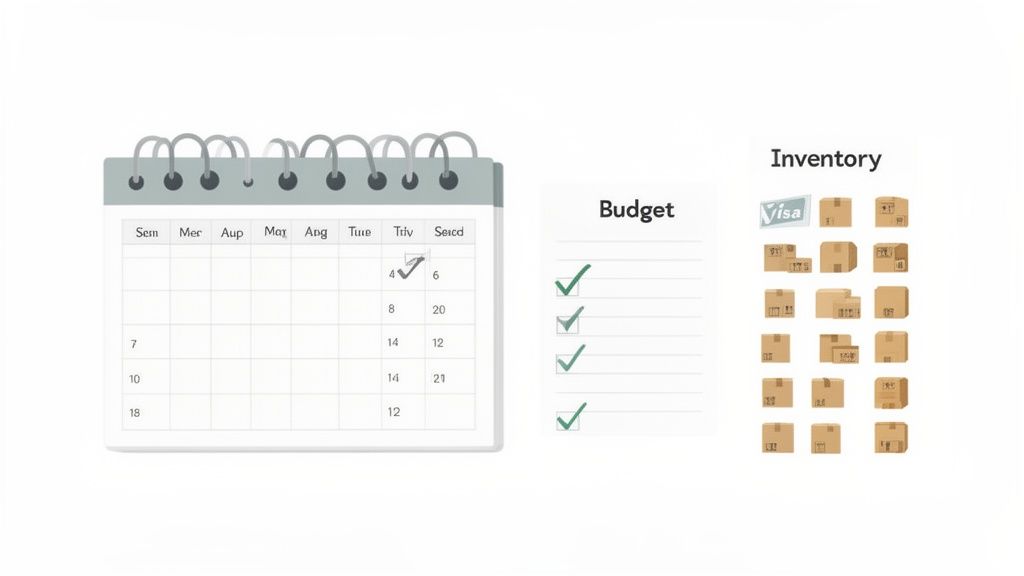
A detailed inventory is probably the most powerful tool in your planning arsenal. You need to go room by room, listing everything from the big furniture down to the small, sentimental items. This isn't just busywork; it's crucial for two reasons. First, it forces you to decide what to ship, what to sell, and what to store. Second, it's the only way to get accurate quotes from international relocation moving companies.
Be ruthless during this process. Is it genuinely cheaper to ship that old sofa across an ocean, or does it make more sense to buy a new one when you arrive? These are the tough calls that have a direct impact on the volume of your shipment and, ultimately, your final bill. For more tips on getting organised, our guide on creating a stress-free relocation checklist is a great place to start.
I've seen it time and again: people seriously underestimate the sheer volume of their belongings. A thorough inventory prevents that nasty surprise of a final bill that’s way higher than the initial quote because the scope of the move was bigger than expected.
The timeline below gives you a bird's-eye view of this initial planning stage, breaking down the key milestones from early research to locking in your mover.
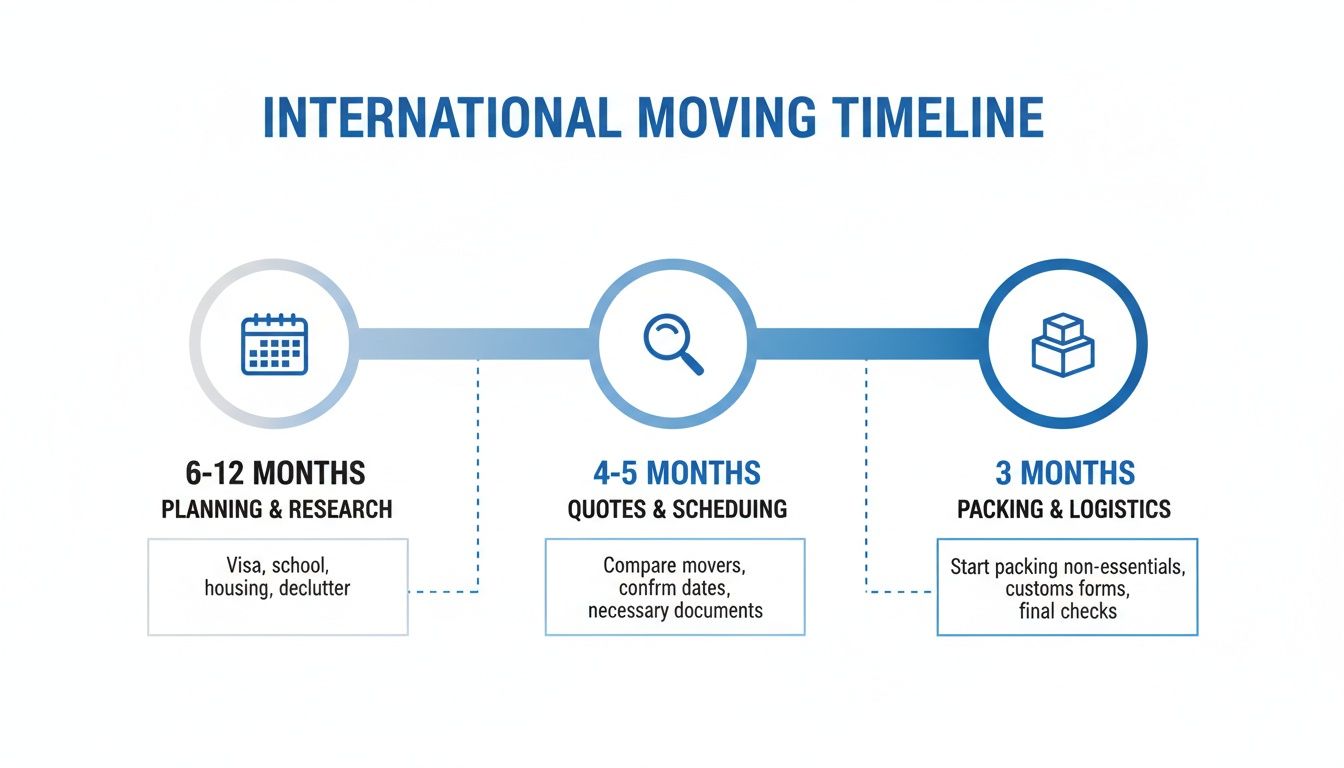
As you can see, the most critical thinking and decision-making happens months before the physical packing even begins.
Researching Your Destination and Logistics
Getting to know your destination's culture and on-the-ground logistics is just as vital as packing your life into boxes. This means digging into local customs regulations, figuring out schooling options if you have kids, and understanding the nuances of daily life. For those planning on moving internationally with pets, there are excellent guides to help navigate the maze of vaccinations, quarantines, and paperwork involved.
This global movement of people is constantly changing how moving companies work. We're seeing a huge trend of people relocating from the UK to other English-speaking countries. According to 1st Move International’s Relocation Index, Canada was the top destination for online searches from the UK, pulling in a massive 269,220 searches. Australia and New Zealand weren't far behind. This data doesn't just show popular routes; it confirms the steady demand for expert moving services.
By carefully laying all this groundwork, you’re not just planning a move. You're setting yourself up for a successful partnership with your moving company and a much, much smoother start to your new life abroad.
How to Vet and Select the Right Moving Partner
This is it. This is arguably the single most important decision you'll make in your entire relocation journey. Picking the right moving partner isn't just about getting your boxes from A to B; it's about entrusting your entire life to a team of people you've just met.
The right company will feel like a project manager, logistics guru, and trusted guide all rolled into one. The wrong one? Well, that's how an exciting new chapter becomes a costly, stressful nightmare. So, let’s get this right.
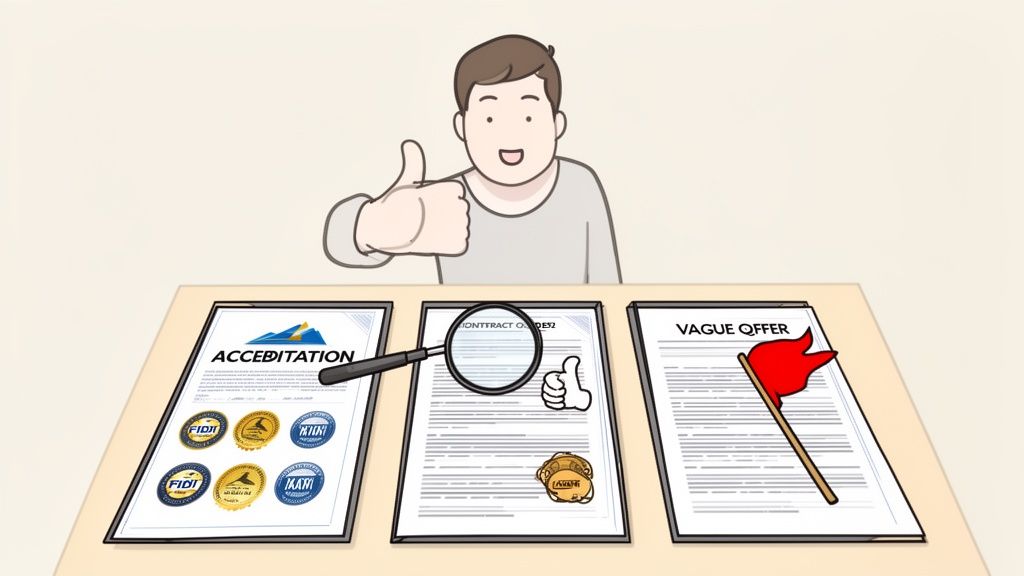
First things first, look beyond a simple web search. You need to dig a little deeper to find genuinely reputable international relocation moving companies. A great starting point is checking for professional accreditations. Think of these as a clear signal of quality and proof that they stick to global standards.
You'll want to see movers who are members of respected industry bodies like:
FIDI (Fédération Internationale des Déménageurs Internationaux): This is the gold standard. FIDI-accredited movers undergo regular, independent audits to prove they meet incredibly strict operational, financial, and quality standards.
IAM (International Association of Movers): This is a huge global network of moving and forwarding companies. Membership shows a company is established and well-connected within the international moving world.
These aren't just fancy logos for their website; they represent a real commitment to best practices and give you an extra layer of security if something goes sideways.
Asking the Right Questions During Consultations
Once you have a shortlist of a few accredited companies, it's time for the consultation. This is where you separate the real experts from the rest. Don't be shy here. This is your chance to gauge their expertise and see how they operate, so ask specific, probing questions.
Try throwing a real-world scenario at them. Something like, "My shipment is heading to Norwich. What are the typical customs clearance times at a port like Felixstowe, and what specific documents will you need from me to pre-clear everything?" An experienced pro will give you a confident, detailed answer without missing a beat.
A vague response to a specific question is a massive red flag. If a company can't clearly explain their process for your destination, they probably don't have the specialised experience you need for a smooth move.
It’s also crucial to find out who is actually handling your things. Ask them straight up: "Do you use your own crews at both origin and destination, or do you work with partner agents?" Good companies have a network of vetted, trusted partners and should be completely transparent about who will be packing, loading, and unloading your possessions.
Decoding and Comparing Moving Quotes
You should always aim to get at least three detailed, written quotes. But here's where many people go wrong: they just compare the final number at the bottom. A suspiciously low bid often means something critical—and expensive—has been left out.
To make a true apples-to-apples comparison, you need to understand what you're actually paying for. This table breaks it down.
Decoding Quotes from International Movers
Quote Component | What It Means | Why It Matters | Key Questions to Ask |
|---|---|---|---|
Service Scope | Is it door-to-door, door-to-port, or port-to-port? | Determines how much work you have to do yourself. A low price might mean you’re responsible for customs and final delivery. | "Is this a full door-to-door service, including unpacking?" |
Volume/Weight | The estimated size or weight of your shipment. | This is the primary basis for the cost. Underestimates lead to surprise charges later. | "How did you calculate this volume? Is this a binding estimate?" |
Packing Services | Does the price include all packing materials and the labour to pack your belongings? | Some quotes exclude materials or special services, adding unexpected costs. | "Are all packing materials and custom crating for my artwork included?" |
Exclusions | Costs that are not included in the main quote. | This is where hidden fees live. Think customs duties, taxes, port fees, or quarantine inspections. | "What potential charges are not included in this quote?" |
By digging into the details of each quote, you get a much clearer picture of the true value you're receiving.
Ultimately, choosing your moving partner comes down to due diligence. Take your time, ask the tough questions, and trust your gut. A professional, transparent company will make you feel confident and supported from the very beginning, setting the stage for a successful start to your new life abroad.
Getting to Grips with Customs, Insurance, and Paperwork
The moment your shipment leaves, it enters a complex world of customs agents, insurance policies, and what can feel like a mountain of paperwork. For many people, this is the most daunting part of working with international relocation moving companies. But a bit of organisation up front can make all the difference, helping your belongings glide through the system rather than getting stuck in red tape.
Precision is your best friend here. Vague descriptions and missing documents are the top culprits for expensive delays at the border. The aim is to give customs officials a file so clear and complete they have no reason to question it.
Creating an Ironclad Packing Inventory
Your first line of defence against customs headaches is a ridiculously detailed packing inventory. Your moving company will create an official one as they pack, but keeping your own list is invaluable for both insurance and your own peace of mind. This isn't just "Box 1 - Kitchen." It's "Box 1 - Kitchen - 8 dinner plates, 6 mugs, 1 coffee maker."
Why go to this trouble?
It keeps customs officials happy, as they need to know exactly what's entering the country.
It creates a solid record for any insurance claims if a specific item vanishes or arrives damaged.
Think of it as a team effort. The movers' professional inventory is for the official manifest; your personal list is your detailed backup. Being meticulous now will pay off massively later on.
Making Sense of International Moving Insurance
Never assume your belongings are automatically covered for their full value. The standard liability offered by movers is usually minimal, often based on weight alone. This could mean your expensive, lightweight laptop is valued the same as a bag of old jumpers. This is why proper moving insurance is an absolute must.
You'll generally come across two main types of cover:
All-Risk Insurance: This is the one you want. It's the most comprehensive option, covering individual items that are lost or damaged during transit. To qualify, your items usually need to be professionally packed by the moving company, which proves they were properly secured for the journey.
Total Loss Insurance: This is a much more basic (and cheaper) policy. It only pays out if your entire shipment is lost or destroyed—for example, if the container falls off the ship. It offers zero protection for a single broken vase or a dented TV.
For almost every international move, all-risk insurance is the only sensible choice. It gives you genuine protection and is a standard offering from any reputable international relocation moving companies.
Always declare the full replacement value of your goods at your destination. Under-insuring to save a few quid on the premium can be a very expensive mistake if you end up needing to make a claim.
Gathering Your Essential Documents
Getting your paperwork sorted well in advance isn't just a good idea—it's non-negotiable. One missing form can bring your entire shipment to a grinding halt. While your moving company will guide you, it's ultimately up to you to gather and provide the right personal documents.
Your core document checklist will almost certainly include:
Copies of Passports and Visas: Clear, readable copies for every family member on the move.
Detailed Packing Inventory: The official version created by your moving company.
Bill of Lading: This is your contract and receipt for the shipment, issued by the mover.
Country-Specific Customs Forms: Your destination will have its own unique declaration forms that need to be filled out perfectly.
Don't forget that for immigration purposes, official documents often need certified translations. If you're navigating this, a complete guide to birth certificate translation for USCIS and official use is a brilliant resource for understanding the strict legal standards. Similarly, knowing your visa status is critical. For anyone moving to the UK, our complete guide to the eVisa UK system will help you stay informed. A bit of prep work here is the secret to a smooth customs experience.
You've compared the quotes, picked your moving partner, and now the real action begins. This is the moment your life gets carefully packed into boxes and starts its long journey across the world. Knowing what to expect during packing and shipping can take a lot of the mystery—and stress—out of the process.
The first big decision is whether to have the professionals pack for you or to tackle it yourself. While DIY packing might look like a good way to cut costs, for an international move, it’s often a false economy. Professional packers know the difference between packing for a move across town and packing for a multi-week journey across an ocean. It's a completely different ball game.
Professional Packing vs. a DIY Approach
Letting the pros handle the packing has some serious perks. A good crew can pack up an entire house in just a day or two, using specialised materials you likely can't get your hands on. More importantly, most comprehensive "all-risk" insurance policies require professional packing. It’s their way of knowing everything was secured properly from the get-go.
If you do decide to pack some things yourself, stick to the non-breakables—books, clothes, linens. For anything fragile, valuable, or sentimental, let the experts do what they do best. You just can’t replicate their experience in custom-crating a piece of art or protecting delicate electronics.
Choosing Your Shipping Method
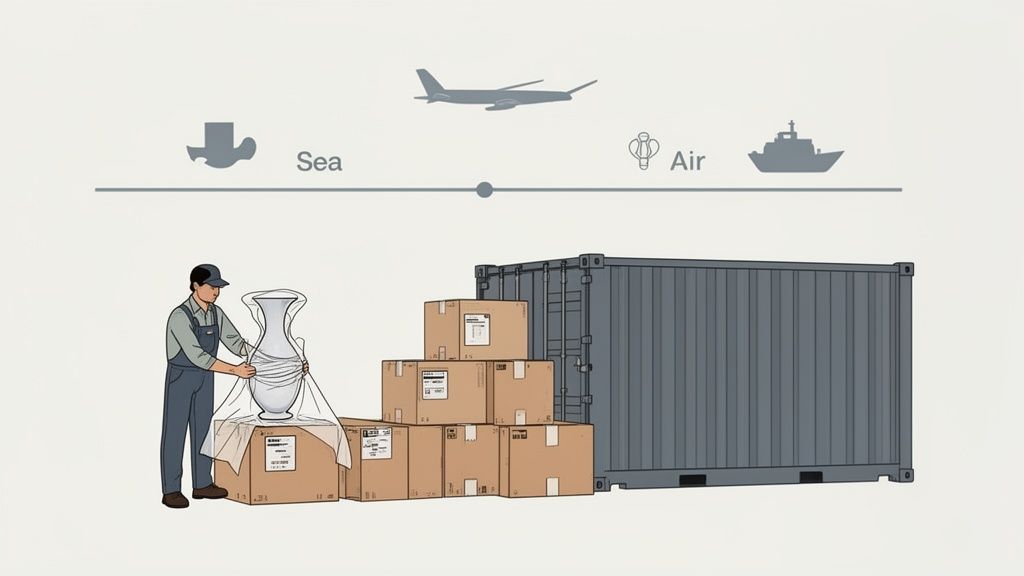
With everything boxed up, it’s time for the main event: the journey itself. You’ve got two main options here—sea freight or air freight—and the choice boils down to a classic trade-off between speed and cost.
Sea Freight: This is how the vast majority of household goods travel the globe. It's by far the most cost-effective method, but it requires patience. Depending on the route, you could be looking at anywhere from a few weeks to a couple of months for your container to arrive.
Air Freight: Need certain things the minute you land? Air freight is your answer. It’s fast, but it's also significantly more expensive. This is typically reserved for a small, time-sensitive shipment of essentials: key documents, a couple of weeks' worth of clothes, and maybe your work laptop.
Most people moving internationally end up using a mix of both. They’ll send the bulk of their belongings by sea and fly over a smaller shipment of essentials to tide them over until the main container arrives. The logistics for this can get complicated, which is why leaning on professional movers is so crucial. The UK removal services industry has grown to a revenue of about £1.4 billion, which really shows how essential these services have become. You can read more about the UK removal services industry trends to see just how much the sector has grown.
Staying Informed During Transit
The long wait while your life is somewhere on the high seas can be one of the most nerve-wracking parts of the move. Any good moving company will give you a clear communication plan and access to a tracking system. You should get a reference number—like a Bill of Lading for sea freight or an Air Waybill number—that lets you see where your shipment is.
That said, be prepared for delays. They happen. Customs can hold things up, ports get congested, and bad weather can throw schedules off track. This is all part of the process. Your mover should be the one to tell you about any major delays and give you a new timeline. Managing your own arrival is just as important; if you're flying into a major hub like Gatwick, our stress-free guide to Gatwick Airport has some useful tips for making that part of the journey smoother.
You should expect regular, proactive updates from your moving coordinator. If you’re the one always having to chase them for information, that's a red flag. The best international relocation moving companies know that keeping you in the loop is the single best way to reduce your stress during the long wait.
Your Arrival and First Weeks in a New City
The plane has landed and you’ve navigated baggage claim. It’s a huge milestone, but the final, crucial leg of your international move is just kicking off. Those first few weeks in a new city are a whirlwind of logistics that can really set the tone for your whole experience. This is where your moving company and a smart plan for temporary housing prove their worth.
You'll find yourself in a bit of a balancing act. You’re waiting for the bulk of your belongings to arrive, figuring out a new city, and probably needing to get started with work or settle the kids. Trying to manage all of that while living out of a suitcase in a single hotel room can ramp up the stress pretty quickly.
Coordinating Your Shipment's Arrival
As your container gets closer to its destination port, stay in close contact with your moving coordinator. They are your go-to source for the estimated delivery window and will walk you through the local customs clearance process. Keep your phone handy, as you might need to provide final documents on short notice.
Once your shipment clears customs, the local delivery team will call to schedule a drop-off date at your new home. This is the moment of truth. Before you sign anything, take a deep breath and do a proper inspection. Check the boxes for any obvious signs of damage and, most importantly, check everything off against the original inventory list the movers created.
It’s so easy to feel rushed by the delivery crew, but taking your time here is absolutely critical for any potential insurance claims down the line. If a box is missing or something looks damaged, note it down clearly on the delivery receipt before they drive away.
Bridging the Gap with Flexible Accommodation
It’s common for a gap to exist between your arrival and the day you can actually move into your permanent home. Maybe your sea freight is held up, or you’re still hunting for the right long-term rental. This is where having a great temporary housing solution makes all the difference, especially in a city like Norwich, Norfolk.
Instead of a cramped hotel, a serviced apartment offers a far more comfortable and practical base. As landlords direct with Stay Norwich Apartments, you get furnished accommodation when you need it, for as long as you need it. It’s a simple promise: no hassle, no drama, pay and stay. This approach means you walk into a fully furnished space with everything you need.
Having a proper kitchen to cook meals, a dedicated space to work, and room to just breathe can be a game-changer for your mental well-being. It transforms a stressful waiting period into a comfortable and productive start to your new life.
This model is catching on. With traditional rents being high and hard to secure, corporate mobility teams are increasingly using serviced accommodation for their relocating employees. It’s a trend that’s particularly strong in cities like Norwich that offer fantastic value. You can actually discover more insights about corporate relocation demand to see how this is shaping the UK rental market.
Your First-Week Action Plan
With your temporary accommodation sorted, you have a solid launchpad for tackling all the initial admin. A simple checklist can keep you organised and moving forward without feeling completely overwhelmed.
Here’s a practical plan to get you started:
Inspect Your Delivery: Like we said, be thorough. Check every item as it comes off the truck, photograph any damage, and get it all documented on the delivery paperwork.
Set Up a Local Bank Account: Make this a top priority. You'll need a UK account for your salary, setting up bills, and just handling daily expenses without getting hit by international fees.
Register with a Local GP: Don't put this off until you're sick. Find a local doctors' surgery and get registered as soon as you have a proof of address.
Get a Local SIM Card: A UK phone number makes everything easier, from opening accounts to connecting with new colleagues.
Begin Your Permanent Home Search: From your comfortable temporary base, you can explore different neighbourhoods and view properties without feeling rushed. For more tips on this, take a look at our guide to finding a furnished rental house in the UK.
Getting through these first weeks with a clear strategy turns a potentially chaotic time into a smooth and exciting transition. By choosing professional international relocation moving companies and securing a flexible home base, you’re setting yourself up for a brilliant start in your new city.
Common Questions About International Moves
Even with a perfectly organised plan, you’re bound to have questions when moving abroad. It’s one of life’s biggest transitions, and getting clear, straightforward answers can make all the difference. Knowing what to expect helps you feel confident and in control.
Here are a few of the most common questions we see from people working with international relocation moving companies. A good mover will be more than happy to talk you through these points, but being prepared ahead of time will help you ask the right questions.
How Far in Advance Should I Book International Movers?
This is one of the most critical questions, and the answer is always the same: as early as you possibly can. A good rule of thumb is to start researching and asking for quotes at least 3-6 months before you plan to move.
This isn't just about ticking a box. It gives you enough breathing room to properly vet the companies, compare detailed quotes without feeling pressured, and get all the complex paperwork sorted.
If you’re moving during the summer peak season (June to August), you’ll want to add even more time to that buffer. Booking early doesn't just secure your preferred dates; it often locks in a better price before demand drives costs up. Trying to book last-minute is a recipe for stress and will almost certainly cost you more.
What Items Are Generally Prohibited from Shipping?
Every country has its own list of things you can and can’t bring in, and pleading ignorance won’t get you very far at the border. While the specific rules vary, some items are almost universally banned from household shipments.
These usually fall into a few key categories:
Hazardous Materials: Anything flammable, corrosive, or explosive is a definite no-go. Think aerosols, paint, harsh cleaning supplies, and even some batteries.
Perishable Foods and Live Plants: To stop the spread of pests and diseases, you can’t ship fresh food, seeds, or soil.
Alcohol and Firearms: These are highly regulated and nearly always require special permits that are handled completely separately from your household goods shipment.
Your moving company should give you a comprehensive list, but it's ultimately your responsibility to check it against the official customs website for your destination country. A mistake here can lead to your entire shipment being delayed, fined, or in the worst-case scenario, confiscated.
One of the most common slip-ups we see is people trying to tuck a few bottles of wine or a favourite food item into a box. Customs officials are incredibly thorough. It's just not worth risking your entire life's belongings for something you can probably buy when you arrive.
What Should I Do If My Belongings Arrive Damaged?
It's truly disheartening to see your things damaged after such a long journey, but there's a clear process to follow. The first thing to do is document everything with photos, ideally while the delivery crew is still there.
Make detailed notes about the damage on the delivery receipt or inventory list before you sign anything. This signature is your acceptance of the goods, so noting damage beforehand creates an official record.
Next, get in touch with your moving company’s claims department right away to start the formal process. This is exactly why comprehensive moving insurance is non-negotiable. A mover's basic liability coverage is usually minimal, but a proper, all-risk insurance policy will ensure you're compensated for the item's full replacement value.
Why Is Short-Term Accommodation So Important?
Think of short-term housing as your safety net. In a process filled with variables and potential delays, it gives you a guaranteed place to land. International shipments can get held up in customs, and permanent homes aren't always ready the moment your plane touches down.
Having a flexible, furnished space like a serviced apartment means you have a comfortable and functional place to live from day one. You can find answers to other common questions about booking temporary accommodation and learn what to expect when you arrive by checking out our FAQ page.
This simple step removes the incredible stress of house-hunting while living out of a suitcase in a hotel. It bridges the gap perfectly, giving you a stable home base until your container arrives and you're ready to settle into your new life in Norwich.
A smooth arrival starts with a comfortable place to land. At Stay Norwich Apartments, we provide hassle-free, fully furnished accommodation for as long as you need it, giving you the perfect home base for your new beginning. https://www.staynorwichapartments.com
Comments