


Dog Friendly Self Catering Norfolk Guide

Updated: 18 hours ago
You've found a Norfolk cottage that accepts dogs, the dates work, and the photographs show a beach nearby. Before you pay, there's a less photogenic question to answer: where will your dog walk, toilet and settle when you arrive tired, it's raining, and the beach has seasonal restrictions?
______________________________________________
Sponsor Stay Norwich Apartments offers furnished, self-catering accommodation in Norwich for temporary and extended stays, working trips and Norfolk breaks. Our booking process is easy, search, select, pay, move in. View available properties on this link Stay Norwich Apartments Cant find what your looking for or have a large group to place? Contact us to get a tailored package for your stay. No task is to big or small for us.
______________________________________________
Dog-friendly self-catering in Norfolk works best when the accommodation and the daily routine fit together. A welcoming host can't override a beach exclusion, and a beautiful garden isn't much use if your dog can slip through its gate. Start with the walks you need, then check the property's small print.
Dog Friendly Self Catering Norfolk Guide Table of Contents
Where Dog Friendly Self Catering Works Best in Norfolk - Choose the everyday walk first
Beach Dog Rules by Season and Location - What a summer visit actually means
Cottages, Apartments and Farm Stays Compared - Cottages and apartments - Farm stays
Pet Policy, Fee and Cleaning Checks Before You Book - Ask about the physical details - Clarify the money and supervision rules
Reading Listings, Reviews and Host Replies - Read photographs as practical evidence - Judge the answer, not its friendliness
Getting There by Train and Packing for the Dog - Check the operator and pack for arrival
Emergency Vet, Wet Weather and Late-Night Plans - Prepare the support and walking options - Make the property work on arrival
Sample Dog Break Itineraries Across Norfolk - A day within a coastal break - A slower Broads weekend - A Norwich contractor's working day
Booking Your Norfolk Dog Break With Confidence - Make the booking decision on written answers
Where Dog Friendly Self Catering Works Best in Norfolk
After a long drive, your dog needs somewhere safe to stretch, a clean floor to settle on and a walk within minutes. You need to unload without worrying about an open gate or discovering that the nearest footpath starts along a road with no pavement.
Think of Norfolk as a choice between the north coast, the Broads and Norwich, with inland villages offering another useful option. Choose the base by your ordinary morning, not just the outing you're most excited about.
Norfolk areas for dog-friendly self catering
Area | Best for | Dog access notes | Typical stay |
|---|---|---|---|
North Norfolk coast (Hunstanton, Wells-next-the-Sea, Cromer) | Daily beach walkers and sea air | Seasonal beach restrictions apply; check the specific beach | Cottages and holiday homes |
Norfolk Broads | Quiet walks, boating and slower breaks | Check waterside access, livestock notices and lead requirements | Cottages, lodges and farm stays |
Norwich | City breaks, business trips and contractor stays | Parks and paved walks; lead rules in busy areas | Serviced and self-catering apartments |
Inland villages | Longer stays and garden space | Check public footpath access, livestock and road sections | Cottages and farm stays |
Choose the everyday walk first
Read the table's access column before its accommodation column. A coastal cottage suits someone who wants sand underfoot most mornings, but only if permitted routes remain convenient during the intended stay. A sea view doesn't compensate for having to drive elsewhere for every proper walk.
The Broads suit slower days and owners happy to keep dogs close around water, boats and other visitors. Use this guide to Norfolk Broads self-catering accommodation to compare bases, then check the actual route from each property rather than assuming a riverside address includes a public riverside path.
Norwich makes sense when work, appointments or relocation dictate the day. A paved loop near the door can be more useful than countryside reached only by car, particularly when you're fitting walks around a shift.
Inland villages are worth prioritising when private outdoor space matters more than evening entertainment. Check whether reaching the village footpath means crossing a busy road, and whether that remains manageable with your particular dog.
Practical rule: Choose the area by the walk you want every day, then check the property against that choice.
A property accepting dogs doesn't mean every nearby beach, path or pub does. Treat the accommodation booking and destination access as separate decisions.
Beach Dog Rules by Season and Location
Is the beach you want open to dogs on your travel date? Check the named section, not just the town, because Norfolk's coastal controls differ by location and season.
Norfolk coastal dog restrictions by location and season
Location | Set by | Restriction period | Rule |
|---|---|---|---|
Nine marked North Norfolk beaches | North Norfolk District Council | 1 May to 30 September | Dogs banned from marked areas |
Hunstanton main beach | King's Lynn and West Norfolk Borough Council | 1 April to 31 October | Dogs excluded from specified section; leads on promenade |
Nesting colonies and likely nesting areas | Published visitor guidance | April to July | Dogs on leads; keep away from tern and wader groups with chicks |
Wader and wildfowl feeding areas | Published visitor guidance | August to March | Do not disturb flocks; leads or close control when needed |
The seasonal beach periods above are set out in Dogs Invited's Norfolk beach guide, which identifies restrictions on nine North Norfolk beaches from 1 May to 30 September and Hunstanton's specified main-beach section from 1 April to 31 October, with promenade leads under the Public Spaces Protection Order. Wildlife guidance follows a different calendar: Visit Norfolk's coastal advice recommends leads near nesting areas from April to July and avoiding disturbance to wader and wildfowl flocks from August to March.
What a summer visit actually means
Say you book a cottage near Hunstanton for July. The host confirms your dog is welcome, but that permission stops at the property boundary: your planned main-beach walk must switch to a permitted route, a lead walk along the promenade or an inland footpath.
Don't assume every coastal restriction means a complete beach ban. North Norfolk District Council's dog-access guidance distinguishes exclusion areas from places where dogs must stay on leads, and advises using designated footpaths.
Tides need their own check, especially around Wells-next-the-Sea. Don't treat exposed sand as proof that your return route will remain available, or follow another walker without knowing where they're heading.
Use this guide to beaches near Norwich to shortlist trips, then verify current notices for the exact access point.
Check the council guidance: Match the beach section to your travel dates.
Check wildlife and tide conditions: Respect cordons, nesting areas and local warning signs.
Carry a footpath alternative: Choose it before leaving, rather than searching beside a restricted beach.
Cottages, Apartments and Farm Stays Compared
Taking the dog is a normal part of holiday planning for many owners: 86% of surveyed UK dog owners said they take their dogs on holiday in a Censuswide survey of 1,000 UK dog owners for The Caravan and Motorhome Club, according to the club's published findings. The useful question isn't whether accommodation accepts pets, but which layout handles your dog well.
Cottages and apartments
Cottages are a sensible starting point if your dog needs direct outdoor access. A kitchen door opening into a secure garden makes life easier, while a utility room can provide somewhere appropriate for bedding and muddy equipment.
What works: Space for a familiar crate, separation from the main entrance and an outside tap where the host permits its use.
What doesn't: Attractive boundary hedges presented as secure fencing, steep stairs for an elderly dog, or a garden shared with unfamiliar dogs.
Apartments suit city breaks and working stays because cooking, working and resting happen in one manageable base. Judge the route between the apartment and outdoors just as carefully as the rooms.
What works: Easy-clean flooring, a convenient exit and a dog comfortable passing neighbours.
What doesn't: A reactive dog repeatedly meeting others in a narrow corridor, or a dog that struggles with lifts and stairs.
The compromise: Limited private outdoor space can be manageable, but only with a dependable toilet-break routine.
Farm stays
A farm stay can offer a peaceful setting, but open land isn't permission to exercise a dog freely. Ask which tracks are available to guests and whether livestock, working machinery or resident animals share the approach.
What works: Clearly identified guest routes, a separate enclosed garden and explicit instructions about gates.
What doesn't: Assuming a field beside the cottage is available for off-lead exercise.
Match the building to temperament. An anxious dog may settle better behind a private entrance and secure boundary; an active dog may gain more from usable routes outside the door than from a large interior. For an older dog, level access and somewhere comfortable to rest can matter more than either.
Pet Policy, Fee and Cleaning Checks Before You Book
A dog-friendly label can hide very different conditions. Before paying, turn that label into a written agreement about your dog, the space available and the total cost.
Pet policy checks and what a good answer looks like
Check | What good looks like | Red flag |
|---|---|---|
Dog fee | Stated per stay and shown before payment | Fee added after payment or at check-in |
Number and size of dogs | Limit and size rules stated in writing | Silence on size or number |
Restricted rooms or furniture | Clear list of rooms and furniture dogs may not use | Only “pets welcome” with no detail |
Enclosed garden | Fenced area with a secure gate and size described | Open or shared lawn with no detail |
Waste disposal | Bins or bags supplied, with instructions | No mention of waste |
Cleaning charge or deposit | Terms in writing before booking | Charge explained only after the stay |
Nearby toileting area | Named walk within a short distance for late-night breaks | No toilet area named; search needed after dark |
Ask about the physical details
The PDSA's dog-friendly staycation guidance recommends checking room and furniture restrictions, enclosed outdoor space, waste disposal and somewhere suitable for late-night toileting. These aren't decorative extras: they determine whether you can manage the stay comfortably.
Ask what enclosed means. Request boundary photographs, gate details and confirmation of gaps beneath fencing, especially if your dog digs, climbs or squeezes through small openings.
Furniture rules need equal clarity. If your dog normally sleeps beside you, a bedroom ban requires preparation at home, not an argument at check-in.
Clarify the money and supervision rules
Ask whether the quoted dog fee is per stay or calculated another way, and whether additional cleaning charges or a deposit apply. Get the expected departure standard in writing, including how the host distinguishes ordinary cleaning from damage.
Also establish whether dogs may be left alone, including in a crate. A contractor's shift or a restaurant booking becomes a problem if the accommodation prohibits unattended pets.
If you're still deciding between accommodation formats, Global Pet Sitter's guide can help you compare holiday accommodation options before weighing individual listings.
Keep the host's answers in the booking message thread. A clear written reply is more useful than a reassuring telephone conversation you can't check later.
The building type changes the answers, not the questions. Apply the same checks to a Norwich apartment and a coastal cottage.
Reading Listings, Reviews and Host Replies
The listing photograph shows the room's best angle. It may not show where your dog's bed will fit, whether the floor is slippery or how the garden connects to the road.
Look beyond the cushions and view. Trace the route from entrance to sleeping area, identify reachable soft furnishings and check whether an open staircase or glazed door could create difficulties for your dog.
Read photographs as practical evidence
A garden photograph taken towards the house tells you little about the boundary behind the camera. Ask for missing views rather than treating a wide lawn as evidence of secure containment.
Floor surfaces: Consider traction for an older dog and where a washable runner could sit with permission.
Sleeping space: Look for room away from radiators, draughts and the entrance.
Entrance layout: Check for an internal door or another way to prevent a dash outside.
Outdoor boundaries: Look for the gate, its fastening and changes in fence construction.
Reviews help when you search for specific words: dog, paws, garden, mud and cleaning. Read recent comments first, and separate praise for a pleasant host from evidence that the property suits your dog.
A review describing a successful stay with a small, quiet dog doesn't resolve concerns about a large dog negotiating tight stairs. Likewise, an old comment about a garden shouldn't outweigh current photographs showing building work.
Judge the answer, not its friendliness
A useful host reply identifies the permitted accommodation, describes access arrangements and states the fee. For example, a reply explaining that your dog can use the kitchen and living room, but not the bedroom, gives you something concrete to assess.
A reply saying only that dogs are no problem leaves the important questions unanswered.
Written house rules: Available before payment, not introduced on arrival.
Clear cancellation terms: Understand what happens if the property proves unsuitable before you travel.
Relevant questions from the host: Size, temperament and supervision arrangements deserve attention.
A provider's own listing should receive the same scrutiny as a marketplace advertisement. Familiar branding isn't a substitute for checking the individual property.
Getting There by Train and Packing for the Dog
Arriving without a car can work well, provided the station-to-property journey is manageable with luggage and your dog. Check that final leg before booking, including whether any intended taxi will accept your animal.
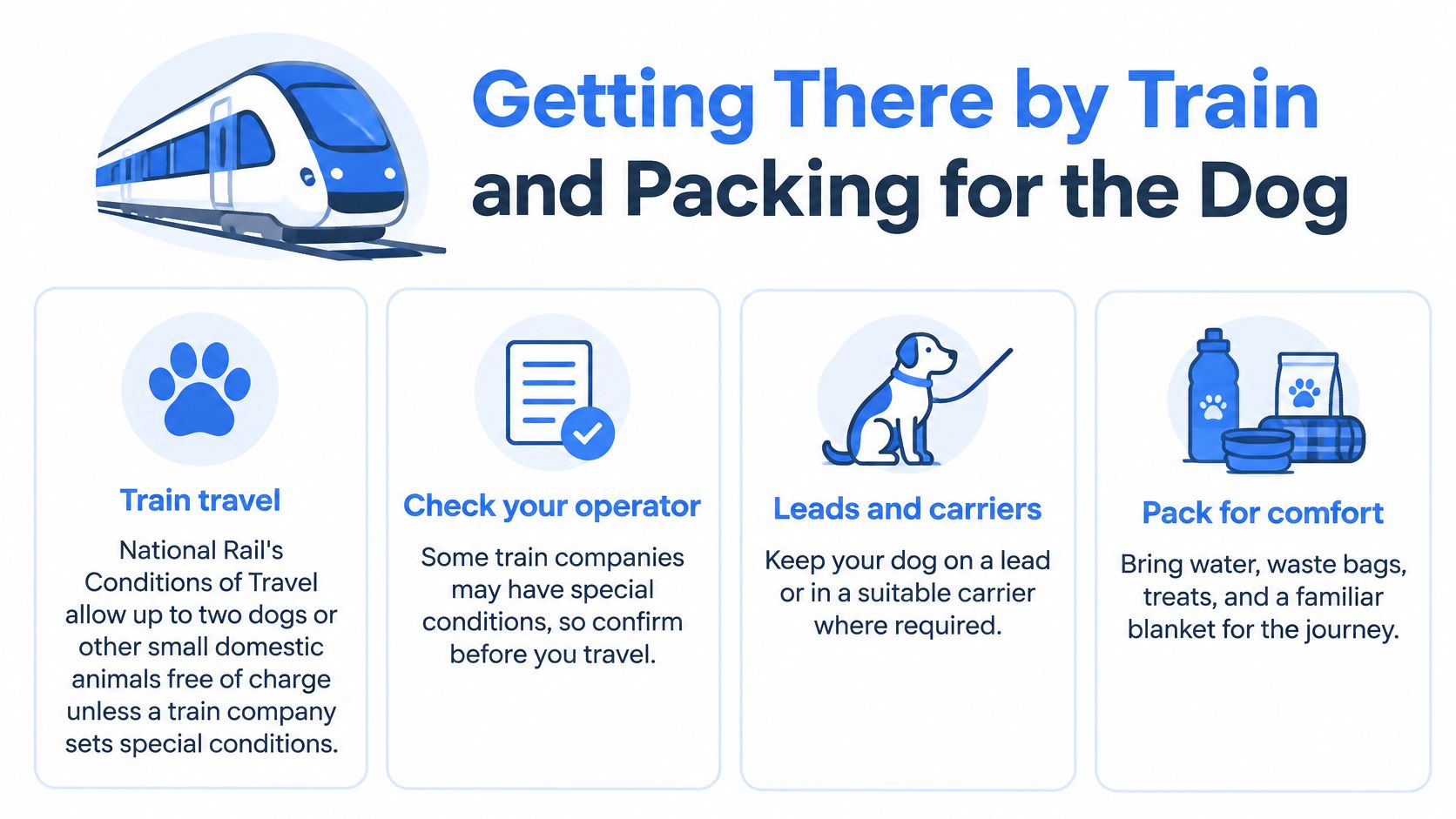
Under National Rail's Conditions of Travel, passengers may take up to two dogs or other small domestic animals free, unless an operator imposes special conditions; dogs must remain on leads throughout the journey and on station property, cannot occupy seats, and are excluded from buffet or restaurant cars unless permitted, with assistance dogs exempt from that restaurant-car restriction.
Use this checklist when preparing the journey.
Check the operator and pack for arrival
For connecting journeys, Great Western Railway's travel FAQs likewise allow up to two pets free, require a suitable lead and specify that pets remain on the compartment floor rather than sleeping on beds. Check every operator on your route, not just the company selling the ticket.
Consult the guide to Norwich train station while planning your arrival. Keep water, waste bags and a towel accessible rather than buried beneath clothing.
Lead and spare lead: A damaged clip shouldn't leave you without safe control.
Collar and identity tag: Include contact details and the holiday address so someone can reach you away from home.
Microchip details: Keep the registration information accessible and check your contact details are current.
Health records: Carry vaccination and parasite-treatment information, plus medication instructions.
Food, bowl and water: Bring the usual food for the stay rather than relying on finding the same product locally.
Towel or drying mat: Prepare for a wet arrival before opening your luggage.
Waste bags: Carry them on your person, not only in the main suitcase.
Familiar bed or crate: Give your dog a recognisable resting place, subject to the accommodation's space and rules.
First-aid kit: Include dressings, saline and any vet-advised supplies appropriate to your dog.
Arrange a pre-travel veterinary check, especially if your dog has ongoing health needs. Locate a practice near the accommodation before arrival and carry enough prescribed medication for the trip.
Emergency Vet, Wet Weather and Late-Night Plans
Where can your dog exercise before check-in, after dark or when rain makes the planned outing miserable? Who will you call if they become ill, and where will a wet, sandy dog dry without soaking the apartment?
Those questions deserve answers before you leave. Build a routine that still works when the weather changes or arrival takes longer than expected.
Prepare the support and walking options
Save veterinary contacts before booking. Find the nearest suitable daytime practice and the out-of-hours emergency service covering your accommodation. Confirm the emergency address and telephone procedure, then save both contacts and a map pin. Use this guide to vets in Norfolk as a starting point, but verify arrangements directly. This removes the need to search unfamiliar listings while dealing with an unwell dog.
Choose a wet-weather route and a daylight outing. Inspect a short paved option near the property and a more open route for suitable conditions. A Norwich park may work in daylight, but don't assume its gates remain open or paths are lit after dark. For a dune or marsh outing, check tides, access notices and the return route. This avoids relying on a single walk that becomes unusable.
Make the property work on arrival
Set up a drying area immediately. Put your own towel or drying mat inside the entrance, with the dog's washable bed beyond it. Keep water and waste bags accessible without blocking the doorway or a shared corridor. In an apartment, dry paws and belly before allowing the dog farther inside, and don't use guest bath towels without permission. This keeps sand and moisture away from bedding and upholstery.
Walk the toilet route before darkness. Locate the agreed spot, check the surface and learn how the entrance lock works when you're holding a lead. Take a torch even if the street appears well lit. If the host can't identify an appropriate nearby option before payment, resolve that gap first. This prevents a tired dog and an unfamiliar doorway becoming a late-night scramble.
A realistic bad-weather plan is a short, usable route and somewhere comfortable to dry off, not a promise to make the beach work regardless.
Sample Dog Break Itineraries Across Norfolk
Build an itinerary around a dog who needs rest as well as exercise. Visit Norfolk's dog-friendly beach guidance highlights considerations including tides at Wells-next-the-Sea, wildlife protection and local access controls, all reasons to keep coastal plans flexible.
A day within a coastal break
Say you're taking a three-day coastal break by car. On a typical morning, you visit a permitted beach after checking tide information and the signs at the entrance, then leave before the dog becomes tired or the access point grows uncomfortable.
Lunch is at a pub whose dog policy you've confirmed, with a table where your dog can lie without blocking a walkway. The afternoon becomes a footpath walk if the next beach section is restricted, rather than an attempt to squeeze through an exclusion zone.
Rule shaping the day: Beach access and wildlife notices decide the route, not the cottage's description.
Back at the property: Use the entrance drying area, offer water and allow undisturbed rest.
A slower Broads weekend
A Broads day starts with a lead-friendly path and an unhurried breakfast back at the cottage. Later, choose a riverside route with enough room to pass other walkers comfortably, turning back if narrow sections or activity beside the water unsettle your dog.
For self-catered meals, use this guide to farm shops near Norwich to plan supplies, then check whether dogs can accompany you or arrange shopping without leaving them unattended.
Rule shaping the day: Respect waterside signs, gates and the host's instructions for surrounding land.
Quiet evening: Check the garden boundary on arrival, supervise outdoor time and settle indoors after the drying routine.
A Norwich contractor's working day
Before work, take a predictable park or street loop rather than an ambitious excursion. A lunchtime paved walk works only if you can confidently return, otherwise arrange suitable care rather than assuming the dog can wait through a full shift.
After work, choose a longer route near the apartment. Save train outings for days when you have time to manage the whole journey comfortably.
Rule shaping the day: The accommodation's unattended-dog policy must fit the working schedule.
Adjust for the dog: Shorten outings for elderly or anxious dogs; give active dogs additional suitable routes from the door.
Booking Your Norfolk Dog Break With Confidence
Choose accommodation for the routine you can sustain, not the photograph you like most. A modest property with suitable access and clear terms can be a better fit than an impressive cottage that makes every walk complicated.
Before contacting a host, write down your dog's size, temperament, mobility and daily exercise needs. Shortlist suitable areas, then send the pet-policy questions through the booking platform so the answers remain attached to the reservation.
Make the booking decision on written answers
Compare the reply with the listing photographs and house rules. Resolve anything that could change your decision before paying, particularly supervision arrangements, outdoor security and the walk available during your travel dates.
Keep the confirmation: Save the property-specific permission and charges.
Verify the destination: Check current coastal notices for the intended outing.
Book the workable option: Don't rely on resolving an important mismatch after arrival.
Dog Friendly Self Catering Norfolk Guide: This post is sponsored by Stay Norwich Apartments, your furnished rental accommodation provider in Norwich, Norfolk, offering temporary or short-term furnished accommodation. You never know when you might need it. Rest assured that Stay Norwich Apartments will have you covered. Its website is staynorwichapartments.com, and you can use the property search to explore accommodation.
Apply the same checks to these listings as to any cottage, apartment or farm stay. Confirm that the individual property accepts your dog and that its conditions fit your plans.
Stay Norwich Apartments offers furnished, self-catering accommodation in Norwich for temporary stays, working trips and Norfolk breaks. Visit Stay Norwich Apartments to explore a Norwich base, then send your dog's details and ask for the individual property's pet conditions before booking.
Comments