


Beaches Near Norwich: 8 Norfolk Coast Day Trips

It's Thursday evening, the laptop is closed, and the forecast shows a clear afternoon on the coast. You have one free stretch during your Norwich stay. The key decision is which journey leaves you enough time on the sand to be worth the trip.
The beaches near Norwich support very different days out. Sea Palling suits a straightforward picnic and sandcastle afternoon. Cromer and Sheringham make sense without a car. Horsey rewards a wildlife-watching mindset, while Holkham deserves a proper day rather than whatever daylight remains after work.
Start with the kind of day you can realistically manage:
A short family outing: Prioritise nearby refreshments, straightforward access and a manageable return.
A car-free break: Check the return train before choosing where to eat.
A winter walk: Plan around daylight, weather and wildlife restrictions over swimming facilities.
Spacious sand does not guarantee easy access or safe swimming.
Parking, tides and the walk back with tired children matter just as much when comparing family-friendly spots along the coast, so weigh the journey as carefully as the beach itself.
This post is sponsored by Stay Norwich Apartments, a furnished rental provider in Norwich offering temporary and short-term accommodation. Current availability is listed on the Stay Norwich Apartments property search.
Table of Contents
2. Winterton-on-Sea Beach - A walking beach, not an equipment-heavy outing
4. Mundesley Beach - Check the route, not just the destination
5. Cromer Beach - Promenade and sand are two separate questions
7. Gorleston-on-Sea Beach - Choose the entrance that suits your group
8. Holkham Beach - Respect the reserve and the returning tide
How the Eight Norfolk Beaches Compare for a Day Trip from Norwich
Match Your Coast Day to Your Free Hours - Choose for the people travelling
1. Sea Palling Beach
Sea Palling keeps the day simple. Best for a straightforward beach afternoon, it puts the effort into sand and sea rather than a packed sightseeing schedule, with village refreshments and parking close to the shore. That suits a Norwich work week that leaves one free afternoon and no appetite for a complicated outing.
Offshore rock reefs shelter sections of the shoreline, but sheltered-looking water isn't a safety guarantee. Swim inside the red-and-yellow flagged area when lifeguards are operating, and stay clear of the reefs themselves.
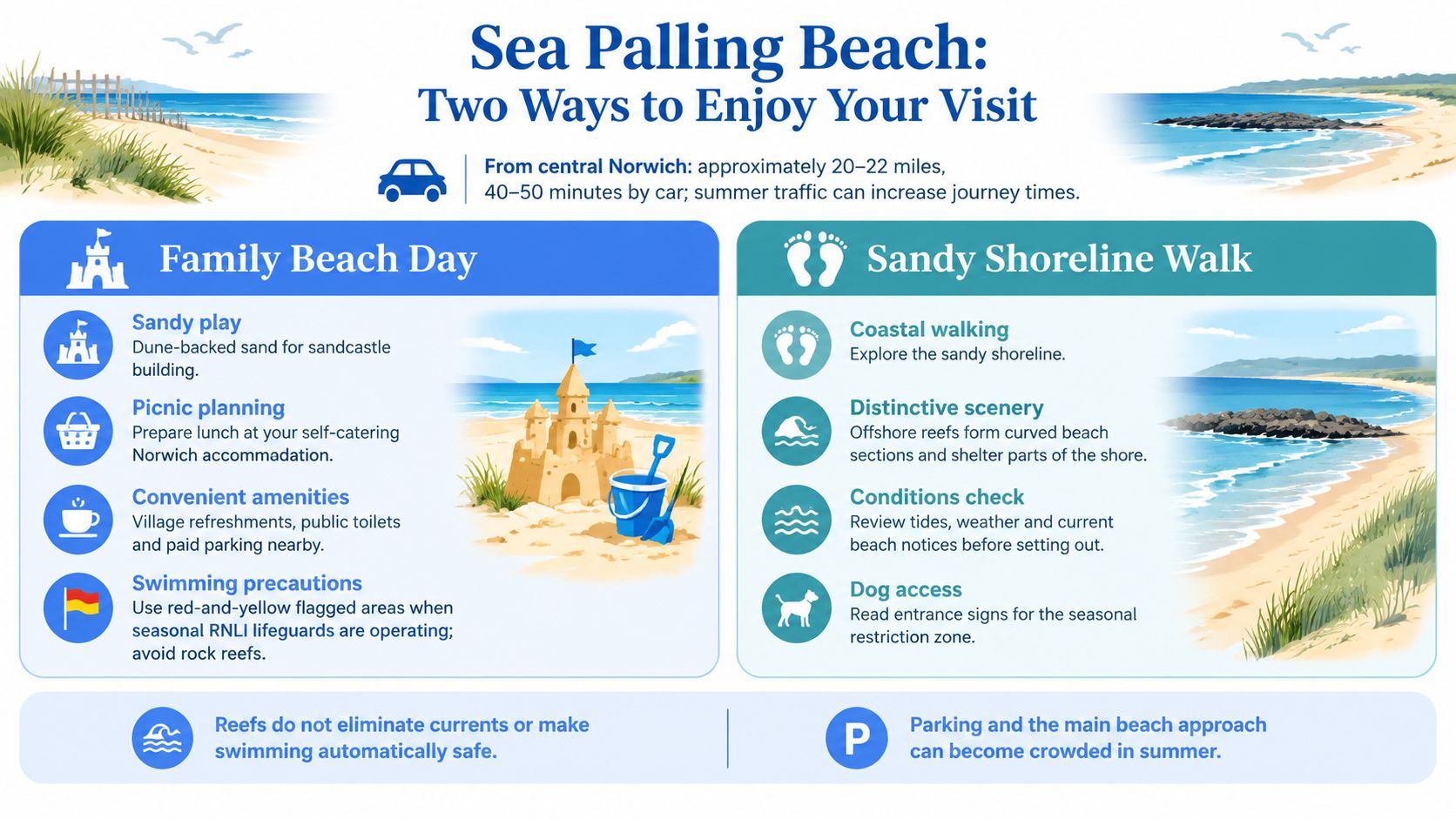
For young children, the appeal is a simple plan: arrive, find a suitable patch of sand and keep refreshments within reach. If you're staying somewhere with a kitchen, prepare a picnic before leaving Norwich so lunch is already sorted when you park.
Older guides may still show a Blue Flag badge for Sea Palling. The council's beach awards update records Sea Palling, Mundesley and East Runton moving from Blue Flag to Seaside Award status after their bathing-water assessments changed from excellent to good. The beach still earns the trip. The award label is the part that changed, so check current notices on the day rather than relying on a badge printed years ago.
Make the short outing work
A beach session and something to eat fills an afternoon well. Adding a second coastal village on top of the drive from Norwich usually means you enjoy both places less.
With a dog: Read the entrance signs for the exact restricted area before settling down.
Before swimming: Check current notices, weather and tide times.
Before driving: Check live traffic and parking arrangements, rather than treating a mileage estimate as a reliable arrival time.
Planning note: Pack the picnic and beach bag before your working day starts, then decide whether to leave once you've checked conditions.
2. Winterton-on-Sea Beach
Choose Winterton when you want a walk through dunes and a less developed coastal setting, rather than a promenade lined with distractions. Its broad sandy beach and the adjacent Winterton Dunes National Nature Reserve suit photography, walking and an unhurried break from a Norwich work routine.
By car, the usual route runs east from Norwich on the A47 toward Great Yarmouth, then north on the B1159 through Caister-on-Sea. Coming without a car means the train to Great Yarmouth and a bus or taxi onward to Winterton village, so check the connecting timetable before you commit rather than at the station. The beach car park sits at the end of Beach Road, behind the dunes, and the last stretch to the shore is on foot over soft paths.
That approach shapes who the visit suits. Walkers and photographers carrying only a camera and a flask can keep the afternoon flexible, picking a loop and setting their own turning point. A family with a pushchair needs more planning, since the route from car park to sand crosses the dunes.

A walking beach, not an equipment-heavy outing
Keep to the marked routes through the dunes and follow temporary conservation signs. Winterton works for a dog walk, but dog-friendly doesn't mean unrestricted: observe any seasonal lead requirements and keep your dog clear of seals hauled out on the sand.
A quieter-looking beach still needs an arrival plan. Decide how much you're willing to carry before you leave the car.
If your work week leaves one free afternoon, a simple loop earns its keep: out along the sand, back through the dunes. Fix your turning point early, because soft ground makes the return slower than the way out.
Planning note: Expect the walk from the Beach Road car park to the shoreline to be over dunes, and treat the Great Yarmouth onward connection as the deciding factor if you travel without a car.
3. Horsey Beach
A Norwich work week that leaves you one free winter afternoon points straight here. Horsey is the seal-watching beach on this list, a largely undeveloped stretch of shoreline where grey seals haul out and pupping runs through late autumn and winter. The whole visit is organised around watching wildlife from a sensible distance, so it suits a couple of quiet hours far better than a swim-and-sandcastles day.
Plan the trip backwards from daylight. Check the viewing arrangements before you set off, arrive with enough light for the walk out and back, and accept that seasonal closures can change where you're allowed to go. The guide to seeing seals at Horsey is a practical starting point for timing that kind of visit.
Let the wardens set the boundaries
Friends of Horsey Seals wardens, marked viewing routes and closure notices decide where you stand on the day. Bring binoculars or a zoom lens instead of edging closer, and never put yourself between a seal and the sea.
With children: Set expectations before you arrive. Seals are watched, not approached or touched.
With a dog: Keep it on a short lead and a long way from any seal on the sand. If holding that line will be a struggle, save Horsey for a dog-free trip.
For photographs: Stay on the permitted route and work with the view it gives you.
Dress for standing still, not for the walk from the car. Watching wildlife involves waiting, and exposed shoreline feels very different once you stop moving. That slower pace is the point of the place.
Planning note: Confirm the day's access and viewing arrangements before leaving Norwich, keep the return walk inside daylight hours, and if part of the beach is closed when you arrive, treat that as the answer rather than something to work around.
4. Mundesley Beach
Mundesley suits visitors who want a traditional village beach day without building the outing around a larger resort. There's a sandy shoreline, colourful beach huts and village amenities nearby, with a setting high above the beach.
That combination works well when different people want different things. Children can spend time on the sand while the adults keep the day simple, with refreshments close enough to avoid packing for every possible need.
The important trade-off is access. Nearby amenities don't tell you whether the route down will suit a wheelchair, a pushchair or someone who finds slopes difficult.
Check the route, not just the destination
Confirm the most suitable beach access before travelling with mobility requirements. Ask specifically about gradients, steps and the return climb, rather than relying on a general description of the beach as family-friendly.
Tide timing also affects how much sand you'll have to use. Plan around a wider beach if playing and walking are your priorities, but don't interpret exposed sand as permission to wander without checking how the water returns.
Near cliffs: Keep away from cliff edges and the base of unstable sections.
Before bathing: Follow current flags and local notices.
For a short stay: Choose either a beach session or a longer village visit, rather than rushing both.
For context, RNLI's seasonal patrol information included Mundesley among supervised Norfolk locations during its announced holiday coverage. That historical announcement isn't confirmation of cover on your travel date.
Planning note: Check tide times, access and current lifeguard arrangements before choosing Mundesley for a swimming-focused afternoon.
5. Cromer Beach
One free afternoon and no car? Cromer is the easiest fix. Trains run directly from Norwich, so the journey works as downtime rather than a second stint behind the wheel after a long week.
The Visit Norwich beach guide lists Cromer and Sheringham among the coastal stops with direct rail links. You still need to check the timetable for your day, but a single, direct service earns its place when a Norwich work week leaves you just one afternoon to use.
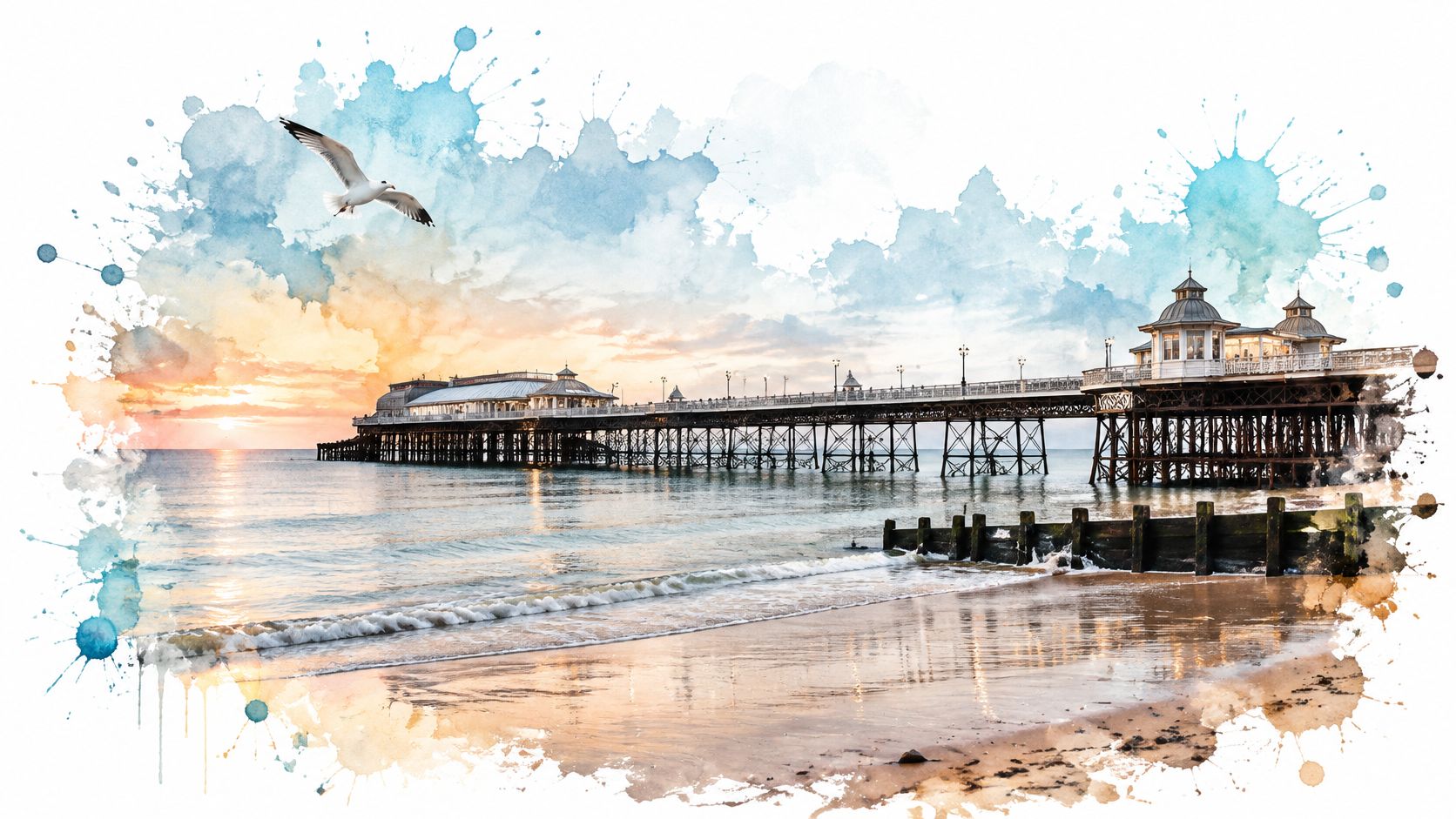
Cromer mixes sand and shingle with the pier, independent shops and places to eat. That matters when the weather turns or half your group loses interest in sitting on the beach. Locally landed Cromer crab is the obvious lunch when it's available, and pier performance dates can stretch the trip into an evening. The Cromer visitor guide can help you shape the town side of the day.
Promenade and sand are two separate questions
The official accessible beach guidance for North Norfolk identifies Blue Badge parking, accessible toilets and promenade access at Cromer, while warning that shifting beach levels can affect ramp usability. Treat the promenade as the dependable step-free option and confirm the route onto the sand itself on the day.
Train-day rule: Check the last suitable return before booking dinner or a performance, not after you've arrived.
Dog restrictions change seasonally, so confirm the rules for the stretch you plan to use before bringing a pet. Drivers should check which car park serves their intended entrance, since Cromer's spaces sit at varying distances from the seafront.
Planning note: Build the day backwards from your return train: beach first, crab lunch, then town or a pier show if timings allow.
6. Sheringham Beach
At Sheringham, the tide should decide the shape of your visit. Shingle dominates the upper shore, while lower water reveals sand and rock pools in places.
Turn up without checking and you may find a steep bank of pebbles where the guidebook photos promised sand. For curious children and walkers, timing matters more here than at most stops on this list.
Like Cromer, Sheringham works as a car-free trip from Norwich, and the town gives you shops, cafés and a heritage railway alongside the coast. It suits a mixed day better than a long stretch of uninterrupted sunbathing, which makes it a sensible pick when a work week leaves you one free afternoon and the weather forecast is uncertain.
Match the outing to the exposed shore
For rock pools, wear shoes with grip and leave marine life where you find it. Wet rocks need care, and young children still need close supervision even when the water around them looks shallow.
Past council reporting placed Sheringham among North Norfolk's Blue Flag beaches for that season, as noted earlier. Treat past results as context rather than a guarantee about the water on the day you visit.
For a rail-focused day: Book heritage railway tickets separately from your Norwich train fare.
For a dog walk: Check restrictions for the specific stretch you intend to use.
For bathing: Confirm the patrol area and operating dates rather than assuming the whole frontage is supervised.
The Sheringham travel guide helps when you want to pair the beach with time in town. Resist squeezing a railway excursion, a long lunch and rock pooling into one afternoon if the tide and the return train leave little room for all three.
Planning note: Pick your priority first, then check the tide and the train timetable together before setting off.
7. Gorleston-on-Sea Beach
A Norwich work week sometimes leaves one free afternoon and nothing more. Gorleston suits exactly that gap: a broad sandy bay with a promenade, cafés close to the shore and clifftop gardens for a sit-down with a sea view.
The resort setup keeps the logistics light. You park, walk a short distance and you are on the front. A car-free Cromer day hangs on train times; here, if you are weighing public transport, check every connection and the final approach to the beach, not only services heading towards Great Yarmouth.
Choose the entrance that suits your group
Start at promenade level if steps are a problem. Confirm the route from your parking space or arrival stop before you set off, especially with a wheelchair, pushchair or tired children in tow.
For wider planning, the Great Yarmouth visitor guide helps you decide whether to keep the outing on Gorleston's front or allow extra time for the surrounding area.
Gorleston appeared among Norfolk beaches with an excellent classification in the latest reported regional results, covered in the BBC's East Anglia bathing-water report. That rating measures bacterial compliance. It says nothing about currents, surf or lifeguard cover on the day.
Water-quality results answer a different question from whether swimming is sensible right now.
Keep clear of harbour structures, follow the bathing flags and check seasonal dog restrictions before bringing a dog onto the sand. An after-work evening visit falls outside lifeguard hours, so treat swimming as optional rather than the point of the trip.
Planning note: Check live traffic before leaving Norwich, pick your access point in advance and decide on the day whether conditions make a swim worth it.
8. Holkham Beach
Holkham asks for a full day. At roughly 38 to 42 miles and 65 to 80 minutes each way from Norwich, it's the longest drive on this list, and the distance keeps going once you arrive: park on Lady Anne's Drive, then walk through the pines before the sand even comes into view.
Save it for a free weekend day rather than the single afternoon a work week might spare. If you only have a few hours, one of the closer beaches earlier in this list will serve you better.

What you get for the effort is scale. The sands run for miles behind a pinewood fringe and protected habitats, and the beach suits long walks, birdwatching and coastal photography rather than a promenade-and-chips outing. Take water, sun protection and a windproof layer. Facilities sit back near the parking, so carry whatever you'll want on the sand.
Unlike Cromer and Sheringham, Holkham doesn't lend itself to a rail day out. This one is a drive, so check the route before you set off.
Respect the reserve and the returning tide
Holkham sits within a national nature reserve. Keep to marked routes, observe current dog zoning and seasonal lead requirements, particularly where nesting birds need space. Dogs and young children both do well here, but children fade on the return leg, so fix a turning point instead of treating the furthest visible sand as a destination.
Incoming tides reshape the channels quickly. The RNLI's Norfolk tidal cut-off guidance warns that shifting sandbars and fast-flowing channels can leave walkers stranded, so check tide times and local hazard signs before committing to a route across the flats.
If you're turning the drive into a longer stay, the Wells-next-the-Sea area guide covers what to do nearby. Confirm Lady Anne's Drive parking arrangements and facility opening times before you leave Norwich.
Planning note: Check the drive estimate, parking and tide times together, then protect enough daylight for the walk back.
How the Eight Norfolk Beaches Compare for a Day Trip from Norwich
Drive time alone won't pick your beach. Read the last column before the middle one: a slightly longer journey can still leave more time on the sand if parking and access are easier.
Distances and times below are approximate road estimates from central Norwich under typical conditions. Treat them as a planning guide rather than a promised arrival, and check a live route estimate on the morning you travel.
Beach | Approx. distance from Norwich | Typical drive | Best for |
|---|---|---|---|
Sea Palling | 20–22 miles | 40–50 minutes | Family days, easy sandy walks |
Winterton-on-Sea | 23–25 miles | 45–55 minutes | Quiet walks, nature photography |
Horsey | 24–26 miles | 45–55 minutes | Winter seal watching, wildlife trips |
Mundesley | 21–23 miles | 40–50 minutes | Traditional seaside, quieter sands |
Cromer | 23–25 miles | 45–55 minutes | Car-free trips, heritage and entertainment |
Sheringham | 26–28 miles | 50–60 minutes | Rail excursions, rock pools |
Gorleston-on-Sea | 23–25 miles | 35–50 minutes | Families, promenade walks, amenities |
Holkham | 38–42 miles | 65–80 minutes | Full-day escapes, long walks, birdwatching |
Where two rows match on time, let the kind of day decide.
Match Your Coast Day to Your Free Hours
Start with the hours you have, not the beach you most want to see. A half-day window suits Gorleston or Sea Palling, where the drive stays short and parking sits close to the promenade. Cromer and Sheringham work better for a car-free afternoon, since trains run direct from Norwich station. Holkham earns its longer journey only when you can give it a full day.
Check live driving estimates on the morning you leave. Your starting address, traffic on the ring road, the parking search and the walk to the sand all eat into beach time. The closest destination on a map can still be the wrong choice if its access doesn't suit your group.
Travelling without a car needs the same honesty. Price up the whole return trip: the train, the station-to-beach walk, and the last connection back to your base before evening services thin out.
Choose for the people travelling
Young children change the maths. Nearby toilets, food and a short walk back to the car matter more than finding the widest stretch of sand. Dog owners should check the exact seasonal restriction zones on arrival, because a general dog-friendly label can hide a summer ban on the main beach. Winter seal watching points to Horsey, with responsible viewing distances built into the plan from the start.
Accessibility questions need the same precision. Ask about steps, slopes, changing beach levels and the firmness of the path onto the shore. Accessible parking alone doesn't guarantee an easy reach of the sand.
Swimming plans: Check current bathing-water advice, local flags and patrol dates.
Walking plans: Check tides, daylight and any conservation closures.
After-work plans: Keep the itinerary small enough that a delayed departure won't spoil it.
The Environment Agency's explanation of bathing-water monitoring separates a beach's longer-term classification from the conditions on a given day. Heavy rain or a pollution incident can shift the advice, so make that final check before anyone enters the water.
A furnished city base keeps beach plans flexible when the Norwich stay involves work, relocation or temporary housing. A kitchen handles picnic preparation the night before. A workspace lets you close the laptop at a normal hour and still make an afternoon train.
Count the free hours first, then pick the beach. A simple outing with time to spare beats an ambitious one spent watching the clock.
Stay Norwich Apartments offers furnished, self-catering accommodation for short stays and longer visits in Norwich, with kitchens and workspaces suited to combining work with time exploring Norfolk. Choose dates that fit your commitments, then plan a coastal afternoon around the hours left over.

Comments