


7 New Developments Norwich Renters Should Know

Updated: Sep 5
You're considering a move to Norwich for a new job, student placement, contract, renovation or family relocation. The difficulty is that the city's most prominent housing schemes aren't all at the same point. Some are being demolished or prepared for construction, some are deep in planning, and others already have occupied phases while further homes are still being planned.
This roundup separates developments with direct housing potential from projects that may increase employment and short-stay demand without delivering homes themselves. For each, the useful questions are practical: where is it, how certain is the delivery stage, who's most likely to rent there, what transport and amenities support daily life, and where can you stay while the permanent option catches up?
The wider construction market includes major firms listed among the top contractors in UK construction, but a headline announcement still isn't a move-in date. If your timing is uncertain, Stay Norwich Apartments provides a landlords-direct option for furnished accommodation when you need it, for as long as you need it. The arrangement is simple: no hassle, no drama, pay and stay.
Table of Contents
1. Anglia Square Regeneration - The practical rental decision
2. East Norwich Regeneration - Where temporary accommodation fits
3. Mile Cross Depot Phase 1 - Who this scheme may suit - A sensible timing approach
4. Deal Ground Trowse - Waterfront appeal versus delivery complexity
7. Norwich Research Park GB1 and Hawkmoth - Why non-residential schemes matter
1. Anglia Square Regeneration
Anglia Square is the clearest current example of major new development in Norwich. Norwich City Council and Aviva Capital Partners agreed a £350 million redevelopment of the former shopping-centre site in July 2025. The project covers 11 acres, with demolition beginning in February 2026 and the first homes expected in 2028, according to Norwich City Council's redevelopment update.
The scheme is designed to deliver 1,100 homes, together with retail and community facilities. It's also expected to create over 3,500 jobs across an eight-year build period. A £34 million Homes England grant helped the council purchase the site in December 2024, demonstrating the combination of public funding and private capital behind the regeneration.
For future residents, the city-centre location is the main advantage. Shops, services, public transport and the historic centre are close, which should suit professionals, students, relocating households and tenants who don't want a car-dependent routine. The mixed-use design may also support a more active neighbourhood once completed.
The practical rental decision
The major limitation is timing. Demolition and enabling works are active, but the expected first homes are still a future milestone rather than available stock. Construction traffic, noise and changing access arrangements may affect nearby residents and workers before the finished benefits arrive.
If you're involved in the project as a contractor, consultant or supplier, a furnished base can be more useful than committing to a future apartment that isn't yet lettable. For anyone researching the city's changing character, Norwich's evolution into a cosmopolitan hub provides useful local context.
Practical rule: Treat the 2028 expectation as a planning horizon, not a guaranteed tenancy date. Ask about completion, tenure, unit sizes and release timing when the developer publishes specific details.
2. East Norwich Regeneration
East Norwich is a city-shaping programme rather than a single apartment block. It brings together brownfield riverside sites including Carrow Works, the Utilities Site, Deal Ground and Trowse, under the coordination of the East Norwich Delivery Board. The council's economic development material positions the programme as a long-term combination of homes, employment space, transport improvements and new neighbourhood infrastructure. Details are available through the East Norwich regeneration programme.
The strategic framework identifies around 4,000 homes by 2038 and up to 100,000 square metres of employment space. Those figures are projections within the city's growth programme, not a promise that every home will arrive at once. Delivery is expected to be phased across multiple sites, with work slated to begin from 2026 under the council's economic development plan.
The riverside setting and proximity to the city core and rail connections are attractive. A successful programme could create a substantial new residential area with local services, active-travel routes and employment nearby. That mix should appeal to professionals, families and renters seeking a neighbourhood rather than an isolated building.
Where temporary accommodation fits
The drawback is sequencing. Multiple owners, utilities, bridges, transport links and other infrastructure dependencies can determine which parcels move first. A person taking a contract near Carrow Works may need accommodation well before a completed East Norwich neighbourhood exists.
The scheme is therefore relevant to more than prospective buyers and renters. Contractors, project managers, engineers, planners and professional services teams could create sustained demand during the long delivery period. A short-term apartment near the city centre or rail station can reduce the disruption of a weekly commute while the project develops.
The best question isn't whether East Norwich will add homes. It's whether the specific parcel you're watching has a confirmed planning, construction or occupation milestone.
3. Mile Cross Depot Phase 1
Mile Cross Depot offers a more defined near-term housing story. Norwich City Council is redeveloping the former municipal depot with Phase 1 delivering 67 energy-efficient council homes for rent. Lovell Partnerships was appointed as main contractor in January 2026, and enabling and ground works are underway. The council's announcement is set out in its update on 67 affordable homes at Mile Cross.
That clarity matters. The project has a named contractor, a public-sector client and a transparent planning record, including planning reference 24/00134/NF3. It's easier to monitor than a broad regeneration vision because the first phase has a specific purpose and delivery team.
Who this scheme may suit
The homes are intended for council rent, so they won't operate like ordinary open-market furnished apartments. The likely relevance is to households eligible for the relevant affordable housing route, rather than business travellers, contractors or students looking for immediate private accommodation.
Mile Cross is also a brownfield redevelopment, which makes the project useful from a city-planning perspective. Reusing a municipal site can add housing without treating every new requirement as an expansion into undeveloped land. Its energy-efficient specification may also help create homes designed around lower operational demand, although residents will still need to confirm the eventual property details and bills arrangements.
The first phase is modest compared with Norwich's wider housing requirement, and future phases may change as site constraints become clearer. That makes the project a solid example of active delivery, but not a complete answer to the city's rental shortage.
A sensible timing approach
If you're waiting for affordable housing, follow the council's updates rather than relying on general property listings. If you're working on the construction programme or relocating before the homes are occupied, arrange interim accommodation separately. A furnished, self-catering apartment provides a practical bridge without assuming that the completed council homes will be available to you.
4. Deal Ground Trowse
Deal Ground is one of the most important detailed planning opportunities within East Norwich. The site is a large waterfront plot close to the city and rail network, and its reserved matters application, 23/00774/RM, includes detailed layouts, landscaping and technical reports. The published material can be reviewed through the council's Deal Ground planning application.
That level of documentation makes Deal Ground different from an early concept. Prospective residents, contractors and nearby businesses can examine more than a broad vision, including the proposed arrangement of buildings, open space and technical infrastructure. It still isn't the same as a confirmed occupation date, however. Approvals, infrastructure connections, market conditions and site history can all affect sequencing.
Waterfront appeal versus delivery complexity
The location could support a strong tenant profile. Professionals who work in the city, households wanting access to the centre and commuters using the rail network may value the combination of riverside surroundings and connectivity. New amenities and active-travel links could improve the area over time, but residents arriving in an early phase may experience a less finished neighbourhood while later works continue.
A detailed planning application tells you what has been applied for. It doesn't tell you exactly when every home will be marketed, completed or ready for occupation.
Multiple ownership interests and infrastructure requirements create practical uncertainty. That matters for anyone accepting a job or contract based on the assumption that a future development will provide an easy housing solution. A nearby furnished base can cover the gap while the scheme moves through approvals and construction. For a broader view of the area's character, see this guide to the River Wensum and Norfolk.
Deal Ground is best understood as a promising medium- to long-term location, not an immediate rental listing. Check the reserved matters status, follow subsequent applications and ask agents for confirmed release information before making a move based on it.
5. St Anne's Quarter
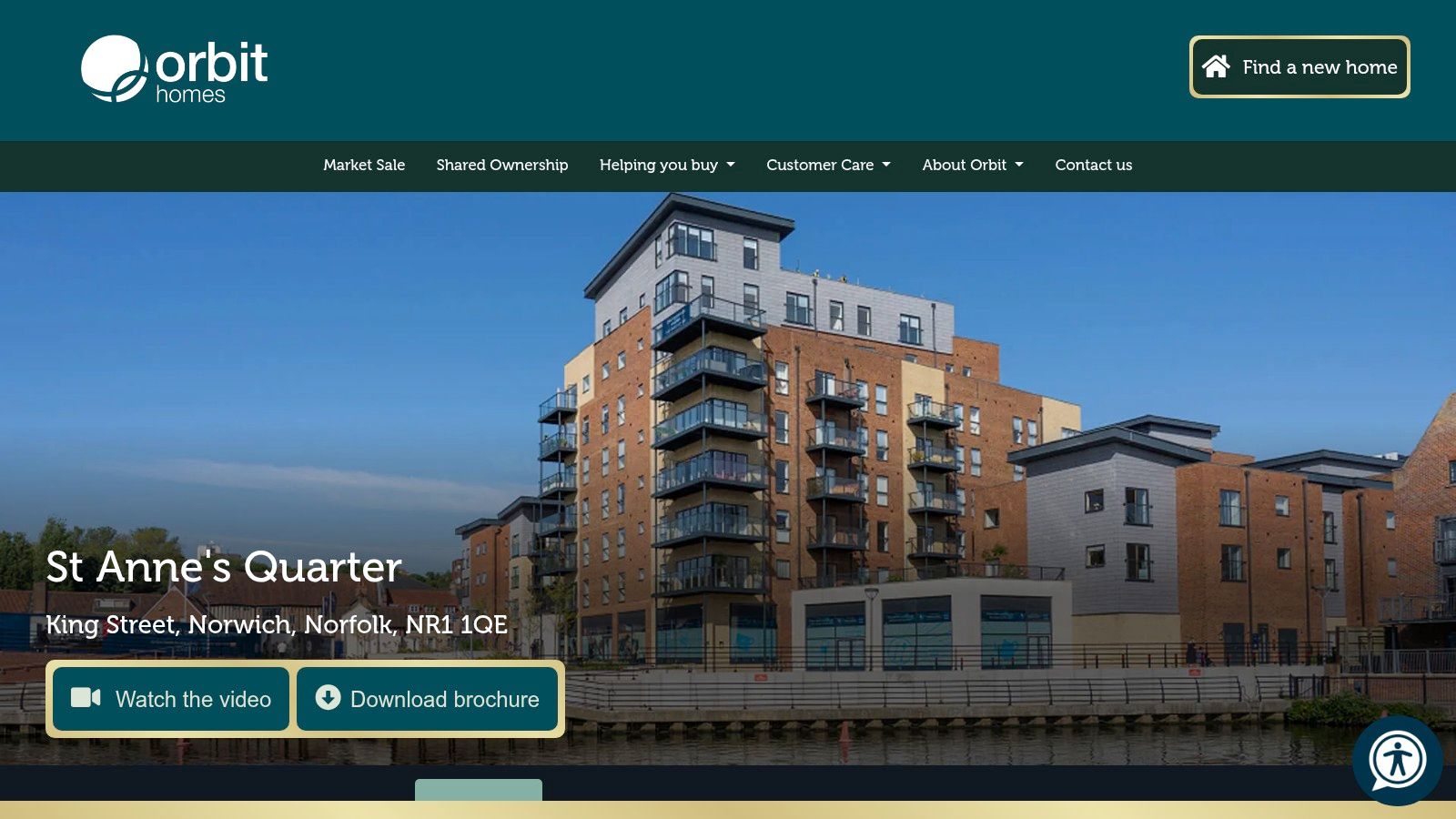
St Anne's Quarter is further along than the major proposals still working through consultation. Orbit Homes has already delivered occupied residential phases in Norwich NR1, alongside community infrastructure including a community hub opened in December 2024. Procurement notices also indicate a further pipeline of approximately 190 homes, although later phases remain subject to procurement and market timing. Orbit's St Anne's Quarter information provides the developer's current project context.
The central location is a practical strength. The site sits within walking distance of Norwich station and the city core, which makes it relevant to commuters, professionals, students and visitors who prefer to combine walking with rail and local transport. An occupied neighbourhood also gives renters more confidence that shops, routes and services are not purely future promises.
The trade-off for tenants
7 New Developments Norwich Renters Should Know: A mature development usually carries less speculative risk than a project still awaiting consent. You can assess the surrounding streets, noise, parking and walking routes in real life. That's useful for families and relocating workers who need to make a decision based on today's routine, not a future masterplan.
The disadvantages are local and practical. Parking can be pressured, and match-day traffic may create congestion. Later construction can also affect access and outlook for people already living on the site. A future phase may add choice, but it may also bring another period of noise and vehicle movements.
For anyone choosing a temporary Norwich base, NR1's central position can be more valuable than waiting for a specific new-build release. Norwich architecture and the visitor's guide can help newcomers understand the surrounding city-centre environment.
Ask about tenure, furnishing, parking, service charges and actual completion status. Don't assume that the presence of earlier occupied phases means the next homes are ready or available on the same terms.
7 New Developments Norwich Renters Should Know
6. Victoria House
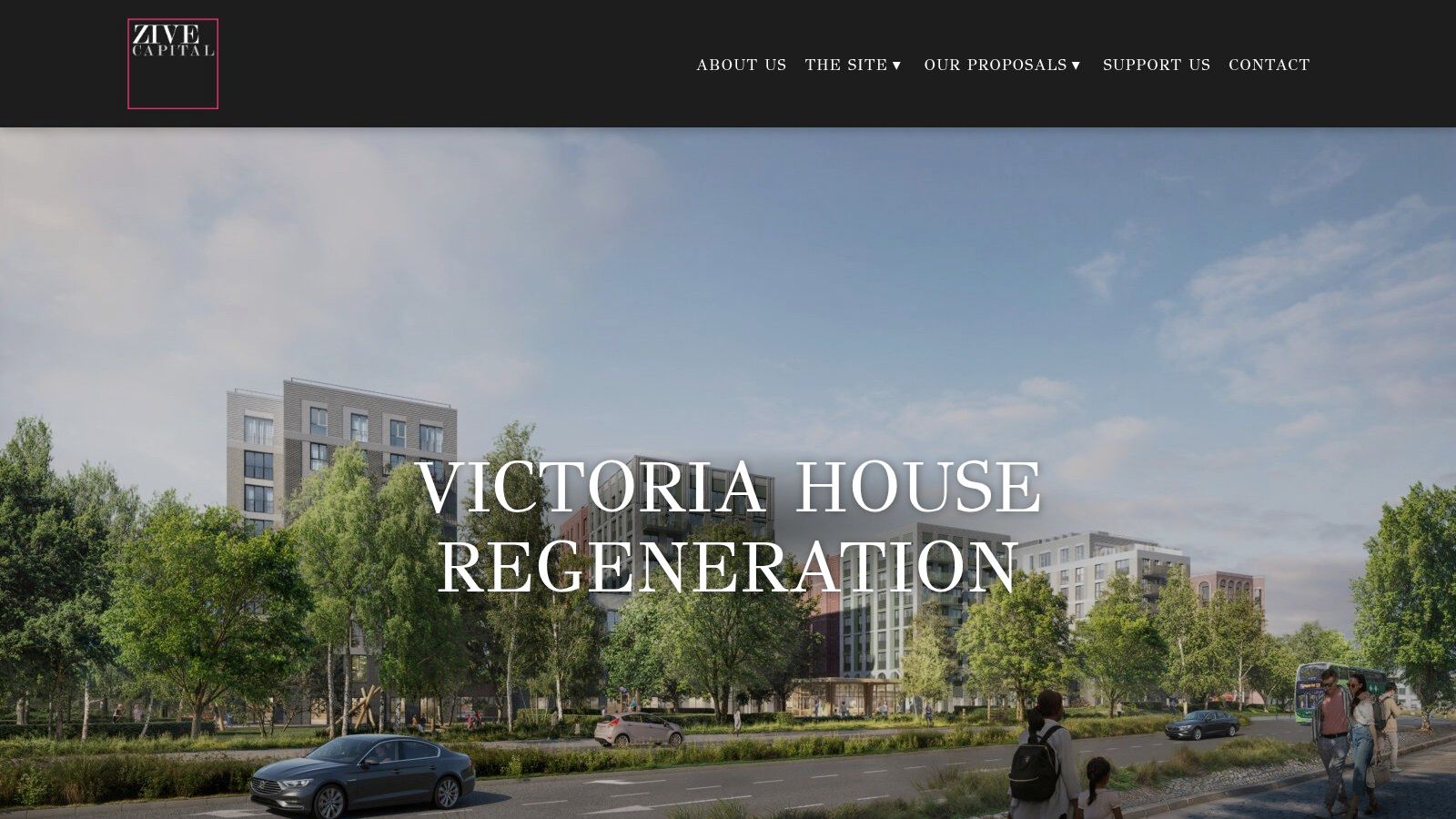
Victoria House is a proposed build-to-rent scheme on the former Marsh offices site in the city centre, led by Norwich Victoria Ltd and Zive Capital. Consultation materials describe a mixed-use project with reduced building heights compared with earlier office massing, new landscaping, tree planting, gardens and public routes through the site. The proposal was being refined after consultation during winter 2025/26, with current information available through the Victoria House consultation site.
Build-to-rent is particularly relevant to renters because the entire concept is designed around professionally managed rental accommodation rather than individual apartment sales. If approved and delivered, a central scheme of this type could appeal to professionals, corporate tenants and people relocating to Norwich who want a single managed building with shared facilities and straightforward tenancy administration.
What renters should not assume
The project remains at the planning and consultation stage. The final apartment mix, amenity package, rents, furnishing arrangements and occupation timetable aren't fixed in the material available to prospective tenants. Public gardens and improved permeability could benefit the wider area, but those outcomes depend on the approved and constructed design.
The former employment site also creates an interesting transition. Reusing a prominent city-centre location could add homes without putting residents far from jobs, transport or services. It may also increase demand for nearby temporary accommodation while planning, construction and fit-out progress.
Check the rental product, not just the render: Ask whether the eventual homes will be furnished, what utilities are included, how parking works and whether flexible terms will be offered.
If you're comparing an eventual build-to-rent apartment with an immediate serviced apartment, the former may offer a longer-term managed home, while the latter solves the timing problem now. This guide on what to look for when renting an apartment in Norwich covers the practical questions that matter before committing.
7. Norwich Research Park GB1 and Hawkmoth
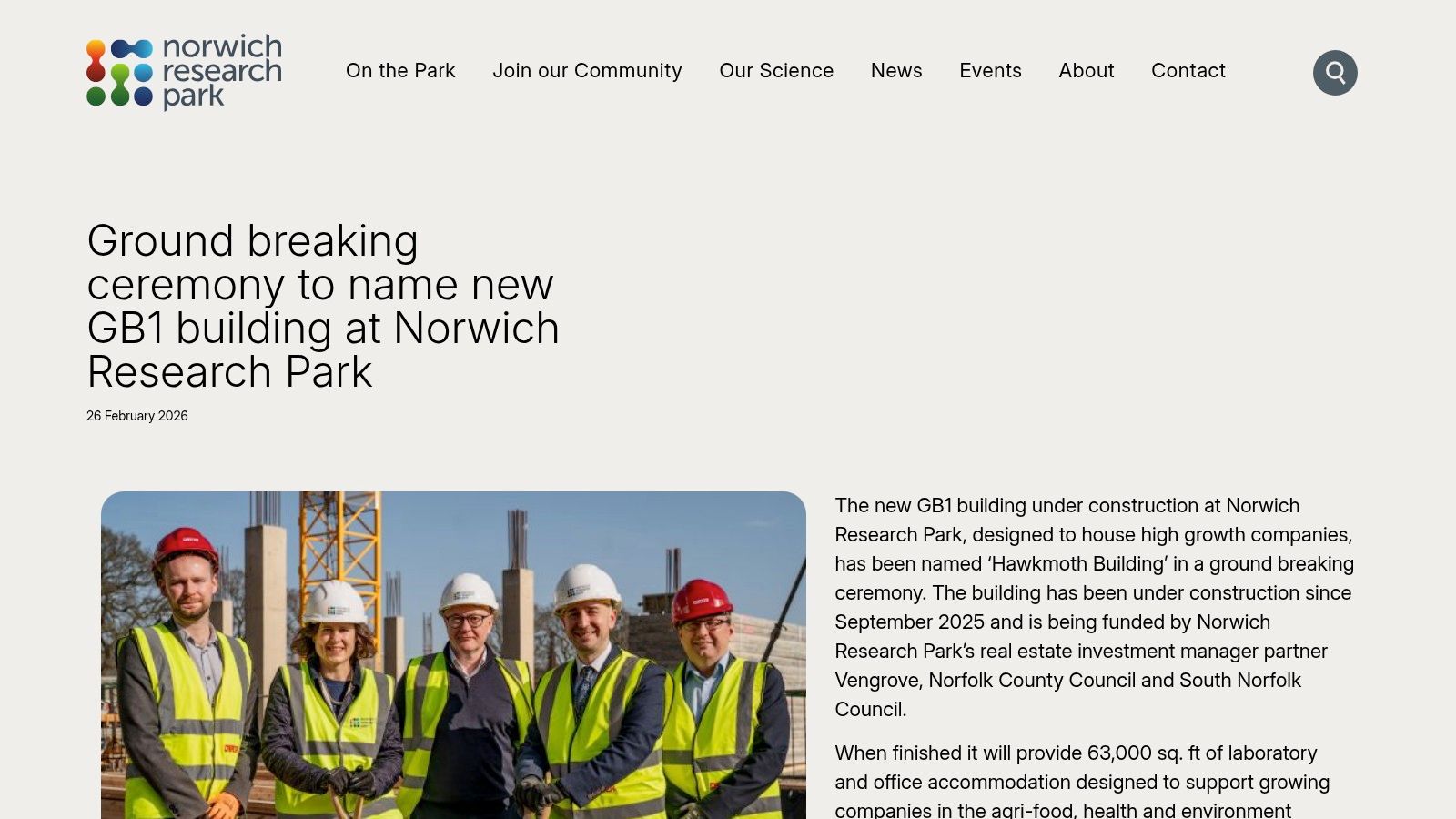
Not every important new development in Norwich delivers housing. GB1, also referred to as Hawkmoth, is a new laboratory and innovation building at Norwich Research Park. Ground-breaking took place on 26 February 2026, and local authority capital support has been provided to accelerate delivery, according to the Norwich Research Park announcement.
The project will add research and development space for life-science and technology organisations close to the University of East Anglia, Norfolk and Norwich University Hospital and established bioscience institutes. That makes it highly relevant to employment, business travel and contractor demand even though it doesn't create residential units.
Why non-residential schemes matter
A laboratory project can bring in construction teams, specialist installers, researchers, visiting academics, suppliers and business partners. Those people may need accommodation for weeks or months, often before the building becomes operational. Contractors also need different features from ordinary tourists, including a proper kitchen, workspace, reliable Wi-Fi and a calm place to work outside site hours.
The location near UEA and the hospital research environment may suit university visitors and relocating professionals, but daily transport still needs checking. A room that looks close on a map may not fit a shift pattern, equipment needs or parking arrangements. Tenant fit-out and construction sequencing can also influence when organisations begin using the space.
For students and university visitors, a furnished apartment can provide more independence than a hotel. The University of East Anglia guide is a useful starting point for understanding the university area and its relationship with the wider city.
GB1 and Hawkmoth should therefore be tracked as an employment-led demand driver. It won't solve Norwich's housing requirement directly, but it may strengthen the case for flexible accommodation near the research park and across the city.
Comparison of 7 New Norwich Developments
Project | Implementation complexity 🔄 | Resource requirements ⚡ | Expected outcomes 📊 | Ideal use cases 💡 | Key advantages ⭐ |
|---|---|---|---|---|---|
Anglia Square Regeneration | High, multi‑phase council/institutional JV with demolition & enabling risks 🔄 | Very high, institutional finance, major construction and infrastructure needs ⚡ | Mixed‑use city‑centre delivery: new homes, retail, community space; long‑term urban re‑stitching 📊 | Flagship city‑centre placemaking and strategic housing/jobs delivery 💡 | Strong political/funding support and central location improves delivery likelihood ⭐⭐⭐⭐ |
East Norwich Regeneration (Carrow Works, Utilities Site, Deal Ground/Trowse) | Very high, 50ha masterplan across multiple owners; phased over decades 🔄 | Very high, long pipeline, major infrastructure (bridges/utilities) and private/public investment ⚡ | Large scale: ~4,000 homes to 2038, up to 100,000 m² employment space; new neighbourhoods and connectivity 📊 | Strategic, long‑term urban expansion and mixed residential/employment neighbourhoods 💡 | Coordinated governance and riverside sites offer transformational growth potential ⭐⭐⭐⭐ |
Mile Cross Depot – Phase 1 | Low–medium, single‑site, council‑led Phase 1 with named contractor; predictable delivery 🔄 | Medium, modest scale construction, council funding and established procurement ⚡ | Short‑term delivery: 67 energy‑efficient council homes for rent; brownfield reuse 📊 | Immediate affordable housing delivery and municipal asset reuse 💡 | Clear near‑term delivery, transparent planning and low speculative risk ⭐⭐⭐ |
Deal Ground, Trowse (Reserved Matters within East Norwich) | Medium, detailed reserved matters stage with technical reports; site complexity remains 🔄 | High, large waterfront plots require significant construction and infrastructure tie‑ins ⚡ | Waterfront mixed‑use housing over multi years; visible phasing via published planning 📊 | Large‑scale waterfront housing that can catalyse local amenities and active travel links 💡 | Detailed design documents increase certainty; strong build programme potential ⭐⭐⭐⭐ |
St Anne's Quarter (Orbit Homes) | Low–medium, established phased delivery with delivered units and ongoing procurement 🔄 | Medium, developer‑led construction with existing on‑site infrastructure ⚡ | Delivered residential units, community hub, pipeline for ~190 more homes; ongoing activity sustains area 📊 | Mature neighbourhood expansion, private developer delivery and amenity consolidation 💡 | Track record of completions reduces speculative risk; existing services and occupancy ⭐⭐⭐⭐ |
Victoria House (Build‑to‑Rent) | Medium, BTR proposal under refinement post‑consultation; planning dependent 🔄 | Medium, private BTR investment with public realm improvements required ⚡ | Central BTR product with new public gardens and accessibility; housing for renters once approved 📊 | Purpose‑built rental housing targeting professionals and corporate tenants 💡 | Attractive central rental offering and improved public realm; flexible product for city centre ⭐⭐⭐ |
Norwich Research Park – GB1/Hawkmoth (lab/innovation) | Medium, specialised non‑residential build with tenant fit‑out sequencing 🔄 | High, laboratory fit‑out, research equipment, and public capital support ⚡ | New R&D/innovation floorspace strengthening life‑science cluster; high‑skill jobs and business demand 📊 | Expansion of research and innovation capacity, incubators and tech cluster growth 💡 | Boosts regional research economy and demand for specialised services; public backing accelerates delivery ⭐⭐⭐⭐ |
How to Plan Your Norwich Stay Before Your New Home Is Ready
The main lesson from these new developments in Norwich is that “coming soon” covers several very different realities. Anglia Square has entered demolition and enabling works, Mile Cross has active early construction activity, St Anne's Quarter has occupied phases, Victoria House remains a build-to-rent proposal under refinement, and East Norwich and Deal Ground involve complex phased delivery. Norwich Research Park adds another layer because it may generate jobs and temporary accommodation demand without providing homes itself.
Check the latest planning or delivery stage for the specific scheme you're considering. A council announcement, consultation document or planning application can explain the direction of travel, but it shouldn't be treated as a guaranteed move-in date. Indicative delivery dates can change because of approvals, procurement, finance, infrastructure, contractor sequencing and market conditions.
The location check needs to be equally specific. Compare the route to work, university, hospital, station and school with the intended tenant's actual daily routine. Look at parking, public transport, walking routes, shops and services, then consider whether those amenities already exist or are part of a later phase.
When units are eventually released, ask developers or agents about:
Unit types: Confirm the size, layout, furnishing and storage arrangements.
Tenure: Establish whether homes are for private rent, council rent, shared ownership or another arrangement.
Costs: Request the rent, deposit, utility position, parking charges and any service charges in writing.
Availability: Ask whether the quoted date means marketing, practical completion or occupation.
Construction impact: Check how later phases may affect access, noise, outlook and parking.
A furnished temporary base is sensible when your start date is fixed but the new home isn't. Contractors, business travellers, relocating families and students can all lose time and money by waiting for a development that hasn't reached occupation. Booking early can give you a stable place to work, study and manage the move while you confirm the permanent option.
Stay Norwich Apartments offers furnished, self-catering accommodation with kitchens, workspaces, fast Wi-Fi and clear rates. The service supports online viewings, flexible stays and responsive assistance seven days a week from 9 am to 9 pm. It's designed for practical temporary living, including business trips, contractor stays, university visits and periods between homes, with the straightforward pay-and-stay approach described at the start.
The apartments can also suit families who need more than a hotel room, particularly when a kitchen and separate workspace make a longer stay easier. A complimentary guest guidebook, including a Norfolk map and local recommendations, helps visitors explore Norwich, the Norfolk Broads and the nearby coast. For someone moving into a new property, a considered housewarming gift guide is a small but useful reminder that settling in involves more than collecting keys.
7 New Developments Norwich Renters Should Know: Use the developments as location clues, not promises. Verify the current stage, match the area to your routine and keep a flexible accommodation plan until the home you want has a confirmed release and occupation date.
If you're working on a Norwich development, relocating between homes or waiting for a new-build completion, Stay Norwich Apartments offers furnished self-catering apartments with kitchens, workspaces, fast Wi-Fi and flexible stays. Visit Stay Norwich Apartments to arrange a practical temporary base and keep your move simple while the city's new homes take shape.
Comments