


Alternative Accommodation Insurance for UK Hosts and Guests

You do everything right. The guest checks in, the apartment looks fine, then a burst pipe turns the hallway into a mess and the electrical system goes down. At that point, the question is blunt, where does everyone sleep tonight, and who pays for it?
That's where alternative accommodation insurance stops being a footnote and becomes the claim that decides whether a bad day stays manageable or turns into a financial bleed. Most hosts and guests assume “insurance” means someone will sort the move, the hotel, the rental, and the extras. In practice, the policy wording decides everything, and the gap between expectation and payout is usually where the dispute starts.
If you manage short lets, serviced apartments, or you're a guest suddenly displaced, you need to know the trigger before the crisis. A useful starting point is the checklist for insurance coverage by ScanStay, but the test is always your own wording, not a generic checklist. For a local example of how temporary stays get handled in practice, see this guide on issues at home and need temporary accommodation.
Table of Contents
When Your Property Becomes Uninhabitable - The 24-hour decisions that matter
What Alternative Accommodation Insurance Actually Covers - The trigger is damage, or a forced evacuation
Policy Types for Hosts and Guests - The main policies do different jobs
Common Exclusions and Costly Pitfalls - The exclusions that trip people up
How to Compare Policies Effectively - Start with the numbers that control the claim
Practical Checklist for Operators and Travellers - For serviced-apartment operators - For travellers
When Your Property Becomes Uninhabitable
A 2 a.m. call changes everything. A serviced-apartment operator in Norwich gets told a guest is standing in a flooded hallway, the electrics are dead, and the unit can't be used safely. That's not a cleaning problem. That's a potential insurance claim, and the clock starts running immediately.
The first move is simple, but people still get it wrong. Notify the insurer, document the damage, and don't book replacement accommodation on instinct before you know whether the claim is accepted. Insurers commonly need confirmation from loss adjusters or contractors before authorising relocation costs, because the core test is whether the property is uninhabitable, not just inconvenient.
The 24-hour decisions that matter
Practical rule: if you source accommodation before you've notified the insurer, you risk funding the gap yourself.
The next decisions are practical, not dramatic. You need timestamped photos, a clear note of what's damaged, and a realistic check on whether the replacement stay is comparable. If the policy promises housing that is substantially the same as the insured home, the accommodation choice matters. A guest expecting a furnished apartment with a kitchen won't be impressed by a basic room with no cooking facilities.
The other mistake is delay. Claims drift when nobody confirms the trigger, nobody agrees the standard of replacement, and nobody tracks costs from day one. That's why hosts and guests need the claim process in advance, not after the flood. A decent operator keeps a ready-made response plan, and a useful model is the one laid out by temporary accommodation guidance from Stay Norwich Apartments.
What Alternative Accommodation Insurance Actually Covers
Alternative accommodation cover is not a luxury add-on. In UK home insurance, it's a standard claims feature designed to pay for temporary housing when an insured event leaves a home unsafe or legally unfit to occupy, and policy documents show it usually aims to cover the extra cost of accommodation that is substantially the same as the insured home while repairs happen, with some landlord policies capping it at £175 per day for up to 30 days, plus up to £15 per day for storage over the same period, according to the policy wording in a landlord legal and rent protection document from OpenRent's policy pack Landlord Legal and Rent Protection policy wording.
The trigger is damage, or a forced evacuation
The main trigger is clear, a fire, flood, storm damage, or escape of water that makes the property unfit to live in. UK insurance guidance also distinguishes a second situation, precautionary evacuation, where people are told to leave because of a nearby safety risk, but there's no property damage to their own home. In those cases, standard home insurance usually doesn't treat emergency accommodation as an automatic claim, and local authority support is more common UK insurance briefing on evacuation support.
That distinction matters because the policy isn't paying for “inconvenience”. It's paying for displacement caused by an insured event, or a property that is unsafe to occupy. In practical claims handling, the cover usually includes hotel stays, serviced apartments, temporary rentals, and reasonable extra living expenses, but only for the period needed to complete reinstatement and only within policy conditions Morgan Clark glossary on alternative accommodation.
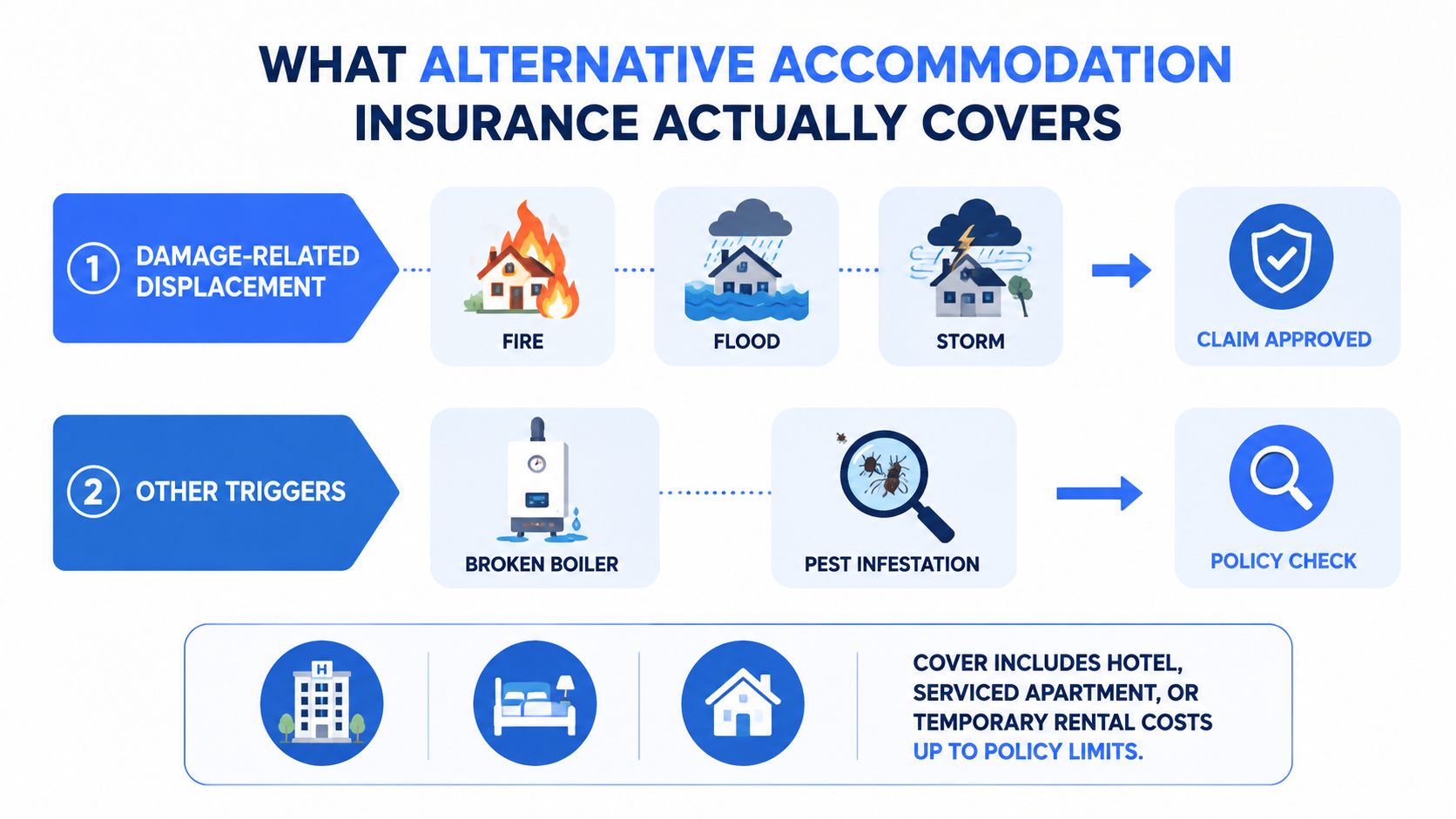
The insurer's default is usually the cheapest comparable option, not the nicest one. If you choose a more expensive place without agreement, you may end up paying the difference. That's why the words similar and reasonable matter so much. They're the fence around the claim.
For a short-let operator, the cleanest way to think about this is simple. Cover the guest's relocation only if the policy wording, the trigger, and the loss evidence line up. For a practical industry example, compare that with this page on emergency temporary rental accommodation.
Policy Types for Hosts and Guests
The wrong question is often asked. They ask, “Does insurance cover alternative accommodation?” The better question is, “Which policy covers which person, for which event, and up to what cap?” That's where the exposure sits.
The main policies do different jobs
Landlord and host protection policies are designed around the operator's risk, including rehousing guests and protecting rental income while repairs happen. Buildings and contents policies can also include alternative accommodation for the owner's own family if they live on site. Public liability cover is a different animal, it may help if an injury or danger forces an evacuation. Business interruption cover deals with lost bookings while the unit is offline. Guest travel insurance sits on the traveller's side and may pay for relocation when the booked stay becomes unusable.
Here's the part operators ignore. No single policy neatly covers both host and guest. One side is usually looking after the property, the other side is looking after the trip. If you run a serviced-apartment business, layered cover is the only sensible approach because each policy closes a different hole. A good claims overview, such as the claims guide for rental property managers from hostAI, makes the same underlying point, liability, relocation, and loss of income are not the same thing.
Policy Type | Who It Protects | Typical Limit | Key Limitation |
|---|---|---|---|
Landlord or host protection | Operator and, in some cases, relocated guests | Often capped by policy wording | May only respond to insured events and approved use |
Buildings and contents with alternative accommodation | Property owner or resident landlord | Fixed cap or percentage-based limit | Usually stops when the cap is reached or the home is habitable |
Public liability | Third parties and sometimes guests | Policy-specific | Doesn't automatically pay relocation costs |
Business interruption | Operator's booking income | Policy-specific | Often subject to an initial excess period before payment starts |
Guest travel insurance | Traveller | Trip-specific limit | Usually won't pay for host-side commercial losses |
Published UK examples show fixed limits such as £25,000, £30,000, £75,000, and £100,000, while some landlord or combined policies use percentage-based limits around 20% to 30% of the sum insured Aviva alternative accommodation guidance. That spread tells you everything. There is no standard “good enough” limit. There's only the limit in your wording.
If you want a local example of how short-let operators think about this in Norfolk, look at the way Airbnb Norwich Norfolk positions short stays, because commercial use changes the insurance question fast.
Common Exclusions and Costly Pitfalls
Most claim disputes start with a wrong assumption. The policyholder thinks displacement automatically means payout. The insurer looks at the trigger, the cause, the use, and the cap. Those aren't the same thing, and the gap is where people lose money.
The exclusions that trip people up
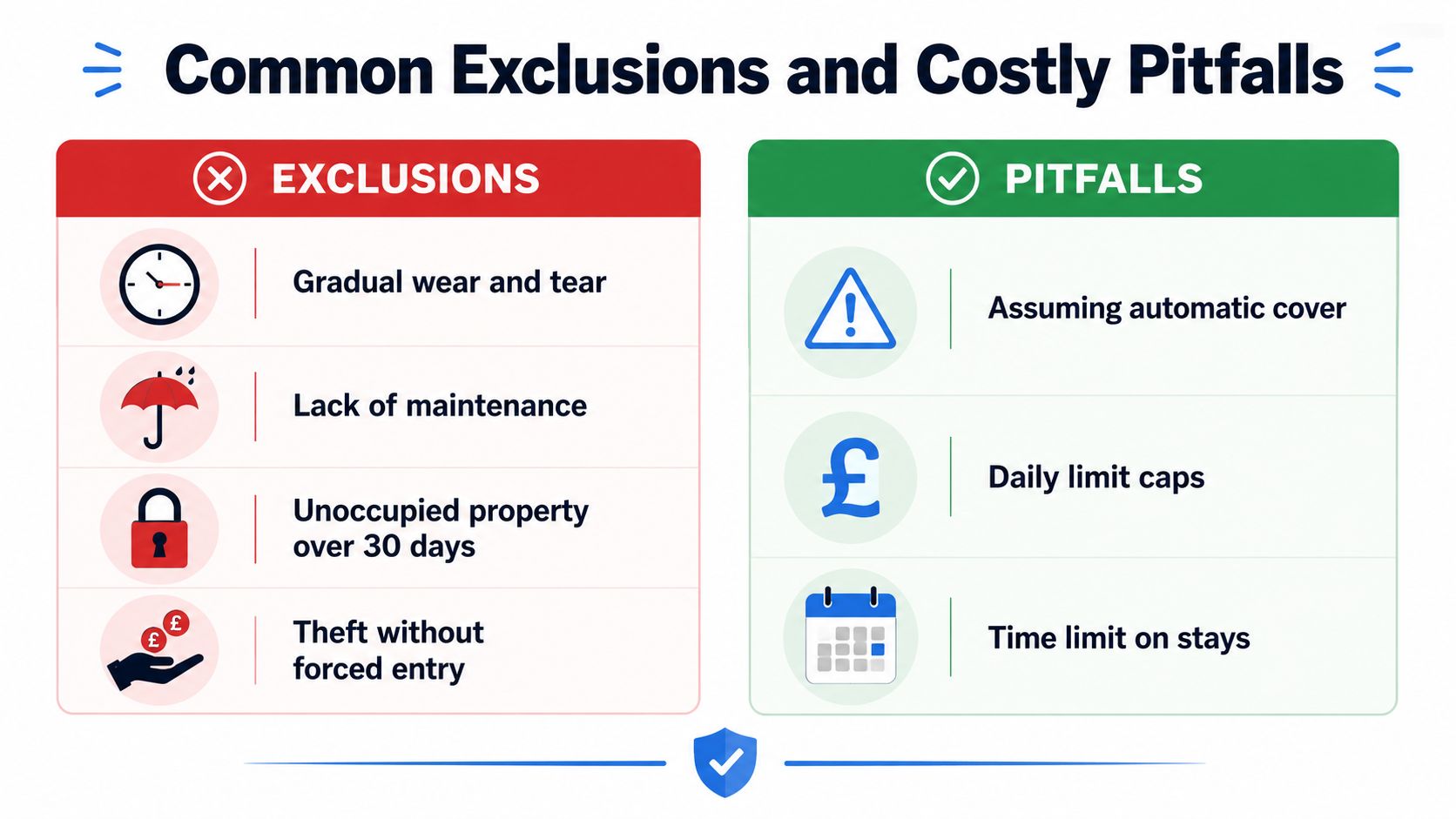
Gradual wear and tear is the classic denial. So are unreported maintenance failures and damage that could have been prevented. Unoccupied-property clauses are another common trap, and some policies void cover after 30 consecutive days of vacancy. UK guidance also warns that a property must be uninhabitable, not merely messy or inconvenient Morgan Clark on the uninhabitable threshold.
A policy can sound generous on paper and still fail you the moment the insurer checks how the damage happened.
The cap can hurt more than the exclusion. A nightly limit that looks fine on paper can fall apart fast if the market rate for a comparable serviced apartment is higher. One policy may promise accommodation, but if the limit is exhausted before the repairs are finished, the rest becomes your problem. The same applies to the “reasonable duration” idea, insurers often stop paying when the home is habitable again or when the time limit is used up, whichever comes first Aviva policy examples and limits.
The weather backdrop makes this more than a theoretical issue. UK insurers paid £585 million for weather-related damage to homes in 2024, and claims reached £226 million in the first quarter of 2025 alone, a 55% increase from the previous quarter Gallagher UK social housing market report 2025. Every one of those major claims has the potential to trigger alternative accommodation costs, so the pressure on policy limits is real.
Another pitfall is role confusion. Guests assume travel insurance will sort out host-side failures. Hosts assume a standard landlord policy covers short-let commercial use. Both assumptions can be wrong. If the wording doesn't match how the property is used, the claim can fall apart before relocation costs are even discussed.
How to Compare Policies Effectively
Don't compare policies by price first. Compare them by the limit that matters on claim day, how long the insurer will pay, and what kind of accommodation they'll accept. Cheap cover that runs out fast is expensive cover in disguise.
Start with the numbers that control the claim
Look at the daily accommodation limit, the maximum duration, and whether the wording says comparable, similar, or just reasonable accommodation. Those words shape the outcome. A policy that offers a decent headline limit but a short time cap can still leave you exposed if repairs drag on.
You should also check whether the insurer covers extra living expenses, storage, pet boarding, and any extra commuting costs created by relocation. If the household has to move further from work or school, those costs become part of the disruption. Some policies include them, many don't, and the wording usually decides the answer long before a loss adjuster does.
Coverage Feature | Budget Policy | Mid-Tier Policy | Comprehensive Policy |
|---|---|---|---|
Daily accommodation limit | Low fixed cap | Higher fixed cap | Stronger cap or more flexible wording |
Duration cap | Shorter period | Moderate period | Longer period, sometimes more adaptable |
Accommodation standard | Basic replacement only | Similar standard | Better alignment with existing home |
Extra living expenses | Often excluded | Sometimes included | More likely to be covered |
Excess | Lower or moderate | Moderate | Can still be meaningful, so check it |
Evacuation trigger | Often narrow | Broader | More likely to consider safety displacement |
A policy with a strong daily limit but a weak definition of equivalent accommodation is still risky for hosts. A guest-side travel policy may help with short relocation, but it won't replace the host's property cover. That's why operators should compare guest-side and host-side wording together instead of treating them as separate boxes.
For a practical benchmark when comparing policy wording against a real-world temporary housing need, the operational advice in finding temporary housing solutions during home renovations or transitions is a useful reference point.
Practical Checklist for Operators and Travellers
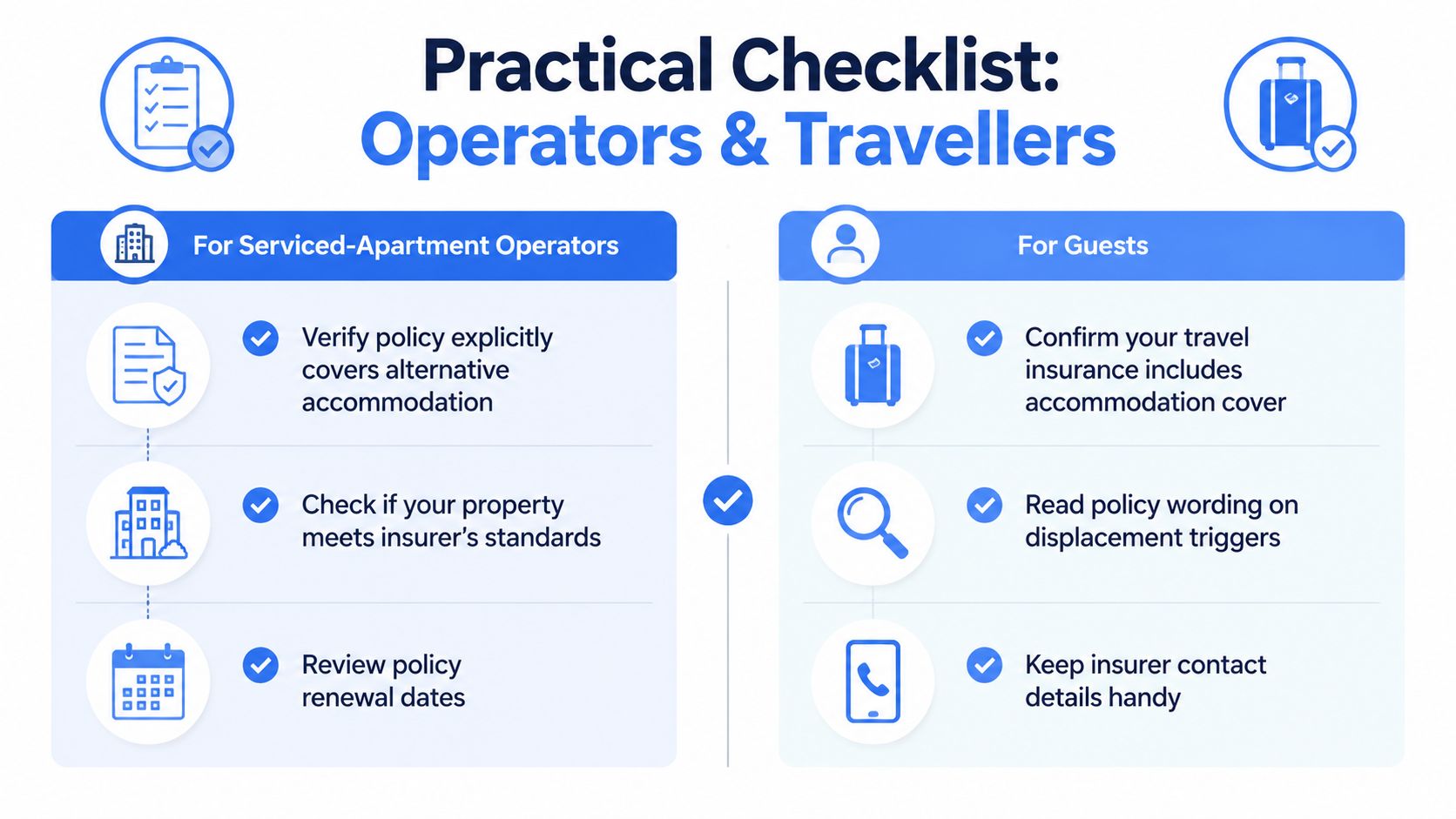
The best claims are the ones you've prepared before the loss. If you're a serviced-apartment operator, the policy has to match the way you trade. If you're a traveller, you need to know who pays when the booked accommodation fails.
For serviced-apartment operators
Check the insured use first. Your policy must explicitly cover short-term or corporate lets, because a standard residential wording can leave commercial hosting exposed.
Match the limit to local reality. If the policy cap won't cover a comparable apartment, you're underinsured, even if the headline figure looks large.
Photograph everything before arrival. Timestamped photos help you prove pre-loss condition and reduce arguments over what changed.
Keep liability cover in line with client expectations. Corporate clients often expect £2 million minimum public liability cover, so verify that your policy and contracts line up.
Review renewal wording carefully. A small wording change can remove the cover you relied on last year.
For travellers
Read your travel policy before you book. If it doesn't cover host-side displacement, don't assume it will rescue a disrupted stay.
Check the booking platform terms. Platform guarantees can help, but they're not a substitute for insurance.
Photograph the property on arrival. You want a clear baseline if the stay is cut short and the condition of the unit becomes relevant.
Keep all receipts. Meals, taxis, storage, and incidentals are only useful if you can evidence them.
Know the duty of care clause. You're expected to mitigate losses, which usually means accepting a reasonable alternative rather than insisting on a higher-cost option.
One strong internal reference for guests and operators dealing with disruption is temporary housing solutions during home renovations or transitions, because the same documentation habits help in insurance claims.
Key Takeaways and Frequently Asked Questions
Alternative accommodation insurance is not one-size-fits-all. The trigger, the cap, the time limit, and the wording around “similar” accommodation decide what gets paid. If you don't know those terms before the claim, you're guessing with real money.
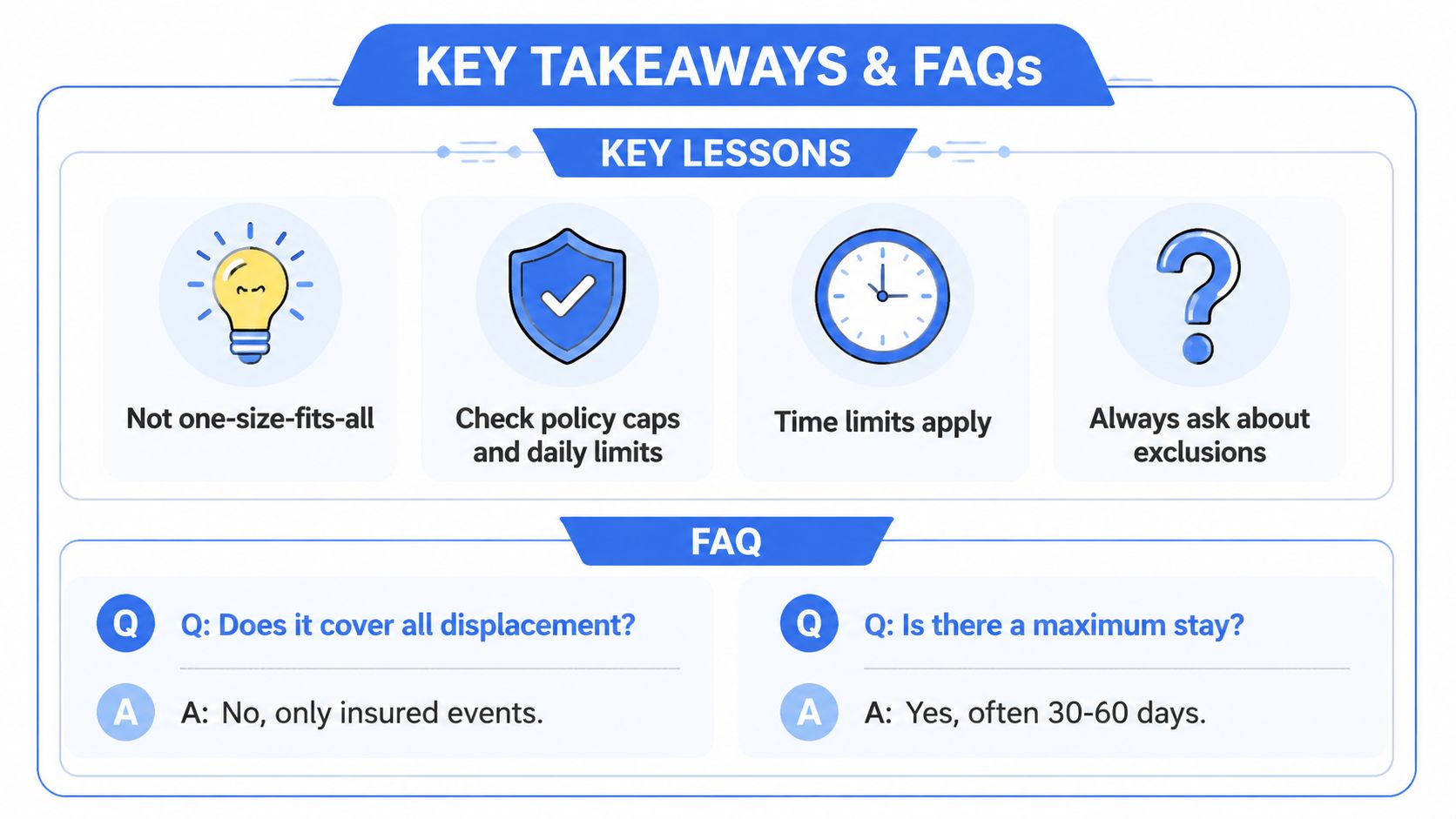
Does buildings insurance automatically cover temporary relocation costs? No. It often includes an alternative accommodation clause, but only if the wording says so and the property is uninhabitable after an insured event.
What happens if a guest's stay is cut short by an insured event? The answer depends on who holds the policy. The host may have property and liability cover, while the guest may need travel insurance to cover their own relocation costs.
Can a host claim loss of rental income and alternative accommodation at the same time? Sometimes, yes, if the policies are written that way. Many operators need separate cover for the property, the booking income, and the relocation costs.
How do insurers define comparable accommodation? They usually look for a similar standard, not an upgrade. For serviced apartments, that usually means practical equivalence in layout, facilities, and location.
What documentation should you keep for a claim? Photos, timestamps, repair reports, insurer correspondence, receipts, and a clear record of when the property became uninhabitable. Missing paperwork slows everything down.
How often should policies be reviewed? Every year, and before every long booking or major change in use. If your property use changes and the wording doesn't, the cover may not follow.
For operators and guests who want fewer surprises, the answer is always the same. Read the wording, check the caps, and confirm the trigger before the problem starts. If you're planning a stay or managing a property in Norfolk, review the details now at Stay Norwich Apartments and make sure your temporary accommodation plan is sorted before you need it.

Comments