


Family Holidays UK: 10 Ideas

You're trying to plan a family holiday in the UK, but everyone wants something different. One person is picturing a sandy beach, another needs easy walking and quiet evenings, while the children want activities that feel exciting rather than educational. Grandparents may need comfortable access, teenagers may want more independence, and the person organising the trip still has to manage meals, transport, weather and the budget.
The best family holidays UK travellers can choose aren't always built around one attraction. They're built around a flexible base and a plan that gives each person something to enjoy. Norwich and Norfolk work particularly well because a city break can lead into the coast, the Broads, countryside, heritage sites, creative venues and food experiences without changing accommodation every night.
This guide compares ten distinct approaches, from a walkable Norwich city break and Norfolk beach days to boating, cycling, history, spa time, creative workshops, multi-generational reunions, adventure sports and culinary trips. You'll also find practical advice on matching activities to ages, balancing energy levels, controlling total trip costs, packing for changeable weather, choosing accommodation and preparing safer outdoor days. For ideas beyond Norfolk, explore these family activities for food-focused days out.
Family Holidays UK: 10 Ideas Table of Contents
1. Norwich City Centre Exploration Break - Make the city work for different ages
2. Norfolk Broads Boating and Water Sports Holiday - Match the plan to the water and the weather
3. Norfolk Coast and Beach Holiday - Plan for tides, weather and travel
4. Historical and Cultural Learning Holiday - Build the itinerary around one question
5. Peaceful Countryside and Spa Retreat - Give the day room to breathe
6. Active Cycling and Walking Holiday - Match the route to the youngest rider
7. Arts, Crafts and Creative Family Workshop Holiday - Book the experience, not just the room
8. Multi-Generational Extended Family Holiday - Agree the logistics before arrival
9. Adventure Sports and Active Experience Holiday - Check restrictions before paying
10. Foodie and Culinary Discovery Holiday - Make food part of the itinerary
Turn Your Favourite Idea into a Practical Plan - Use a short, flexible itinerary
1. Norwich City Centre Exploration Break
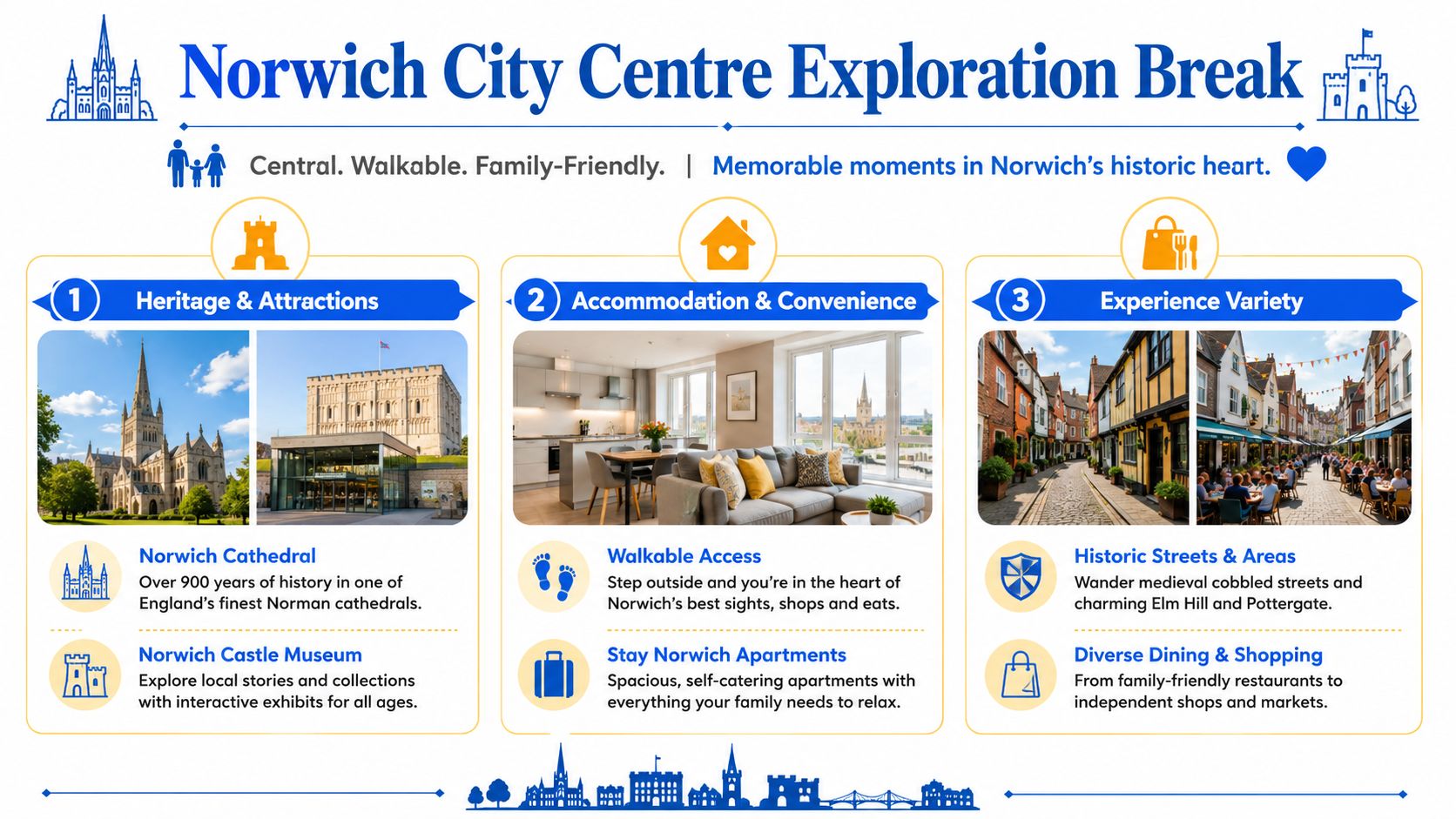
A Norwich city break suits families who want variety without spending every day in the car. The historic centre brings together Norwich Cathedral, Norwich Castle Museum, independent shops, restaurants and distinctive streets, so different age groups can shape the day around their interests.
Start with the cathedral cloisters and grounds, then give children time to engage with the exhibits at Norwich Castle Museum. Older relatives may prefer a slower route through the city, with stops at Elm Hill and nearby cafés. The cobbled streets add character, but they also make comfortable footwear and sensible pacing important.
Staying centrally makes the whole arrangement easier. A serviced apartment within walking distance of major attractions lets one family member return with a tired child while others continue exploring. A kitchen also means you can prepare breakfast, packed lunches or a familiar evening meal instead of relying on restaurants for every sitting.
Make the city work for different ages
Plan one main attraction each morning and leave space for an unplanned shop, snack or rest. Museum visits often work better on quieter weekday mornings, especially when younger children need room to concentrate.
Useful preparations include:
Reserve early: School holiday accommodation can become harder to find, so check dates before fixing the rest of the itinerary.
Use local knowledge: Read the complimentary guest guidebook for hidden corners, family-friendly places and practical walking suggestions.
Pack for walking: Comfortable shoes matter more than an ambitious list of attractions.
Keep meals flexible: Use the apartment kitchen when children need an early dinner or a familiar option.
For a more focused walking route, use this guide to the Norwich Cathedral Quarter. It can help you turn a broad city visit into a manageable day rather than a tiring race between landmarks.
2. Norfolk Broads Boating and Water Sports Holiday
A family can leave Norwich after breakfast, collect a boat at Wroxham and spend the day following quiet waterways rather than a fixed attraction schedule. The Norfolk Broads suit families who want a slower outdoor break, with opportunities for boating, fishing, bird watching, gentle cycling and other water-based activities.
The day can stay flexible. Younger children might watch boats and wildlife from the bank, while older children learn basic steering or join a guided activity. In a multi-generational group, this flexibility works like separate lanes on the same route: some relatives can take a riverside walk while others remain on the water.
Norwich provides a useful base for this arrangement. After an active day, the family can return to a furnished apartment, shower, prepare dinner and dry wet clothing without changing overnight locations. Self-catering also lets you match meals to the day's energy levels, whether that means an early meal for children or snacks packed before departure.
Match the plan to the water and the weather
Family Holidays UK: 10 Ideas: Reserve boat hire in advance if your visit falls during school holidays and you need a particular date. Open water can feel cooler and windier than expected, so waterproof layers, spare clothes and footwear with a secure grip are practical choices.
Use this checklist before setting out:
Pack a picnic: A kitchen makes it easier to prepare lunches, drinks and snacks for a full day outdoors.
Choose quieter times: A mid-week visit to smaller villages may feel calmer than a busy weekend.
Download maps: Offline navigation can help in rural areas where mobile coverage varies.
Set clear safety rules: Children need suitable buoyancy equipment for the activity, along with close adult supervision near the water.
If you are comparing a Norwich base with accommodation beside the waterways, read this guide to Norfolk Broads self-catering accommodation. It explains the practical differences to consider before booking.
The Broads also work for mixed-energy families. You can plan an active morning, a quiet picnic and an unstructured afternoon, without expecting everyone to enjoy the same pace or organised entertainment.
3. Norfolk Coast and Beach Holiday
Start with the family's preferred seaside rhythm. Cromer suits a day that combines pier activities, a traditional seaside lunch and coastal views. Sheringham offers simpler beach time, while Wells-next-the-Sea and Blakeney Point add sandy shores, coastal walks and possible seal-spotting trips. Great Yarmouth brings a more traditional resort atmosphere, including amusements.
Norwich can work as the base for this style of break. A day in Cromer might be followed by a quieter coastal outing, giving the family different experiences without changing accommodation. Use this guide to Norfolk's best beaches to compare locations before choosing where to spend your time.
The choice of base affects the whole itinerary. A central apartment gives you room for wet clothes, packed lunches, toys and tired children. You can prepare food before leaving, return for a rest, or use the kitchen when weather changes. A coastal property shortens the journey to the sand, but a Norwich base may suit families who also want city meals and indoor options.
Plan for tides, weather and travel
Check tide times before visiting exposed beaches or tidal areas. Bright weather can still bring wind, so pack layers, a windbreak and spare clothing. Secure footwear is useful on uneven paths, while extra bags can keep wet items separate from the rest of the day's luggage.
Before booking, work through these practical choices:
Transport: Compare the cost and convenience of weekly car hire with separate daily arrangements, based on your arrival plans and itinerary.
Food: Prepare lunches and drinks in the apartment to limit unplanned purchases during long beach days.
Timing: Mid-week visits may feel less pressured than peak weekends.
Equipment: Check storage arrangements before bringing bulky beach gear.
The main trade-off is journey time. Choose a city-centre or coastal base according to how often your group expects to visit the beach, rather than judging the property by its listing alone.
4. Historical and Cultural Learning Holiday
A school-age child chooses one object in a museum, a grandparent explains how buildings have changed, and the family discusses it over dinner. Norwich and Norfolk make this kind of holiday practical because Roman sites, Anglo-Saxon history, medieval castles, archaeological collections, historic churches and industrial heritage can give each day a clear theme without turning the trip into a classroom.
Start with the period that interests your group most. A morning on medieval Norwich could include Norwich Castle and a walk through historic streets. Another day might focus on earlier history, using objects and buildings to help children connect evidence with the people who made or used it. Ask simple questions: why was the site built, who used it and what has survived?
An apartment base adds useful flexibility. Children can keep a journal, sketch architectural details or create a timeline at a dedicated workspace. The kitchen also allows a proper pause between a morning visit and an afternoon museum or heritage attraction, which can prevent tiredness from taking over the day.
Build the itinerary around one question
Research opening times and accessibility before travelling. A focused question, such as “How did people use this building?”, gives children something specific to look for and makes a display easier to discuss afterwards.
Choose from these planning routes:
Period-based days: Group Roman, Anglo-Saxon, medieval or industrial activities rather than crossing between unrelated sites.
Quieter visits: Weekday mornings may leave more time for displays and questions.
Budget control: Check whether combined museum tickets are available for the attractions you want to visit.
Self-guided discovery: Download or arrange audio guides if your family prefers exploring independently.
Follow-up activities: Use the apartment workspace for drawings, journals or a family quiz.
The Norwich City Cathedral guide can help place a cathedral visit within the wider history of the city.
Mixed-age groups usually benefit when children take an active role. Let one child choose an object to explain at dinner, while grandparents share memories of changes they have witnessed. These small exchanges connect formal history with family experience and leave everyone with a different way to remember the visit.
5. Peaceful Countryside and Spa Retreat
A family can spend the morning beside a Norfolk reserve, return for lunch, and leave the afternoon open. This countryside and spa format suits groups who need fresh air and recovery time rather than another tightly scheduled day. A café visit, a short accessible walk, a treatment and an evening meal prepared at the apartment can fit together without rushing.
The arrangement works particularly well for mixed-age families. Adults may want wellness time, children may need quiet play, and grandparents may prefer level paths with frequent places to sit. Like separate lanes joining the same road, these choices let people follow different speeds while still sharing the holiday.
Use the apartment as part of the plan. A kitchen supports regular meals, a reading corner creates a calm retreat, and a slow morning gives everyone time to settle. One adult or couple can attend a treatment while others rest, play or prepare lunch.
Give the day room to breathe
Reserve treatments early during busy periods, then protect the hours around them. Cooler mornings may suit a gentle outdoor visit, leaving afternoons for books, board games or a café. If a spa visit is part of the plan, this guide to a Norwich spa day can help the adults arrange it before travelling.
Use these choices to keep the retreat comfortable:
Pack adaptable layers: Clothing should work for a nature walk and relaxed indoor time.
Keep meals simple: A properly equipped kitchen reduces pressure to eat out at every sitting.
Bring familiar comforts: Books, quiet games and meditation apps can help children settle in an unfamiliar place.
Choose shorter outings: A brief reserve walk may suit more relatives than a longer route with uneven ground.
Share the timetable: Explain who is attending the treatment, who is supervising children and when the group will meet again.
A useful rule is to treat empty space as part of the itinerary. Rest gives each person a better chance to enjoy the next shared activity.
6. Active Cycling and Walking Holiday
Norfolk's relatively gentle terrain makes cycling and walking appealing for families building confidence outdoors. The right route can give children a sense of achievement without turning the day into an endurance test, while adults can choose longer alternatives when the group has different abilities.
The Bure Valley Railway path is one example of a route families may consider, particularly when a flatter, traffic-free experience is more suitable than a demanding trail. Sustrans routes can also help mixed-ability groups plan journeys with stops, cafés and points of interest along the way.
A good base matters after an active day. Look for accommodation where bikes can be stored appropriately and where everyone has room to dry clothing, shower and prepare an energy-rich meal. Dedicated workspaces and reliable Wi-Fi can also help when an adult needs to handle a short work task without sacrificing the rest of the day.
Match the route to the youngest rider
Don't choose a route solely because an online description sounds scenic. Consider distance, surfaces, traffic, hills, toilet access, weather exposure and the number of planned stops.
Hire in advance: Bike availability can become tighter during school holidays.
Use visibility: High-visibility clothing helps on roads and busier crossings.
Schedule breaks: Interesting stops and cafés give children a reason to keep going.
Check the forecast: Change the route if wind or rain will make the day unpleasant.
Plan recovery food: Use the kitchen for a filling meal after cycling or walking.
Practical advice: Give children a clear destination, such as a café, play area or viewpoint. “Keep going” is less motivating than knowing what comes next.
7. Arts, Crafts and Creative Family Workshop Holiday
Creative breaks give families something to make together, not just somewhere to visit. Norfolk's galleries, artistic venues and workshops can support a holiday built around pottery, jewellery, drawing, textiles or food-related creativity.
Begin with one organised workshop and leave room for independent exploration. Children might visit a free exhibition at the Sainsbury Centre and then create artwork inspired by a colour, shape or object they noticed. Adults and grandparents can join a jewellery-making or pottery session, while younger children work on a simpler project suited to their age.
An apartment with workspace adds flexibility. Finished pieces can be wrapped safely, displayed temporarily or completed between outings. The kitchen supports affordable meals, which may leave more of the activity budget for workshop fees and materials.
Book the experience, not just the room
Workshops often have age, supervision and equipment requirements. Check those details before paying, especially when a child will attend independently or when several generations are booking the same session.
Reserve ahead: Popular workshops may need booking several weeks before arrival.
Check age limits: Confirm minimum ages, adult participation rules and accessibility.
Pack protection: Bring old clothing or aprons for messy materials.
Budget for supplies: Ask whether materials are included or need to be purchased separately.
Shop locally: Buying materials from Norfolk makers can become part of the experience.
Protect finished work: Plan how fragile items will travel home.
Keep gallery visits short enough for children to stay engaged, and use quieter weekday mornings where possible. The strongest creative holidays usually alternate focused activities with free time, rather than booking workshops on every day.
8. Multi-Generational Extended Family Holiday
A multi-generational holiday needs more than enough beds. Grandparents, parents, children and adult siblings may want shared meals and outings, but they also need privacy, different sleep schedules and the ability to opt out without creating tension.
Norwich works as a reunion base because the city and wider county offer different kinds of days. Some relatives can visit museums, others can take a gentle walk, and another group can head to the coast. Connected apartments can provide proximity for shared plans while allowing each household to return to its own space.
Start with one shared meal each day rather than expecting everyone to spend every hour together. One household might handle breakfast, another might organise an afternoon activity, and grandparents might choose the evening restaurant. Clear roles reduce the burden on the person who booked the holiday.
Agree the logistics before arrival
Discuss sleeping arrangements, kitchen use, transport, accessibility and quiet hours before booking multiple units. Ask the property manager whether apartments can be placed near one another, but don't assume that proximity guarantees identical layouts.
Coordinate early: Request nearby units well ahead of the school holiday period.
Protect independence: Give each household time away from the group.
Share planning: Rotate responsibility for meals and activities.
Use age variety: Choose some Norwich attractions for children, some for adults and some for everyone.
Confirm departure details: Put the check-out date and handover arrangements in writing.
A named coordinator can keep information in one place, but that person shouldn't become responsible for every decision. A shared itinerary with optional activities is usually more successful than a rigid programme.
9. Adventure Sports and Active Experience Holiday
Adventure holidays suit families who want a stronger sense of challenge, but the best plans still allow different comfort levels. Kayaking, tree-top courses, go-karting and other outdoor activities can sit within one itinerary when the family checks requirements carefully and avoids treating every day as a competition.
One practical combination might pair kayaking on the Broads with a tree-top course on another day. Teenagers can choose a higher-thrill option while younger children take part in a gentler activity, provided the venue's rules allow it. Multi-generational groups can remain together for meals and rest even when they split up during the day.
Use the apartment as a recovery base. Prepare substantial meals, dry clothing, organise equipment and include a slower day after a demanding experience. A rainy-day alternative matters too. Indoor attractions, creative workshops or a relaxed city visit can prevent bad weather from disrupting the whole holiday.
Check restrictions before paying
Adventure providers may set age, height, health, swimming ability or supervision requirements. Read those conditions for every participant, and ask questions if a child has additional needs or a family member is returning to activity after an injury.
Book key activities early: School holiday places can be limited.
Compare packages: Bundled activities may offer a clearer way to manage costs where available.
Pack spare clothing: Extra layers and towels help after water-based activities.
Build in recovery: Rest days protect the enjoyment of the rest of the itinerary.
Plan supervision: Decide which adult is responsible for each child at every venue.
Keep safety equipment central: Follow provider instructions rather than improvising.
Safety first: Excitement is optional. A suitable activity with clear supervision is better than a more dramatic experience that doesn't fit the youngest or least confident member of the group.
10. Foodie and Culinary Discovery Holiday
Food can provide a natural rhythm for a family holiday. Start with a farmers' market or farm shop, choose ingredients together, enjoy a relaxed lunch, then prepare dinner at the apartment. Children gain practical kitchen skills, adults can sample local produce, and grandparents can share recipes or food memories.
Norfolk suits this style because Norwich and the surrounding area offer independent food businesses, local producers, restaurants and food experiences. One day could centre on seasonal ingredients, another on a booked restaurant, and a third on leftovers or a simple meal at home. This mix keeps the itinerary varied without turning every meal into a costly occasion.
A well-equipped kitchen supports flexibility, although cooking should not become one person's unpaid job. Give each household a role, select recipes that can be prepared in stages, and assign safe tasks according to age. Washing produce, measuring ingredients and setting the table can all help children take part.
Make food part of the itinerary
Check market dates and locations before booking accommodation. Restaurants may require reservations, especially for larger groups, several households or diners who need accessible seating.
Plan menus early: Choose meals based on ingredients you can carry, store and use.
Reserve popular venues: Arrange large bookings before the final evening of the trip.
Try a class: A local cooking lesson can give the family a shared skill and a planned activity.
Visit producers: Farm shops and food producers work well as stops between sightseeing visits.
Support independents: Choose local cafés, restaurants and makers that suit your group's ages and dietary needs.
Use a food guide: The Norwich food activities guide can suggest ideas beyond a standard restaurant list.
The main trade-off is effort. Self-catering gives families more control over timing and can help manage spending, but it involves shopping, preparation and cleaning. A mixed plan usually works better: cook some meals, eat out for others, and keep a few easy options available for tired children or changing plans.
UK Family Holidays, 10-Option Comparison
Holiday Option | Complexity 🔄 | Resources ⚡ | Expected Outcomes ⭐📊 | Ideal Use Cases 💡 |
|---|---|---|---|---|
Norwich City Centre Exploration Break | Low 🔄 (walkable, little planning) | Low–Moderate ⚡ (self-cater, museum fees) | High ⭐⭐, heritage exposure, relaxed family pacing 📊 | Short city breaks; young children; multi-gen sightseeing |
Norfolk Broads Boating and Water Sports Holiday | Moderate 🔄🔄 (boat bookings, safety briefings) | Moderate–High ⚡ (boat hire, waterproofs) | High ⭐⭐, active nature, wildlife encounters 📊 | Outdoor families; wildlife watchers; flexible itineraries |
Norfolk Coast and Beach Holiday | Moderate 🔄 (day trips, parking) | Moderate ⚡ (car hire, beach gear) | High ⭐, seaside recreation, relaxation 📊 | Classic beach days; coastal sightseeing; family leisure |
Historical and Cultural Learning Holiday | Moderate 🔄🔄 (research, timed visits) | Low–Moderate ⚡ (entrance fees, planning time) | Very High ⭐⭐⭐, deep educational value, lasting memories 📊 | School-age families; heritage enthusiasts; study-focused trips |
Peaceful Countryside and Spa Retreat | Low 🔄 (spa bookings, gentle planning) | Moderate ⚡ (spa fees, transport) | High ⭐⭐, relaxation, wellbeing and nature rest 📊 | Wellness seekers; quiet family breaks; restorative stays |
Active Cycling and Walking Holiday | Moderate 🔄🔄 (route planning, kit) | Moderate ⚡ (bike hire, secure storage) | High ⭐⭐, fitness, outdoor engagement 📊 | Active families; mixed-ability groups; training-friendly trips |
Arts, Crafts and Creative Family Workshop Holiday | Moderate 🔄🔄 (workshop bookings, materials) | Low–Moderate ⚡ (materials, class fees) | High ⭐⭐, creative skills and tangible keepsakes 📊 | Creative families; art learners; hands-on holiday makers |
Multi-Generational Extended Family Holiday | High 🔄🔄🔄 (coordination of units/schedules) | Moderate ⚡ (multiple units, meal planning) | High ⭐⭐, family cohesion, convenience 📊 | Reunions; celebrations; mixed-age family stays |
Adventure Sports and Active Experience Holiday | High 🔄🔄🔄 (multiple activity bookings, safety) | High ⚡⚡ (activity fees, gear) | High ⭐⭐, adrenaline, strong group bonding 📊 | Thrill-seeking families; teens; activity-packed itineraries |
Foodie and Culinary Discovery Holiday | Moderate 🔄 (market timing, reservations) | Low–Moderate ⚡ (ingredients, dining costs) | High ⭐⭐, culinary learning, local food experiences 📊 | Food-focused families; market visitors; cooking enthusiasts |
Turn Your Favourite Idea into a Practical Plan
Choosing a holiday style is only the first step. The most comfortable family holidays UK groups take usually combine one main idea with a few supporting activities. A city-centre exploration break might include one beach day and a food market. A Broads holiday could add a museum visit for a rainy afternoon. A multi-generational reunion might use shared meals as the anchor, with optional cycling, shopping, history or spa time around them.
Start with the people, not the destination. Note the youngest child's walking tolerance, the oldest traveller's access needs, the group's preferred meal routine and each person's appetite for activity. Then choose a base that reduces unnecessary travel. Norwich is particularly useful when you want city attractions, coastal excursions, countryside, the Broads and cultural venues within one wider Norfolk itinerary.
Budget for the whole trip rather than looking only at the nightly accommodation rate. Include transport, parking, food, entrance fees, equipment hire, activities, snacks and weather-related alternatives. The cost of a family holiday was the biggest booking barrier for 42% of respondents in Legal & General's 2024 Family Holiday Report, while parents reported an average holiday budget of £2,005, compared with £1,944 spent the previous year. The same report found that 47% had exceeded their holiday budget at least once, so transparent planning matters. Read the Legal & General family holiday findings when you're setting a realistic spending limit.
Use a short, flexible itinerary
Avoid booking a major activity every day. A practical pattern might be one planned morning, a relaxed lunch, an optional afternoon and an easy evening meal. That structure leaves room for tired children, delayed journeys, poor weather and spontaneous discoveries.
A compact planning check can include:
Transport: Decide which days need a car, public transport, walking or pre-booked transfers.
Reservations: Secure accommodation, boat hire, workshops, restaurants and popular activities early.
Weather alternatives: Keep indoor museums, galleries, craft activities or a city walk available.
Food: Plan breakfasts, packed lunches, snacks and at least a few easy evening meals.
Packing: Bring layers, waterproofs, comfortable shoes, swimwear, medication and spare clothing.
Supervision: Assign responsible adults for beaches, boats, cycling and adventure venues.
Outdoor safety: Check tides, route conditions, provider rules and water safety guidance.
Accommodation: Confirm bedrooms, bathrooms, kitchens, workspaces, Wi-Fi, storage and access.
Cancellation terms: Read the rental and cancellation information before committing.
A self-catering apartment can also make a difference when a family needs more than a short overnight stop. Stay Norwich Apartments offers furnished accommodation in central Norwich for short or longer stays, with fully equipped kitchens, dedicated workspaces, fast Wi-Fi, TVs, high-quality bedding and soft towels. Online viewings, clear rates and a straightforward booking journey help you assess the accommodation before arrival.
The complimentary guest guidebook includes a Norfolk map and local recommendations for Norwich's historic centre, the Broads and the nearby coast. Responsive customer service is available seven days a week from 9 am to 9 pm, which can be useful when a family needs practical information during planning.
Stay Norwich Apartments works directly with landlords and offers furnished accommodation when you need it, for as long as you need it. The arrangement is designed to be straightforward, with flexible duration, direct booking, transparent rental and cancellation information, no hassle, no drama, pay and stay. That can suit families extending a visit, professionals combining work with a family stay, or visitors who want a stable base while exploring Norfolk. You can also use the BTOURS England drive route as inspiration for a broader road-based itinerary.
Norfolk's tourism economy is substantial. In 2024, tourism across Norfolk and Suffolk reached a combined value of £3.9 billion and supported 120,000 jobs, both reported as record highs by Visit East of England's research and reports. That scale reflects the range of leisure experiences available, but it also means you should compare locations carefully instead of assuming every destination offers the same pace, access or value. Review the regional tourism research from Visit East of England for wider context.
Finally, remember that accommodation is part of family safety and comfort, not just a place to leave luggage. England's temporary accommodation rules recognise the particular needs of households with children. Parliament's housing committee report states that local authorities may use bed-and-breakfast accommodation for families only when no alternative is available, and then only for a maximum of six weeks. The Department's guidance describes B&B use for households with children as a last resort and also limits it to six weeks. Read the Parliamentary report on temporary accommodation for the policy context.
Compare the ten holiday styles against your family's actual priorities. Choose the base that makes meals, rest, transport, supervision and weather changes easier, then shape the activities around the people travelling rather than trying to complete an ambitious list.
Stay Norwich Apartments provides furnished, self-catering apartments in central Norwich for short and longer family stays, with kitchens, workspaces, fast Wi-Fi, TVs, quality bedding and practical local guidance. Compare the ten holiday styles with your group's needs, then visit Stay Norwich Apartments to explore the accommodation, viewing options, rates and booking information.
Comments