


Short Term Rental Norfolk: Options and How to Choose

90,096,700 guest nights were generated across the UK by short-term lets offered through online collaborative-economy platforms in 2024, according to the Office for National Statistics. Yet the practical question for someone working temporarily in Norfolk is much smaller: can you find somewhere suitable between a weekend booking and a conventional tenancy?
A short term rental in Norfolk needs to fit your working day, moving arrangements or study timetable, not just your arrival date. A holiday cottage with attractive photographs can still be the wrong choice if you can't park a van, get an invoice or extend when a project overruns.
Short Term Rental Norfolk: Options and How to Choose: Table of Contents
Norfolk Short Stay Options Side by Side - Compare the commitment as well as the facilities
Who Books Short Stays in Norfolk and Why - Overnight demand means daily living matters
Matching Your Stay Length to the Right Property - Why minimum stays deserve your first question
Checks to Make Before You Book - Get the booking conditions in writing - Confirm the practical essentials
Serviced Apartments in Norwich for Work and Relocation - A working week without living from a suitcase - Study and leisure need different judgements
Rules and Local Housing Pressure to Know About - Registration won't replace planning checks - Look for an accountable operator
Confirm the Terms and Book Your Norfolk Stay - Send a usable enquiry - Keep responsibility clear
Norfolk Short Stay Options Side by Side
Norfolk short stay options compared
Option | Typical stay length | Bills and Wi-Fi | Kitchen and workspace | Best fit |
|---|---|---|---|---|
Norwich serviced apartment | Short breaks to 30+ nights | Bills-included options available | Full kitchen and dedicated workspace | Work, relocation, contractors, study |
Hotel | Nightly, one or two nights | Included in rate | Limited kitchen, no workspace guarantee | Single short visits |
Coastal or rural holiday let | Often two-night minimum | Confirm inclusions for the property | Kitchen usually, workspace must be checked | Weekend and holiday leisure |
Fixed-term let | Six to twelve months | Usually paid by tenant | Furnished or unfurnished, workspace arranged by tenant | Long-term residence |
These are booking patterns, not universal rules. A hotel can accommodate an extended visit, and a holiday cottage can work for a contractor, but neither arrangement automatically provides the facilities or flexibility you need.
A hotel's nightly arrangement suits a brief visit because you can arrive, sleep and leave without organising household essentials. For a three-week project, the calculation changes: eating out, arranging laundry and working from the bed can become more troublesome than the room rate suggests.
Compare the commitment as well as the facilities
A serviced apartment offers a furnished base without requiring a long tenancy. That makes it a useful starting point for work or relocation, especially when you need to cook and keep a normal routine rather than live out of a suitcase.
A fixed-term let assumes a longer residential commitment, commonly framed around six to twelve months. Before taking that route, establish the contractual end date, responsibility for utilities and whether you'll need furniture, broadband installation or household equipment.
Practical rule: Compare the cost of living in the property, not just the cost of sleeping there.
Holiday lets deserve particular scrutiny. Weekend-oriented booking calendars can make a continuous work stay awkward, while an attractive rural setting may mean a less convenient journey to your actual destination.
The table compares accommodation types rather than prices. Season, party size and exact dates affect a quote, so a headline nightly rate isn't a reliable budget for your whole stay. Our Norfolk accommodation guide offers a broader starting point for choosing your base.
The deciding question is straightforward: which accommodation type fits how long you're staying and why you're there?
Who Books Short Stays in Norfolk and Why
North Norfolk's 2025 visitor-economy infographic records approximately 579,000 overnight visitors generating 2.377 million nights, with domestic overnight visitors staying around 3.2 nights and spending approximately £302.34 per visit, according to the North Norfolk visitor-economy infographic. That is the leisure picture. It is not the whole short-stay market, and it says little about the contractor, relocating family or academic visitor who needs a base for one to four weeks.
The guest mix in Norfolk short stays runs across domestic leisure, temporary work, relocation and study. The ONS platform accommodation bulletin covering July 2023 to December 2025 shows domestic guests make up the large majority of short-stay nights in Great Yarmouth and North Norfolk, so the market is not primarily an overseas holiday trade. Domestic share does not reveal occupation. A high domestic count can include a family between homes, a site team on a project and a postgraduate staying for a term.

Overnight demand means daily living matters
For a two-night break, a bed, parking and a pub within walking distance can be enough. For a two-week work stay, the accommodation has to support a morning routine, laundry, cooking and somewhere to answer email without sitting on the bed. That shift in requirements is where many short-stay bookings go wrong. The listing looks fine for a weekend, then proves awkward by day four.
The practical split is by routine:
Contractors and trade teams need van parking, a proper kitchen, clean invoicing and a clear extension route if the job runs on.
Families between homes need space for ordinary domestic life without unpacking everything they own.
Students and academic visitors need a quiet base with reliable Wi-Fi and a location that makes a daily commute or library visit realistic.
Business visitors need a desk, check-in times that fit a travel schedule and a base close to the city centre or main employment sites.
Stay Norwich Apartments offers short-term rentals in Norwich and corporate accommodation, with properties close to the train station, cathedral, market and main employment sites.
A relocation can also create a gap where furniture and seasonal belongings need to sit outside the temporary rental. If part of the move runs through Bristol, you can book with Admiral's Yard Self Storage for that leg, while keeping the Norfolk stay focused on the weeks you need to be near work or study.
The minimum stay is the detail that separates these groups most sharply. A listing with a 30-night minimum can suit a contractor, a relocating household or a student, but it rules out a four-night business trip. A two-night minimum does the opposite. That split matters more than the headline nightly rate, because it decides which properties are even available for the stay you need.
For your booking, the test is practical: if the stay involves daily routines, judge the accommodation on those routines, not just the nightly rate.
Matching Your Stay Length to the Right Property
Stay purpose, typical length and first check
Stay purpose | Typical stay | First thing to check |
|---|---|---|
Contractor or trade project | One to four weeks, often extended | Minimum stay, van parking, extension option |
Relocation between homes | Two to eight weeks | Minimum stay, deposit, end-date flexibility |
Student or academic stay | Term length, often 30+ nights | Bills included, Wi-Fi, quiet location |
Business visit | Two to five nights | Workspace, Wi-Fi, check-in times |
Leisure break | Two to four nights | Kitchen, parking, distance to the coast |
Use these as planning scenarios, not measured averages or promises that every property accepts those dates. The important relationship is between your likely departure date and the booking commitment you're being asked to make.
A contractor expecting a short project needs more than an available arrival date. If the work runs on, the useful question is whether the same property can remain available, how an extension is agreed and when you must make that decision.
Why minimum stays deserve your first question
The AirDNA Norfolk supply breakdown reports that 37.6% of tracked listings require a 30-day minimum, 34.2% use a two-night minimum, and only 3.2% target stays of 7–29 days; it also reports 55.9% available for 271–365 days. These are tracked listing characteristics, not a guarantee that any particular dates are bookable.
That split helps explain why a search can produce plenty of accommodation without producing an obvious answer for a project or temporary move. A property can appear available throughout much of the year yet have a minimum stay that excludes your visit.
An open calendar doesn't prove that a property accepts your stay length, your working arrangements or an uncertain departure date.
Start with two actions:
Confirm the minimum before comparing interiors. Otherwise, you can spend time choosing a property that won't accept your dates.
Establish the extension process. Ask whether extra nights require a new booking, a different rate or a move to another property.
For our contractor bookings, contact us before committing to a property that doesn't suit the job. Explain the work location, vehicle requirements and likely end-date uncertainty so we can address the mismatch before payment.
Our guide to renting in Norwich can help distinguish temporary accommodation from a longer residential arrangement. The right fit lets you complete the stay without an avoidable move, with everyday essentials working from arrival.
Checks to Make Before You Book
A booking confirmation should resolve uncertainty, not merely acknowledge payment. Use this checklist to turn a promising listing into clear written terms.
Keep the practical checks alongside the property description.

Get the booking conditions in writing
Minimum stay. Our minimum stay differs according to the apartment and is outlined when the reservation is made. Confirm that the reservation covers your intended dates rather than assuming every apartment follows the same rule.
Security or damage deposit. Most of our short-stay bookings require a deposit, with the amount determined by stay length and apartment type. Establish the amount, payment method and return arrangements before paying.
Cancellation and rental agreement. Read our Rental Agreement & Cancellation Policy before committing. Check the refund provisions and what happens if your employer cancels the visit or your job finishes early.
Change requests. Reservation changes must be requested at least 48 hours before check-in and remain subject to availability, rate differences and possible additional fees. A request isn't the same as an accepted amendment.
Confirm the practical essentials
Bills and Wi-Fi. Confirm which utilities are included and whether any usage conditions apply. For budgeting, use the full payable amount rather than assuming the advertised accommodation rate covers everything.
Workspace and parking. Check the actual desk arrangement and connection suitability for your work. If you drive a van, establish access restrictions and parking arrangements rather than relying on a general parking symbol.
Weekly housekeeping. For our stays of 30 nights or more, weekly housekeeping is included in the booking price. Confirm access arrangements so cleaning doesn't conflict with meetings, sleep or shift work.
Location. Check the property postcode against your employer, campus or worksite. Test the journey at your expected travel time, including the walk from parking or public transport.
For a visual introduction to the accommodation, watch the video below.
Our Norwich short-term accommodation cost guide helps frame the overall budget. A sound booking answers every relevant item in writing before you pay.
Serviced Apartments in Norwich for Work and Relocation
Say you're arriving in Norwich for a project with early starts and some evening paperwork. A serviced apartment is a fully furnished, self-catering home: you use it like a home, with accommodation management closer to a hotel than a conventional tenancy.
At Stay Norwich Apartments, that means equipped kitchens, dedicated workspaces, fast Wi-Fi, bedding and towels. The range runs from studios for solo travellers to four-bedroom houses for teams and families, including river-view studios and apartments five minutes from the Cathedral.
The property presentation helps you check layout as well as appearance.

A working week without living from a suitcase
On arrival, you unpack into a furnished home rather than arranging furniture or household basics. During the week, you can cook around your shift, use a dedicated desk for paperwork and keep work separate from the place you sleep.
That separation matters for shared accommodation. A team needs to consider bedroom allocation, bathroom access and whether somebody cooking breakfast will disturb a colleague returning from a night shift.
Our properties are in Norwich's city-centre postcode areas NR1, NR2, NR3 and NR5, close to the train station, Norwich Cathedral, the market and employment sites in and around the city. Choose the individual address carefully: a city postcode alone doesn't establish that your particular worksite is walkable or that you won't need a car.
For relocation, prioritise a layout that works while your belongings and household arrangements are unsettled.
For a team, check sleeping arrangements against actual colleagues, not just the maximum occupancy.
For solo work, decide whether the desk, kitchen and location support the routine you'll follow.
Our corporate relocation housing guide addresses the practical distinction between an interim base and a permanent home.
Study and leisure need different judgements
For a student or academic placement of 30 nights or more, confirm bills-included Wi-Fi and a quiet base at the individual property in NR1, NR2, NR3 or NR5. Don't assume a central location automatically means the right environment for reading or remote seminars.
For a leisure scenario of two to four nights, subject to the apartment's minimum stay, the same furnished Norwich base can support a city visit with a coastal day trip. Choose it because Norwich is where you want to return each evening, not because every Norfolk destination is nearby.
We've been in hospitality since 2001. The useful test remains practical: can you name which daily needs the particular property will meet?
Rules and Local Housing Pressure to Know About
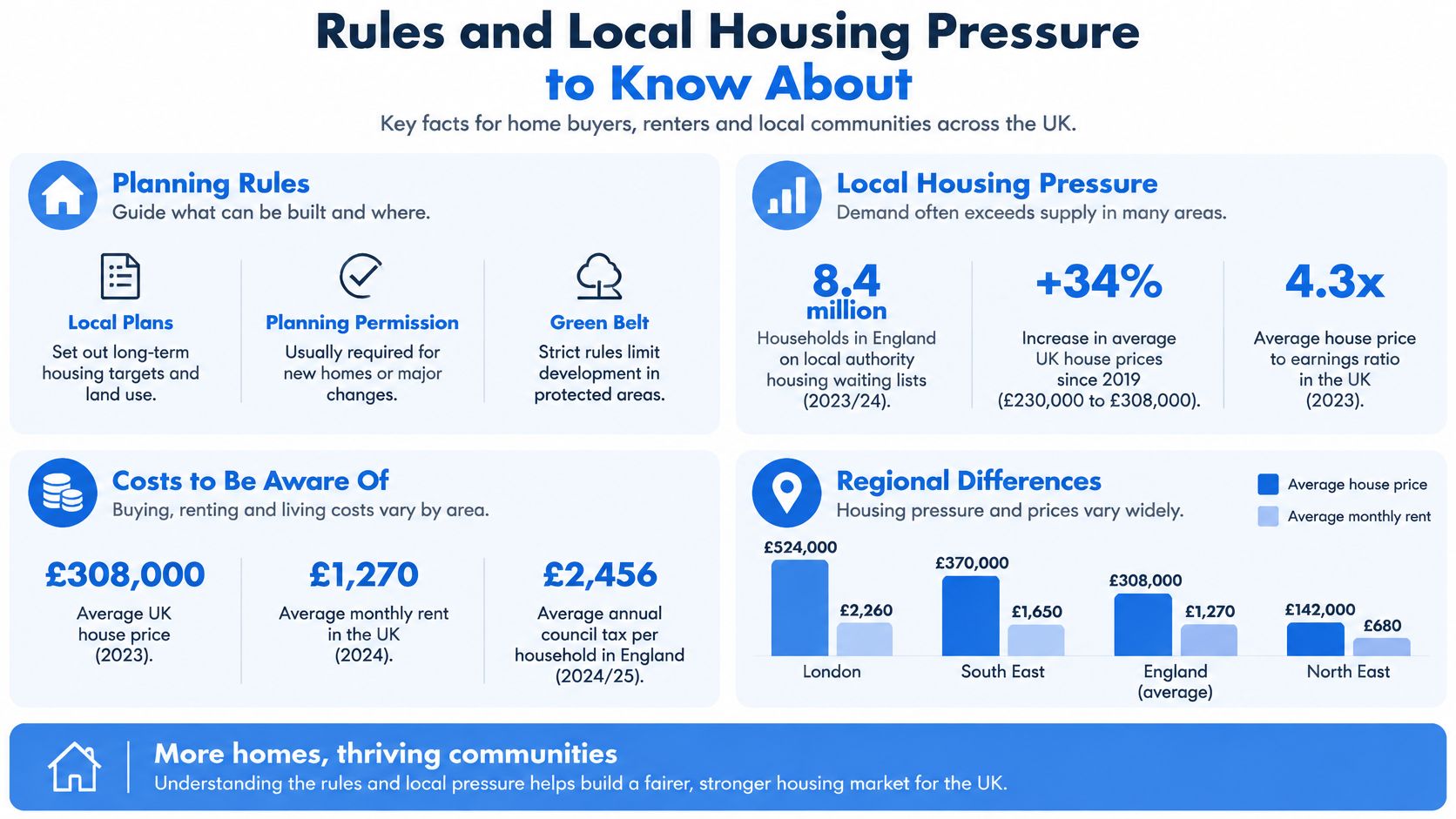
North Norfolk has nearly 6,000 second homes or long-term empty homes among roughly 55,000 homes, alongside more than 2,500 households on the social-housing waiting list, with a potential 100% council-tax premium for qualifying second homes introduced from April 2025, as described in BBC reporting on North Norfolk's housing pressures. Those figures deserve attention, but they don't count every serviced apartment as a second home.
A temporary work base in Norwich and a coastal second home aren't interchangeable categories. Equally, a professionally presented listing isn't proof that its operation has no effect on local housing availability.
Registration won't replace planning checks
England is preparing a mandatory national registration scheme under the Levelling-up and Regeneration Act 2023, expected to begin in March 2027, while local planning requirements remain separate, according to the government's self-catering accommodation guidance. That start date is an expectation, not a statement that registration is already operating.
For a guest, the practical response is to establish who runs the property and who can answer questions about its use and safety. Registration, where applicable, won't remove the need for an operator to establish whether planning permission is required.
Responsible choice: Judge the property's actual use, management and location rather than assuming every temporary stay has the same housing impact.
Look for an accountable operator
Useful questions concern evidence rather than reassuring adjectives:
Management responsibility. Who deals with access problems, maintenance and complaints?
Safety arrangements. What fire-safety information will guests receive, and who maintains the relevant records?
Occupancy records. Can the operator clearly document who is staying, the agreed dates and the booking purpose?
Every property we operate is managed directly by the business, with no letting agents or platform middlemen. That gives guests an identifiable operator, although direct management should never be mistaken for a substitute for compliance.
Our practical UK guide to short-term lets explains the broader accommodation distinctions. The better question isn't which rental is cheapest, but which type fits your purpose, duration and the local housing context.
Confirm the Terms and Book Your Norfolk Stay
Turn your requirements into a short booking enquiry. A clear description of the visit lets the accommodation team address the actual constraints instead of sending an attractive but unsuitable option.
Send a usable enquiry
Set out the visit. Give arrival and departure dates, party size and purpose. Include key requirements such as vehicle parking, separate sleeping arrangements, a desk or bills included.
Choose the accommodation category. For a one-to-four-week work, relocation or study scenario, start with a Norwich serviced apartment. A hotel may be simpler for one or two nights; a coastal or rural holiday let may suit a two-to-four-night leisure break, while a fixed-term let belongs in a six-to-twelve-month residential search.
Browse, then request the figure. Use the property search for Stay Norwich Apartments and Hospitality Norfolk to identify available homes. Our rates are quote-based: send dates, party size and specific requirements, and we'll reply with the right property and a clear figure.
Accept only a complete written offer. Match the reply against your checklist before paying. Keep the agreed terms and the booking contact together so whoever travels has the same information as whoever makes the reservation.
Keep responsibility clear
Short Term Rental Norfolk: Options and How to Choose: If an employer is paying, establish whose name belongs on the booking and invoice. Tell the team if the person authorising payment isn't the person arriving, and ensure the arriving guest receives access instructions and the relevant agreement.
An uncertain departure date needs a decision process, not an informal assumption. Nominate who can approve an extension and make sure the booking contact knows whom to approach if plans change.
This post is sponsored by Stay Norwich Apartments, your furnished rental accommodation provider in Norwich, Norfolk, offering temporary or short-term furnished accommodation. You never know when you might need it. Rest assured that Stay Norwich Apartments will have you covered. Visit staynorwichapartments.com or email admin@staynorwichapartments.com.
Booking directly gets you the best available rate, no platform fees and a direct line to us if something comes up; Airbnb and Booking.com add fees. A sound reservation matches the purpose, records the terms and names who to contact, rather than leaving those decisions until arrival.
Stay Norwich Apartments offers furnished, self-catering accommodation for Norfolk work assignments, relocation, study and short breaks. Visit Stay Norwich Apartments with your dates, party size and essential requirements to request a suitable property and a clear quote before you commit.
Comments